Domestic Violence and Traumatic Brain Injuries
1412719110253

Since October is Domestic Violence Awareness Month, I thought this would be a perfect time to share with you a societal problem that has been largely ignored. Not only do war veterans, football players, and accident survivors sustain traumatic brain injuries, but women who are victims of domestic violence sustain TBIs too. Here’s the tragic truth: Close to five million women in the United States experience domestic-related assaults every year, and the injuries they suffer are mostly to the head, neck, and face. Men experience approximately three million domestic-related assaults each year. The CDC estimates that nearly one hundred sixty thousand TBI-related deaths, hospitalizations, and emergency room visits in the U.S. every year are a result of physical assaults. But the actual numbers are unknown. Why?

Many victims don’t report the abuse to family, friends, or the police because they worry others will not believe them. And victims are often dependent on their abusers, financial and physically. Also, a TBI can make it difficult to communicate clearly, preventing victims from reporting the abuse. The perpetrator may convince others that the victim shouldn’t be taken seriously because of her TBI-related cognitive problems, and victims may be unwilling to admit that they have a TBI out of fear of the fallout: losing custody of children for instance.

An obvious trauma does not have to occur for a TBI to exist. Women who suffer a blow to the head in a domestic violence incident may not lose consciousness, and, therefore, they may not seek medical attention. Symptoms may not be easily recognized and women are often misdiagnosed with a mental health illness. In an article from the Huffington Post, a woman who was interviewed about her experience subjected to a two-and-a-half year abusive relationship says, “When you are in a relationship with that much trauma and violence, you don’t know what’s physical or what’s emotional or mental.”

In a past study conducted by the American Psychological Association, trained staff surveyed one hundred sixty nine women who visited three different emergency rooms with injuries sustained over a period of seven to nine months. Of the forty-six women who answered all the survey questions, seventy-one assaults were reported. Thirty-five percent of the women were identified as possibly having sustained a mild traumatic brain injury.

Women with traumatic brain injuries caused by domestic violence have below average recoveries and are more likely to develop post-concussive syndrome. Researchers don’t know the reasons for this, but suspect it’s due to the nature of the injury to the head, that female hormones may affect recovery, or that female victims of domestic violence have sustained multiple injuries.

Overall, researchers found that sixty-seven percent of the women who participated in the survey exhibited symptoms of a TBI.

What is being done about this dire reality? Researchers have advocated for further exploration into the nature and consequences of domestic violence and TBIs. They are also proponents of early screening for TBIs, so women have access to treatment, thus preventing further injuries.

The New York State Office for the Prevention of Domestic Violence has made available to those likely to encounter victims of domestic violence a list of statistics, TBI symptoms, and questions to ask when assessing for abuse. Though the document is geared toward professionals, I encourage all of us to read it, to be better aware of the connection between domestic violence and TBIs.


Read More
Social Media and Post-Traumatic Stress Disorder

social media_and_ptsd

How often do you view social media sites? Two, three, five times a day? Do you have nightmares after viewing clips of school shootings or movie theatre bombings? Do you feel chronically uneasy, irritable, hyper-vigilant after watching unfettered displays of violence?

If this is the case, you might be suffering from post-traumatic stress disorder. Yes, viewing violent news events on social media can cause PTSD. In a recent study conducted by Dr. Ramsden, a researcher at the University of Bradford in the UK, 189 individuals completed questionnaires regarding personality and violent news events such as 9/11 and suicide bombings. They also participated in clinical assessments concerning PTSD and vicarious traumatization, a term typically assigned to those who repeatedly witness trauma such as therapists, rescue workers, crisis clinicians, police officers, and nurses.

Out of the 189 participants, nearly one quarter of them scored high on clinical assessments of PTSD, showing that they were significantly affected by watching violent news events on social media. The more individuals who viewed violent events, the greater they were affected. Extroverts were also found to be at greater risk for developing PTSD.

Now that I’ve added a layer of worry to your day, (sorry), how do we protect ourselves from unrestrained acts of violence? Though, in June of this year, the Supreme Court ruled in favor of protecting free speech on social media and the Internet, we, as viewers, possess a similar freedom of choice, namely the freedom to make choices that protect our emotional well being. We can choose to walk away from our computers, iPhones, iPads, e-readers, and tablets. The challenge I pose to you is this: Can you shift your eyes from the screen, even for a day, and onto something else like a walk in the woods, a fantasy novel, or a crossword puzzle?


Read More

Taking The Car Keys Away From My Father

TEST_Image

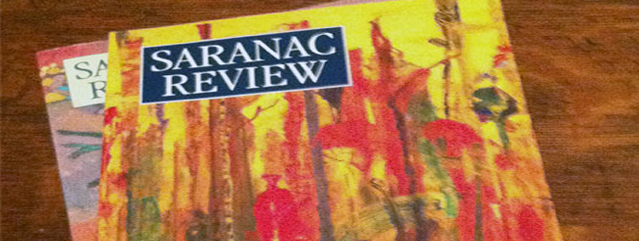
I’m over-the-moon excited to announce that my essay, “Reaching for the Keys,” has been published in Saranac Review  It’s about my emotional struggle to take the car keys away from my father, who was diagnosed with Alzheimer’s disease in 2012. I spent a year and a half working on it – typing, deleting, reflecting, pacing, tearing up drafts and starting over, pulling my hair out, waking up in the night to scratch down notes. Why all the fretting? Though any piece of creative work takes time to craft into a piece of salient art, writing this essay challenged me more than most other essays I have written. How so? While I know I made the right choice by taking the keys away from my father, the act of writing the essay brought me uncomfortably close to particular emotions and a long list of complexities that speak to the human condition (at it’s core, what this essay is really about): fear, anger, remorse, guilt, truth, loyalty, mortality, illness, aging, independence. I suppose that’s partly what creative writing should do – push us a little too close to the edge of the metaphorical embankment.

There’s also an ironic element to the piece, but I don’t want to give too much away here (apologies for the teaser). To quench your curiosity, relieve your hunger, I encourage you to read the essay. The Journal is available for purchase at: Saranac Review.

The Saranac Review was born in 2004 out of four writers’ vision to open a space for the celebration of many voices including those from Canada. Attempting to act as a source of connection, the journal publishes the work of emerging and established writers from both countries. As our mission states, “The Saranac Review is committed to dissolving boundaries of all kinds, seeking to publish a diverse array of emerging and established writers from Canada and the United States. The Saranac Review aims to be a textual clearing in which a space is opened for cross-pollination between American and Canadian writers. In that way, we aim to be a textual river reflecting diverse voices, a literal “cluster of stars,” an illumination of the Iroquois roots of our namesake, the word, Saranac. We believe in a vision of shared governance, of connection, and in the power of art.

Saranac Review

Read More

A Tribute to Oliver Sacks

Oliver_sacks_2

The following tribute to Oliver Sacks, an eminent neurologist, prolific writer, and quintessential humanist who died from cancer at 82 on August 30,  is dedicated to Christy Lyn Bailey, who died from Inflammatory Breast Cancer (IBC) in June 2015. A good friend to many people around the world, she lived each day with passion and curiosity – she traveled to nineteen different countries, completed marathons and triathlons, left her corporate job and joined the Peace Corps. Christy also pursued her passion for writing and teaching: she earned an MFA, and taught creative writing to university students, and to homeless children. And she wrote a memoir, which tells of her journey toward acceptance after losing her hair to alopecia areata

Christy was a first-rate storyteller, and shared her IBC experience online with countless compassionate readers. Each story she shared revealed her bravery, sensitivity, love, and gratitude. As her mother says, “She dreamed big.”  Christy worked hard to survive, to say all she needed to say, to write what she needed to write, but mostly she gave to others – right up until she fell into a peaceful and ever-lasting sleep. 


Do you feel your work is done? Do you have more to do, to give, to write, to say? Oliver Sacks leaves us to ponder such existential inquiries in his essay, “Sabbath.”

It’s evident he had more to say, even as his death drew nigh: Fourteen days before he took his last breath, the New York Times published “Sabbath.” In the essay, Sacks speaks out about his withdrawal from the Jewish rituals he grew up with, his indifference to his parents’ beliefs, and his addiction to methamphetamines. In the context of his sexuality, he speaks to how the writing of his newly released memoir, On the Move, allowed him to finally unearth what he had kept buried away for far too long:  “I had been able, for the first time in my life, to make a full and frank declaration of my sexuality, facing the world openly, with no more guilty secrets locked up inside me.”

Sacks was also the kind of man who thought deeply about others. His natural curiosity and interest in the world around him, and likely his sense of isolation from his family who questioned his sexual orientation, drove him to venture far from his family in England. In 1960, as a new physician, he left for Los Angeles, where he found what he called a “sort of connection.” Still, Sacks yearned for some deeper meaning – lacking that, an addiction to methamphetamines lured him in. But he recovered, slowly, and found his way: He worked as a physician at a chronic care hospital in the Bronx, where his fascination with his patients mobilized him to tell their stories, unfathomable stories he felt it was his mission to share. That’s when he became a storyteller, a storyteller of the human condition. Those stories span the pages of The Man Who Mistook his Wife for a Hat, in which Sacks shows the struggles of his patients living with various neurological disorders. At the same time, he eloquently describes the resilience of the human spirit, making each and every individual he writes about real life human beings on the page. Sacks’ curiosity and interest in others is steadfast and palpable in the other dozen books he has written such as Hallucinations, Awakenings, and The Mind’s Eye.

It’s Sacks’ open, empathetic, and introspective storytelling that prompts us to ask of ourselves, “What moves us? What must we share with others? In his essay, “Altered States,” though Sacks suggests that drugs is a “shortcut” to “transcendence,” he’s also clear about one thing: that understanding can be found through other means. As Sacks reminds us in the essay, the point is “To live on a day-to-day basis is insufficient for human beings; we need to transcend, transport, escape; we need meaning, understanding, and explanation; we need to see over-all patterns in our lives. We need hope, the sense of a future. And we need freedom (or, at least, the illusion of freedom) to get beyond ourselves … to travel to other worlds, to rise above our immediate surroundings.”

That’s exactly what Oliver Sacks and Christy Bailey did – they rose above their “immediate surroundings.” They left us with the and abundance of hope.

Read More

Volunteering and Happiness

volunteering_and_happiness

On August 2, as part of a three person panel, I had the occasion to discuss learning accommodations available to traumatic brain injury survivors on “Another Fork in the Road,” a broadcast of the weekly Brain Injury Radio Network, hosted by Donna O’Donnell Figurski. Juliet Madsen, a retired military veteran of the Iraq and Afghanistan wars, sustained a TBI in 2004 while serving in Operation Iraqi Freedom. Both she and I discussed post-TBI issues such as indecisiveness, poor attention span, the inability to remember names, and the need to rely on written and auditory cues to accomplish daily tasks. While I found it to be comforting to know that I am not alone with the fall out of a TBI and what Juliet calls a “revolving door” (One day you have a handle on things, and the next day you don’t), I found her zeal to volunteer inspiring.

A quilter for twenty-five years, Juliet founded Stroke of Luck Quilting and Design  and began sewing quilts to raise funds raise for disabled veterans. She developed the fundraiser, “The Ultimate Sew-in,” and, along with other volunteers, has made 500 quilts for injured soldiers. She also serves as an ambassador for the Invisible Disabilities Association (IDA) and speaks publicly about TBI and PTSD. And, as part of the Veterans Book Project, Juliet worked collaboratively with dozens of other veterans to write Objects for Deployment. She gathered unsettling images of the Iraq and Afghanistan wars with the goal of making meaning out of her memories.

Since the radio show nearly one month ago, I’ve thought a lot about why traumatized individuals spend time volunteering, and go back to a memoir I read a few months ago. In Moving Violations, the author John Hockenberry says, “Trauma intensifies existence.” In other words, trauma brings forth experiences previously shrouded by day-to-day routines, and propels us to re-invent our lives. So it’s reasonable to say that volunteering is just one path toward re-invention. And, since traumatized people often struggle with depression and a sense of helplessness, giving back to the community can help boost self-esteem and a sense of accomplishment. From that, unfolds a better sense of emotional wellbeing. And since volunteering usually involves being around other people, it makes one less isolated, a core risk factor for depression. Of course, these benefits are not exclusive to traumatized individuals; others reap emotional gains too.

Most of us want to be happy, right? A dose of it could come as easily as spending two hours every few months playing music for elders at an assisted living facility, walking three miles once a year to raise money for a national nonprofit, or serving dinner to the homeless at a shelter during the holidays.

Does volunteering make you happy? What kind of volunteer work makes you happy? Please share.


Read More
error

Enjoy this blog? Please spread the word!