Driving after a Traumatic Brain Injury

For most of us, driving equates with independence and freedom. So when you are diagnosed with a traumatic brain injury and learn that you cannot drive at all, or need to limit your driving to daylight hours, you may feel the loss of independence you once enjoyed.

Even with a mild traumatic brain injury, changes in thinking, perception, vision, and motor skills can affect driving: the ability to stay in the correct lane, react quickly when another driver cuts in front of you, and seeing a green light change to red. With a TBI, individuals become easily fatigued and may have difficulty concentrating for long periods of time. They often have difficulty processing rapidly moving stimuli, such as passing cars and bicycles. http://www.biausa.org/brain-injury-community.htm

But the good news is that between thirty and sixty percent of individuals with a moderate to severe traumatic brain injury eventually return to driving. They do so with the help of driving rehabilitation professionals, who first evaluate cognitive functioning, judgment, and reasoning skills. They then conduct a road evaluation. Still, most TBI survivors are not adequately evaluated before getting behind the wheel again. http://www.biausa.org/brain-injury-community.htm

Family members can help too. If it’s your spouse, though, and you prefer to save your marriage, you may want to be evaluated by an objective party like a rehab professional. For me, though, my husband has been helpful (okay, so we’ve had a few spats). Since my TBI has presented with difficulty processing multiple stimuli and anticipating changes down the road, he has spent time with me driving – me behind the wheel and he the passenger – cueing me when to change lanes or to turn. He has also encouraged me not to engage in too much conversation while driving. Because I fatigue easily, I no longer drive long distances – either my husband drives or I take the bus. And he’s aware of what I call my “bad brain” days and initiates driving. More importantly, I’m aware of my “bad brain” days and either limit my driving, or do not drive at all.

Of course, making the change from limitless driving to limited driving has not been easy. I don’t see friends as much as I used to, and I spend more time indoors, especially during the winter. Thank goodness for social media!

How has your TBI limited your ability to drive? How have you learned to cope with the changes?


Read More
Walking Toward Understanding: A Review of the Movie Wild

wild_movie

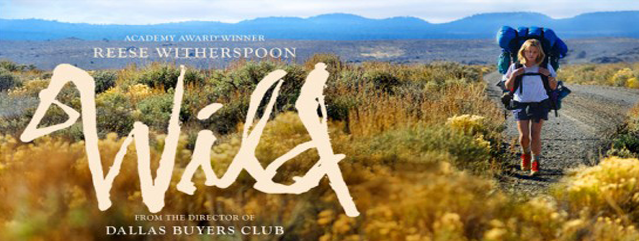
“I’m sorry you have to walk a thousand miles just to …” Cheryl Strayed’s ex-husband, Paul, tells her. But “just to” what? Early in Wild, Strayed finishes the sentence for her ex-husband: “Why do I have to walk a thousand miles?”

At mile one, Strayed is not sure why. She’s not even sure at mile eight, twenty-eight, or thirty-six. She lumbers around sharp curves and up and down rugged terrain in order to find the answer, or answers. Strayed’s father was an abusive alcoholic. Her mother, whom she calls “the love of my life,” died of cancer at forty-five. Strayed sought refuge in heroin, and sex with multiple partners, which is what led to the demise of her marriage. She finds the answers to the why part of her hike only at mile one thousand. Strayed hikes toward an understanding of her tumultuous life that seduced her into the woods. Much like how the memoir is structured, the movie depicts both her physical and emotional journeys, the present and past paralleling one another the entire one thousand miles. Of course, we can’t help but lumber along with her.

Wild is not only about Strayed’s yen to find the answers as to why she chose to venture into “wild” territory. It’s about identity, the body, forgiveness. Several tropes represent these themes: the heavy weight of her backpack on her shoulders and back calls to mind the burden of her guilt for past wrongs. The bruises she is left with remind us of the pain of her present, and past, life. Lifting herself up under the weight of the pack, then again when she slips in a river signifies perseverance. The pruning of the pack partway through her trek can be likened to the shedding of her guilt.

The sex scenes reveal Strayed’s confusion: she conflates sex, her body, with worthiness. When a reporter pulls his car over to the side of the road – Strayed is hoping to catch a ride – he interviews her for an article and calls her a hobo. Strayed is quick to clarify that she is not a hobo, that she’s simply hiking the PCT. But she has no place to call home, no anchor, no words to describe who she is. Strayed is not a mother or a wife, labels her mother once assigned to herself.

A series of metaphorical purges (guilt purges) take place: when strayed vomits after a night of drinking with other hikers, when she erases her ex-husband’s name from the sand, and when she finally breaks down sobbing, and says, “I miss you Mom.”

I could share more, but if you have yet to see Wild, or read the book, I don’t want to spoil the ninety-four day hike for you – the one hundred degree afternoons, the sweaty silences, the blue nights and sun-bleached mornings.

So, lace up your hiking boots, strap on your backpack, and join Cheryl Strayed at the head of the PCT.


Wild Director: Jean-Marc Vallee. Staring Reese Witherspoon, Laura Dern, and Gabby Hoffman.

Read More

How Yoga Helps Heal Post-Traumatic Stress Disorder

downward_dog

What is your New Year’s Resolution? Perhaps it’s to eat healthier, exercise more, quite smoking. Maybe you have decided to take up yoga. If you suffer from symptoms of post-traumatic stress disorder, yoga just might be the perfect resolution. Studies show that yoga, specifically the breathing-based aspect, improves PTSD recovery. Hyper-arousal, nightmares, anxiety, difficulty sleeping, irritability, are all common features of PTSD. Yoga, which dates back to 3,000 B.C and practiced among warriors before heading into battle, means “to unite.” In other words, it helps us become more self-aware, allowing us to feel a sense of control over our own bodies. Yoga brings the mind and body back to a state of calm. http://www.traumacenter.org/research/yoga_study.php  http://uwire.com/2014/09/17/uw-study-finds-yoga-can-improve-ptsd-recovery/

Each morning (or most mornings), I sit cross-legged on my living room rug, take several deep breaths, then launch into ten minutes of yoga: downward dog, warrior I and II, Half Moon Pose, Plank, Forward Bend, Child’s Pose (not necessarily in that order). Downward Dog is my favorite – letting my head hang, my calves and hamstrings stretching, releasing a nighttime’s worth of bad dreams.

I know I could benefit from longer sessions, so I think that’s what I’ll strive for in 2015 – to breathe deeper, unite my body and mind, and, as Certified Yoga instructor Robin Carnes says, “draw [my] attention inward, away from outside stressors.” http://www.huffingtonpost.com/arianna-huffington/military-yoga-treatment_b_2443317.html

What about you? How about joining me in a few downward dogs?

Here’s a link to get you started: https://yoga.com/poses

Read More

What Does Home Mean to You?

pillow_-to_lay_head_on

A couple months ago, I trudged through the thick woods five miles from where I live, in search of homeless individuals. As part of a campaign to end homelessness in Vermont, I volunteered to find people willing to answer survey questions to identify those at high risk for dying on the streets. I had driven past the woods numerous times, numb to the homeless community surviving in the dark drizzle, lost in my small world – what should I make for dinner tonight? Salmon or Lasagna? Should I buy that new couch on sale? I really should go to the gym today. But as I stepped closer to a campsite with a one-person tent and a sagging blue tarp for a roof, my fortune on the other side of the murk seemed far away and inconsequential.

I thought about the last question on the survey: What does home mean to you? Before entering the woods, I had not spent much time, if any, examining that question. But, now, with the sagging tarp and the empty tent as real as the bone-aching cold, I could not avoid it. Home: warmth, privacy, a front door that locks. A comfortable bed.

I did not find anyone in the encampment, so I did not have the opportunity to ask the question. I headed downtown to continue my search. A mid-twenty something guy, wearing a stained sweatshirt and rubbing his hands together to stay worm, was sitting on a bench. I walked up to him and asked if he was homeless and would he be willing to answer some questions that were designed to help him. “Sure,” he said and invited me to sit next to him.

I asked him questions about his health, his interactions with the police, if he had been beaten up or threatened by others, if he received any subsidies. Then, “What does home mean to you?”

“A pillow to lay my head on.”

We gave each other a nod, as if we understood one another.

But his answer still resides in my consciousness, so much so that I am working on an essay about my experience. As I write this, though, I wonder if home is a place in which we are inextricably linked, a place that represents our unique identities. Your scent planted in your pillow. Your dreams contained in your pillow.

If you have not had the opportunity to speak to someone who is homeless about what it’s like for them to survive on the streets, or ask them what home means to them, I urge you to watch the film Without a Home. “Growing up in Los Angeles, a city with a homeless population that exceeds 90,000,” filmmaker, Rachel Fleisher, fulfills her desire to understand the homeless community in Los Angeles by spending four years connecting with the lives of six homeless individuals. http://www.withoutahomefilm.com/about-the-film

I assure you, the film will change your perception of homeless individuals.

So, I leave you with two questions to consider on this Christmas holiday: what does home mean to you? How does your home speak to your identity?

Read More

Football and Suicide

post_concussive_syndrome

Twenty-two-year-old Ohio State football player Kosta Karageorge had a history of concussions. Though we don’t know the inciting event that resulted in his suicide, research suggests that athletes who sustain concussions are more likely to develop depression, disorientation, and suicide. How so? You might ask. Chronic traumatic encephalopathy (CTE), a degenerative disease of the brain, originally called “punch-drunk” syndrome in boxers, is seen in any athlete who sustains repeated head trauma, especially football players. It’s not unreasonable to assume that Karageorge was a victim of this mysterious disease, which can only be diagnosed on autopsy. “I am sorry if I am an embarrassment but these concussions have my head all f***ed up,” Karageorge said three days before he shot himself (www.washingtonpost.com/football-player-kosta-karageorge).  According to his sister, Karageorge experienced confusion and mood swings, symptoms, which, in addition to aggression and gait disturbances, are not uncommon in those with CTE (www.marquettewire.org/karageorges-death-shows-concussion).

Though football players of any age may suffer from CTE, younger athletes are particularly vulnerable. Because their brains are not fully developed, they are at risk for second impact syndrome, a potentially fatal condition that occurs when a player sustains a concussion then returns to the game and suffers a subsequent concussion before the first one has had time to heal (www.usatoday.com/highschool football deaths). More sad news: the prevalence of depression among teenagers who sustain concussions is three times higher (http://www.ncbi.nlm.nih.gov/pubmed/24355628).

If you haven’t been following the news about brain trauma in football players, you might, or might not, be surprised to learn that, out of one hundred twenty-eight deceased players, as many as one hundred one had CTE (www.pbs.org/concussion). What steps are being taken to prevent football players from these unnecessary and brutal deaths? Both the National Football League and the National Collegiate Athletic Association settled class-action lawsuits in 2013 challenging concussion protocols. But, finally, this past November, a former football player, who sustained concussions playing the game, filed the first class action lawsuit against the Illinois State High Athletics Association.

Another young football player has also come out about his history of concussions, and subsequent plunge into depression. Though heartbreaking, his story will leave you more than informed; it will make you pause and think twice before you enroll your child in high-school football (www.huffingtonpost.com/football-concussions).

Let’s take a moment of silence for the others who chose to end their lives because of football (www.ajc.com/football-suicide):

Owen Thomas: The first, and youngest, collegiate player diagnosed with CTE.

Terry Long: An offensive lineman for the Steelers. Shot himself on June 7, 2005. Age forty-five.

Andre Waters: Played for the Steelers and the Cardinals. Shot himself on Nov. 20, 2006, at age forty-four.

Shane Dronett: A defensive lineman in the NFL. On Jan. 21, 2009, shot himself. Age forty-eight.

Dave Duerson: Played for the Bears, Giants and Cardinals. On Feb. 17, 2011, he shot himself in the chest. Age fifty.

Ray Easterling: Played for the Falcons. On April 19, 2012. Shot himself in his Richmond, Va., home. Age sixty-two.

Junior Seau: A linebacker for the Chargers, Dolphins and Patriots. On May 2, 2012, shot himself in the chest. Age forty-three.

Jovan Belcher: A linebacker for the Kansas City Chiefs. Shot and killed his girlfriend, then shot and killed himself. He was twenty-five.

Paul Oliver: Played for the University of Georgia, then the Chargers. Shot and killed himself on Sept. 24, 2013. Age twenty-nine.

If you’re looking for a holiday gift for a football fan, or a non-fan, check out Steve Almond’s Book, Against Football.  An entire chapter is devoted to football and traumatic brain injuries. The research is both startling, and disturbing.


Read More
error

Enjoy this blog? Please spread the word!