Reaching for the Keys: Available on Audio

My essay, “Reaching for the Keys,” about my experience taking the car keys away from my Alzheimer’s-afflicted father, is now available on audioA huge thank you goes out to Sarah Cronin, musician, sound/video engineer, performance artist, costume designer, writer, and more, who has kindly featured my piece (in my voice!) on her website.

“Reaching for the Keys” was previously published in issue 11 of Saranac Review.

Read More

Alzheimer’s and Brain Awareness Month

It’s June –  Alzheimer’s and Brain Awareness Month. Did you know that? If not, no worries. I’m here to tell you all about it. Alzheimer’s and Brain Awareness Month is a time to help raise awareness about a disease that affects millions of people world-wide. Though researchers know a lot about Alzheimer’s, they still don’t have a cure, which makes the disease still a mystery. That’s why purple is the color designated to Alzheimer’s, because it symbolizes mystery. But purple also represents magic, and it is that magical day millions of us are waiting for, the day when we can say with confidence that Alzheimer’s no longer exists, that it is no longer a threat to us or our loved ones. During the month of June, the Alzheimer’s Association encourages us to wear purple, to spread a purple light in honor of all affected by this life-robbing disease.

To learn more about Alzheimer’s and Brain Awareness Month,  I encourage you to read this past Sunday’s special section of the Burlington Free Press. Here you will find my article, “Agitation in Alzheimer’s, about the latest research involving an investigational medication to help reduce agitation in those living with the disease. In the 31-page section, you’ll also find personal narratives about individuals with Alzheimer’s, stories about the role of caregivers, support services available, and the community’s efforts to raise awareness.

Happy June!

Wear purple; wear hope.


“The sky is already purple; the first few stars have appeared, suddenly, as if someone had thrown a handful of silver across the edge of the world.”

Alice Hoffman, Here on Earth

Read More

Transportation for Seniors

transportation_services

I’m here to share with you my latest interview with ITNAmerica, a nonprofit transportation network for seniors serving fifteen states. “Why the interview?” you might be wondering. Have you ever thought about how you would manage your day-to-day life if you couldn’t drive? Do you ever think about what you’ll do when you’re old and frail, or old and ill, and can’t drive? While I don’t lose sleep over it, I do think about it. I think about how I’ll get to the grocery store, the bank, the movies, and, of course, the wine outlet. The answer: because my immediate world has left me with few emergency exists through which I can escape such dread-filled questions.

My eighty-eight-year-old mother-in-law, who lives in a condo down the hall from my husband and me, is blind in one eye and has dementia. She cannot driven; by choice she has not driven for years (God bless her), and depends on family for transportation. Fortunately, or unfortunately, depending on how you look at it, she prefers not to leave the house very much. When my father was diagnosed with Alzheimer’s, and the dents and scratches scarring the front and rear of his car left me no other choice but to take the keys away from him, he had to learn to accept that caregivers would be driving him to and from the bank, doctor’s appointments, and his favorite Italian restaurant. And because it was an older driver who slammed into me, and seveny-two others, while I was visiting a farmers’ market in California years ago, I can’t help imagine how all seventy-three of our lives would be much different if the driver had access to transportation services, and was willing to use them.

I learned about ITNAmerica while researching news articles for a writing project and, ironically enough, learned that the founder, Katherine Freund, experienced a similar tragedy to mine and dozens of others: In 1988, an eighty-four-year-old driver ran down her three-year-old son. He survived, but suffered a traumatic brain injury. Instead of letting herself get swallowed-up by anger, Katherine, an inspirational speaker who has been featured in The Wall Street Journal and on CNN, and has won numerous awards recognizing her work around public health initiatives, made lemonade out of lemons (forgive me for the cliched proverbial phrase). She built and supported community-based senior transportation services.

Like Katherine, I too feel summoned to advocate for the most efficient and cost effective transportation options for the older population. While here in Northern Vermont we have Neighbor Rides and Special Services Transportation Agency (SSTA), I’m not sure that’s enough. After all, an estimated 25% of Vermonters will be sixty-five and older by 2030. Believe it or not, Vermont ranks higher than Florida when it comes to age: 42.8 versus 41.9.

What transportation options for elders are available in your community? Maybe you’re twenty-nine, thirty-three, or fifty, like me, and saying this to yourself: it’s too soon to plan for when I’m eighty, eighty-nine, one hundred.

But I must agree with Jodi Picoult: “Time is an optical illusion- never quite as solid or strong as we think it is.”


Read More

Long-Term Care Costs

Eve_hand

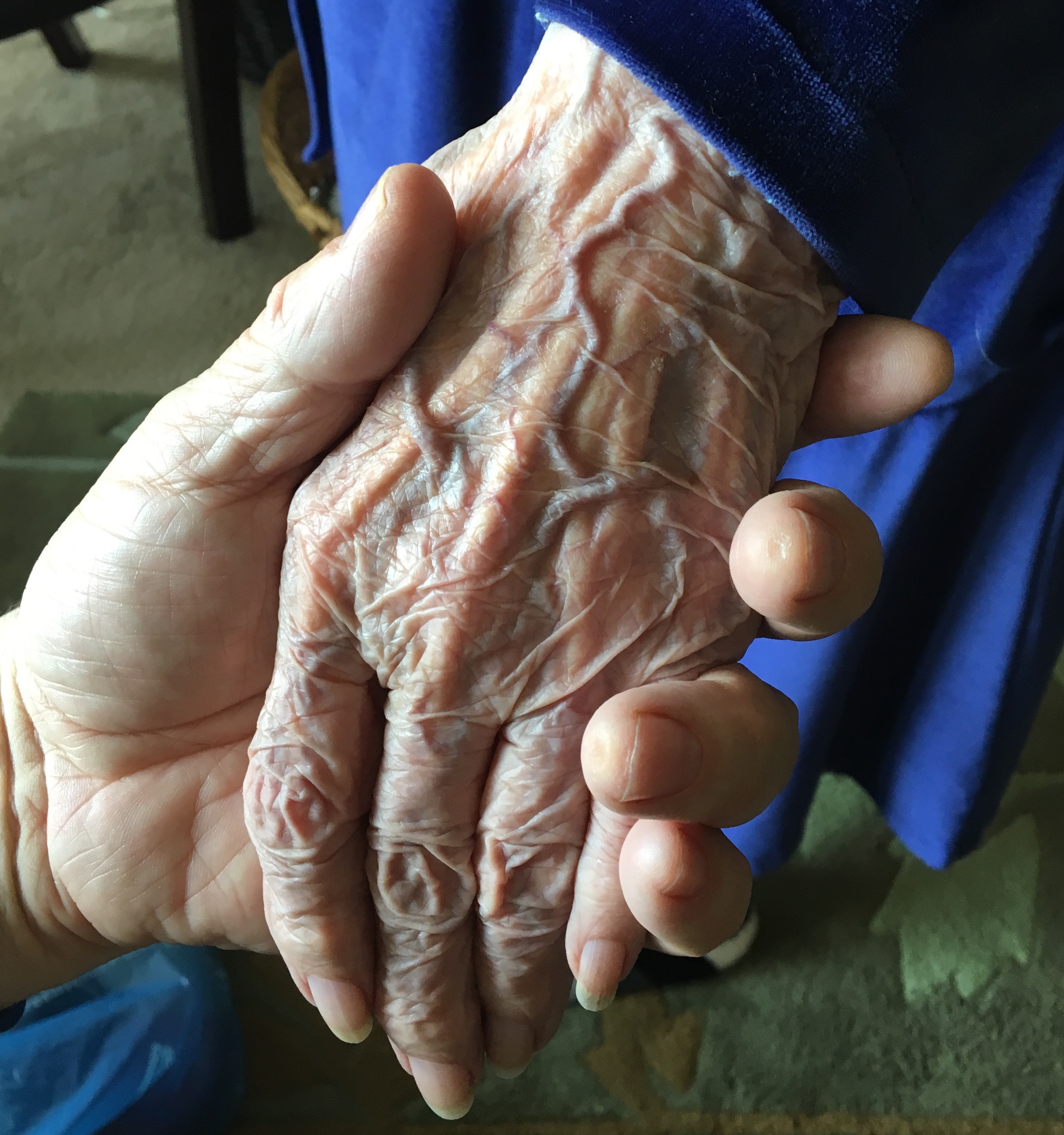
I like to believe that I’m too young to think about who will take care of me when I’m old and frail and can no longer prepare my own meals, bathe myself, or even tie my own shoes. But my father’s personal narrative has taught me to plan ahead: I now have an advance directive, and hope to have enough money set aside for long-term care costs, like an assisted living, or, do I dare say it? Nursing home. A place that most of us hope to avoid. We remind our loved ones, over and over, “Never, ever put me in a nursing home.”

My father spoke those exact words to me, time and again, in the years before he was diagnosed with Alzheimer’s, at age seventy-one, though he punctuated them with what might as well have been an exclamation point: “If you do, I won’t live a year.”
I wanted to guarantee my father that I would never “put” him in a nursing home. As his health care proxy (HCP), I did all I could to follow through with his documented wishes: “It’s my expressed desire not to be placed in an assisted living facility, or nursing home, or any other institutionalized living arrangement.” During the early phases of my father’s Alzheimer’s, he was able to stay at home with a paid companion a few hours a week. But as his disease progressed, he required full time care, twenty-four hours a day, seven days a week.

He didn’t have a wife to care for him. I live in Vermont with my husband, my older sister lives in California, and my younger brother and his wife have demanding jobs, with two young children in tow. None of us could have easily packed away our lives and moved in with our father; we had to hire a home care agency. But no way could the three of us afford the exorbitant cost of upwards of $14,000 a month for trained home care staff and case management services. This is when we cashed in on my father’s foresight: Because he’s a perennial over thinker, and could afford it, he had purchased long-term care insurance (LTC) – a policy that covers personal care in the home or institutional setting – years earlier. We managed, barely though, to keep my father at home for three years. Yes, the inevitable happened, and he’s been in a nursing home for a year now – a nice nursing home with attentive staff, decent food, lots of activities, a flower-bordered patio, and a pastel-painted dining room with tall windows.

But what happens to those who can’t afford the prohibitive price for long-term care insurance, or the out-of pocket costs for home care services – services typically not covered by insurance – or the fees for a nursing home? In the U.S, with the older population – people sixty-five and older – at nearly close to fifty million, which is predicted to nearly double to an eye-popping ninety eight million by 2060, I imagine those kinds of questions are being asked at a lot of dinner tables. My husband, his siblings, and I, ask one another those questions as we scramble to piece together a plan to care for his eighty-eight-year-old mother, who is blind in one eye and has dementia. Her dementia is at a stage where she doesn’t need to be in a nursing home or an assisted living facility. But she no longer drives, and needs assistance preparing some meals and doing household tasks, she is also at high risk for falling. But she doesn’t have the funds to pay for home care. That leaves her with one option left: family. For now, one of her sons, who recently resigned from his job, is living with her full-time. But that’s not sustainable, financially or emotionally, for her son. Fortunately, my husband comes from a large family, and his siblings are willing to sign up for shifts.

Here’s why having family available to help is a saving grace: Taking into account three types of care – assisted living, independent living, and memory care – the average monthly cost in the U.S. is nearly $4,000. The Northeast is the most expensive in the nation: just over $5,000 a month. The average daily cost of nursing home care runs about $250 a day for a private room, more than $90,000 a year. But nursing home care is a whole different animal from other types of elder care, and this is where it gets confusing: If you, or your loved one, need nursing home services on a temporary basis – due to an illness or injury – and you have Medicare, great, the government will pick up your tab, but, of course, only if certain requirements are met. And they’ll pay the full cost for only so long: exactly twenty days. For the next eighty days, you get to pitch in: about $130 a day. On day one hundred, Medicare is no longer an option. And they don’t pay for long-term nursing home care. If you can’t afford LTC, and you don’t have Medigap – a non-government insurance plan – and are not a veteran, that’s when you dig deep into your pockets, cash in life insurance policies, reach out to family, praying you haven’t done anything to offend them, or, to qualify for Medicaid, sell just about every last possession you own, including your house.

That’s why procrastination isn’t your best friend. Where do I start? You might ask. A Place for Mom, the largest senior living referral service in the U.S., offers tips on how to prepare for the kind of care you might need as you age. If you believe you’re immune to aging, even after reading this post, I should share with you what James Salter, author of All That Is , has to say: “Age doesn’t arrive slowly, it comes in a rush … You are the same and still the same and suddenly one morning two distinct lines, ineradicable, have appeared at the corners of your mouth.”

Since I can’t bear ending on a minor key, I’ll leave you with this: You have a voice, so don’t be afraid to use it. Speak out, share your concerns about the rising costs of long-term care, even if your voice is out of tune: As Joni Mitchell says, “The more out of tune voices the better.”


This above post was originally published on June 3, 2016 at Strategy Health Care

Read More

Compassion Fatigue

You’ve heard of “burnout,” right? Your work environment is making you miserable, so miserable that you feel unfulfilled, depleted of energy, stripped of all motivation to effect change in the workplace. If you’re a healthcare professional, undoubtedly, you know all too well about burnout. But then there’s “compassion fatigue.” While individuals working in any kind of job setting can experience burnout, compassion fatigue is unique to those exposed to trauma while working in a helping profession: nurses, firefighters, police. Because you’re in the helping profession, you feel the onus is on you to save peoples’ lives, to make them better, to alleviate their pain, so you sign up for extra shifts, and, if you’re a nurse, offer to take care of the sickest patients. But what happens when your patients have little, or no family support, or are constantly ringing the call bell, making demands (get me water, I need more pain meds, I need something to help me sleep)? You feel like Sisyphus – no matter how many times you push the boulder up the hill, it keeps rolling back down into your weakened arms. You’re worn down, irritable, angry. That’s compassion fatigue, when you can no longer muster the sympathy to care for your patients because you’ve been exposed to the same kinds of patients again and again, and have answered an uncountable number of call-bell dings, but the bells keep dinging, and you want to keep helping, but, at the same time, you want to run.

It’s worth noting, however, that compassion fatigue doesn’t necessarily mean individuals experiencing it lack compassion, not at all. They still care about their patients. Instead, as a nursing professor at the College of Nursing at University of Arizona says, compassion fatigue is more like feeling too “full,” and even suggests a different name for it: “emotional saturation.”

Not only are healthcare professionals at risk for compassion fatigue, though, family members caring for loved ones with, say, a traumatic brain injury or dementia, are at risk too. Even those who hear about another’s traumatic experience over and over again are affected. I bring these scenarios into the mix because, sadly enough, I suffered from compassion fatigue when I worked tirelessly to navigate my father’s emotional swings, and, as he slipped into Alzheimer’s, made sure he was safe at home because he had insisted he never be put in a nursing home. And I’m witnessing compassion fatigue again, as my husband and his siblings stumble then pick themselves each day, determined to keep their aging mother safe from the ravages of dementia.

But it is possible to care too much, so much that it hurts. When I say hurt, I mean really hurt, as in traumatized hurt. Being pre-occupied with others’ suffering can cause “secondary traumatic stress” for the helping individual. It’s not unusual to experiences symptoms of post-traumatic stress disorder: anxiety, hyper-vigilance, irritability, impatience, withdrawal, poor concentration, sleep disturbance, nightmares, the list goes on.

What’s the cure for compassion fatigue? Boundaries and self-care. In other words, set limits, say no even when you want to say yes, remind yourself to take time out, meditate, go for a walk, keep a journal, draw, listen to your favorite music, dance, do yoga, take a bath, read a novel, watch a funny movie. Watch the sun set. Watch the sun rise.

For more resources on how to evaluate whether or not you have compassion fatigue and how to prevent/treat it, go to compassion fatigue and healthy caregiving.


Read More