Rejection
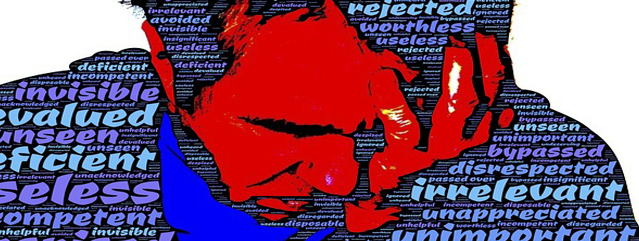
Remember that punched-in-the-gut feeling when the one guy (or girl) you had a crush on in high school went to the prom with your best friend instead of you? Or how about the first time you tried out for the soccer team and you didn’t make the cut? Rejection doesn’t feel very good. You might as well be a deflated balloon. That’s what it felt like for me when a literary journal recently rejected an essay of mine. I’ve received lots of rejections from journals, but this one, for no reason I can explain, hurt like a motherfucker. Because I’m generally a curious person, I can’t help but wonder why rejection causes humans so much emotional pain.
By nature, humans are social beings. Just as we need food and water to survive, we depend on others to feel a sense of belonging. To be rejected is like suffering from hunger and thirst. Because we have access to technology and other modern conveniences, we could manage to lead a solitary existence, though it would likely be a depressing one. To say “I’m in a lot of pain” after receiving a rejection letter from your top choice college, or after failing to land your dream job is not merely a figure of speech. It’s as real as physical pain. Through MRI studies, researchers have found that rejection stimulates many of the same areas of the brain involved with physical pain. As researcher Naomi Eisenberger describes, “As far as your brain is concerned, a broken heart is not so different from a broken arm.”
So, if we feel just as lousy when rejected as we do when experiencing physical pain, maybe the two cold be treated in the same way. That’s what researchers thought, and had a group of volunteer subjects take Tylenol for three weeks, while a second group of subjects were given a placebo. At the end of the study period, those who were given the Tylenol reported fewer episodes of hurt feelings. To confirm those reports, MRIs were taken of the Tylenol group, and showed less activity in the pain regions of the brain. Similar results have been found in real-life: The same researchers conducted MRIs of individuals whose partners had recently ended their relationships, and when they were shown pictures of their ex-partners, the pain regions of the brain lit up.
Of course, while some individuals experience very few rejections over time (personally, I don’t know any of those people), others experience one rejection after another. And how each of us copes with rejection differs. Some are better at picking up and moving on; others crawl back into bed and bury themselves in the dark. (I’ll admit it: sometimes that’s where I end up, back in bed.) But, even though studies have proven that Tylenol can heal hurt feelings, pain serves us well. Since it’s an evolutionary advantage that we maintain social connections, though it means risking rejection, if we isolate ourselves, we’ll ultimately perish. So, the next time you receive a rejection of any kind, remember this: pain means you’re not as alone as you might think you are.
Read More
Recent Comments