
Brain Injury Awareness Month

brain injury awareness month

It’s March, the time of year when we begin to think about daffodils, Easter bunnies, Passover Seders, and, of course, day light savings time. The month of March reminds us to act on our thoughts, to effect change, to move forward; After all, March was named after Mars, the God of war. This doesn’t mean we should act through violence. Because Mars was also known as the God of agriculture and fertility, March is a time for new growth. How do we grow? Through awareness. So it logically follows that March has been designated as Brain Injury Awareness Month.

Every March, The Brain Injury Association of America leads the nation in observing Brain Injury Awareness Month by holding awareness campaigns. These campaigns aim to educate the public about an often misunderstood and misdiagnosed injury, including the incidences of brain injury, and ways in which we can help the injured and their families. It’s also an opportunity to work with communities on how to empower brain injury survivors without stigmatization.

To help you understand a little about brain injuries, here are some facts from the Brain Injury Association of America to get you started:

More than 2.5 million people in the U.S. sustain a TBI each year.

137 people die each day due to a TBI.

Most TBIs are due to falls.

5.3 million Americans live with disabilities as a result of a TBI.

Acquired brain injury (ABI) is an injury to the brain that is not congenital, hereditary, degenerative, or caused by birth trauma. Examples of causes include: electric shock, infections, near drowning, strokes, and tumors.

A TBI is a subset of ABI and is caused by trauma from an external source such as a bullet wound, falls, or car accidents.

To learn more about brain injuries, including the latest research, legislative briefs, and the social stigmas attached to having a brain injury, I encourage you read more by clicking on the following links:

Brain injury facts

Brain injury legislation

Brain injury awareness month

Differences between boys’ and girls’ brains

Inosine treatment for brain injuries may help motor function recovery

Scientists take big steps toward being able to repair brain injuries

To Share or Not to Share: Life after a Brain Injury

Marginalization of people with brain injuries


Read More
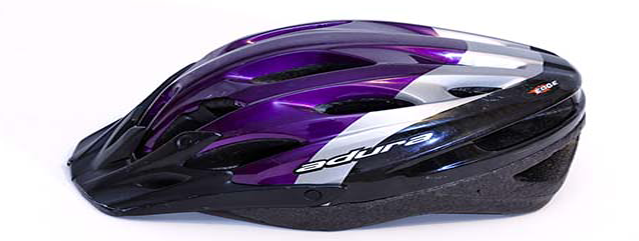
Are You Wearing a Helmet?

helmet

With the warmer temperatures finally here, maybe you’ve unlocked your bicycle from sitting stiff in the garage all winter, and have been riding it, hopefully with a helmet, to work every day. Or maybe you ride for pleasure – to feel spring wash over your face while inhaling the lilac scented breeze.

It’s estimated that nearly 70 million Americans ride bicycles. It goes without saying that riding a bicycle is good for your health, but doing so does not come without risks, especially if you are not wearing a helmet. More than 600,000 people go to emergency rooms each year for bicycle-related injuries. Each year, head injures account for about seventy-five percent of bicyclists who die from crashes. Out of the estimated 33 million children who ride bicycles each year, nearly four hundred die from crashes and 153 million go to the ER for head trauma.

But there’s good news: wearing a helmet can prevent eighty-eighty percent of TBIs from bicycle accidents. This solution is a no-brainer (no pun intended). But how many adults, and children do you see riding a bicycle without a helmet? You may wonder why some people choose not to wear a helmet, why some parents do not insist that their children wear one too. Perhaps parents don’t think it will happen to them or their children – fall into the road and hit their head on the pavement, or get hit by a car in the process. Perhaps they forgot their helmets and didn’t feel like turning around to go home and get them. Or they think they’ll look silly wearing a helmet. Better to look silly than the alternative.

I’ll stop lecturing and offer you this video about how to properly fit a helmet. It will only take three minutes and forty-seven seconds of your time. And, if you’re concerned about appearances, check out this site here for some stylish helmets.

If you cannot afford the more costly helmets, click here or here for less expensive ones (disclaimer alert: some of the larger corporate stores I don’t necessarily endorse). You might contact your local bike shop, school, or fire department for places to purchase helmets. This past March, during Brain Injury Awareness Month, the Brain Injury Association of America partnered with Nutcase Helmets to raise awareness about TBIs. For every helmet purchased, two dollars went to the BIAA. Is there a similar fundraising effort happening in your area?

The government is working to prevent brain injures from bicycle accidents by enacting legislation that would require bicyclists to wear helmets. Twenty states have some form of a helmet law, but most only apply to riders under eighteen. To see which states currently have laws in place click here.

Happy, and safe riding!

Read More

Driving after a Traumatic Brain Injury

For most of us, driving equates with independence and freedom. So when you are diagnosed with a traumatic brain injury and learn that you cannot drive at all, or need to limit your driving to daylight hours, you may feel the loss of independence you once enjoyed.

Even with a mild traumatic brain injury, changes in thinking, perception, vision, and motor skills can affect driving: the ability to stay in the correct lane, react quickly when another driver cuts in front of you, and seeing a green light change to red. With a TBI, individuals become easily fatigued and may have difficulty concentrating for long periods of time. They often have difficulty processing rapidly moving stimuli, such as passing cars and bicycles. http://www.biausa.org/brain-injury-community.htm

But the good news is that between thirty and sixty percent of individuals with a moderate to severe traumatic brain injury eventually return to driving. They do so with the help of driving rehabilitation professionals, who first evaluate cognitive functioning, judgment, and reasoning skills. They then conduct a road evaluation. Still, most TBI survivors are not adequately evaluated before getting behind the wheel again. http://www.biausa.org/brain-injury-community.htm

Family members can help too. If it’s your spouse, though, and you prefer to save your marriage, you may want to be evaluated by an objective party like a rehab professional. For me, though, my husband has been helpful (okay, so we’ve had a few spats). Since my TBI has presented with difficulty processing multiple stimuli and anticipating changes down the road, he has spent time with me driving – me behind the wheel and he the passenger – cueing me when to change lanes or to turn. He has also encouraged me not to engage in too much conversation while driving. Because I fatigue easily, I no longer drive long distances – either my husband drives or I take the bus. And he’s aware of what I call my “bad brain” days and initiates driving. More importantly, I’m aware of my “bad brain” days and either limit my driving, or do not drive at all.

Of course, making the change from limitless driving to limited driving has not been easy. I don’t see friends as much as I used to, and I spend more time indoors, especially during the winter. Thank goodness for social media!

How has your TBI limited your ability to drive? How have you learned to cope with the changes?


Read More