Rejection

rejection

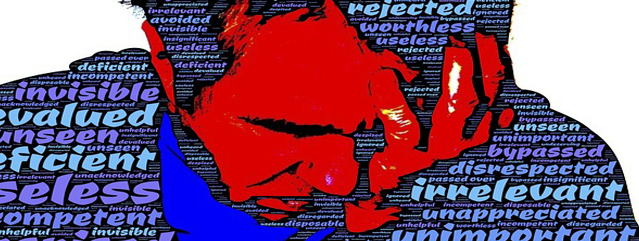
Remember that punched-in-the-gut feeling when the one guy (or girl) you had a crush on in high school went to the prom with your best friend instead of you? Or how about the first time you tried out for the soccer team and you didn’t make the cut? Rejection doesn’t feel very good. You might as well be a deflated balloon. That’s what it felt like for me when a literary journal recently rejected an essay of mine. I’ve received lots of rejections from journals, but this one, for no reason I can explain, hurt like a motherfucker. Because I’m generally a curious person, I can’t help but wonder why rejection causes humans so much emotional pain.

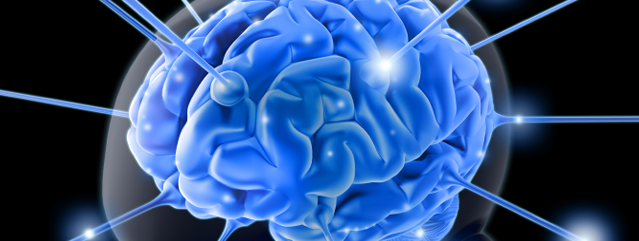
By nature, humans are social beings. Just as we need food and water to survive, we depend on others to feel a sense of belonging. To be rejected is like suffering from hunger and thirst. Because we have access to technology and other modern conveniences, we could manage to lead a solitary existence, though it would likely be a depressing one. To say “I’m in a lot of pain” after receiving a rejection letter from your top choice college, or after failing to land your dream job is not merely a figure of speech. It’s as real as physical pain. Through MRI studies, researchers have found that rejection stimulates many of the same areas of the brain involved with physical pain. As researcher Naomi Eisenberger describes, “As far as your brain is concerned, a broken heart is not so different from a broken arm.”

So, if we feel just as lousy when rejected as we do when experiencing physical pain, maybe the two cold be treated in the same way. That’s what researchers thought, and had a group of volunteer subjects take Tylenol for three weeks, while a second group of subjects were given a placebo. At the end of the study period, those who were given the Tylenol reported fewer episodes of hurt feelings. To confirm those reports, MRIs were taken of the Tylenol group, and showed less activity in the pain regions of the brain. Similar results have been found in real-life:  The same researchers conducted MRIs of individuals whose partners had recently ended their relationships, and when they were shown pictures of their ex-partners, the pain regions of the brain lit up.

Of course, while some individuals experience very few rejections over time (personally, I don’t know any of those people), others experience one rejection after another. And how each of us copes with rejection differs. Some are better at picking up and moving on; others crawl back into bed and bury themselves in the dark. (I’ll admit it: sometimes that’s where I end up, back in bed.) But, even though studies have proven that Tylenol can heal hurt feelings, pain serves us well. Since it’s an evolutionary advantage that we maintain social connections, though it means risking rejection, if we isolate ourselves, we’ll ultimately perish. So, the next time you receive a rejection of any kind, remember this: pain means you’re not as alone as you might think you are.

Read More
Blueberries and Post-Traumatic Stress Disorder

blueberries_and_ptsd

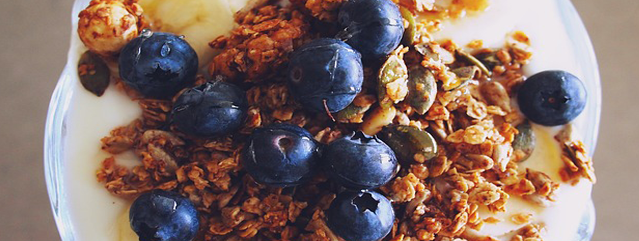
What did you eat for breakfast this morning? I had yogurt with blueberries, lots of blueberries. Akin to gulping down a mug of coffee, these plump babes are part of my morning routine. The sweet burst on my tongue makes me smile and, let’s admit, smiles are more attractive than frowns. If I miss a day munching on an overflowing cup of blueberries, my mojo is all messed up. Thank goodness for blueberries. Why? Not only are they packed with anti-inflammatory, heart-protective, brain-healing extracts (see earlier blog post), they are the anti-depressant of the future.

Based on animal studies, researchers at Louisiana State University’s School of Veterinary Medicine suggest that blueberries may help those suffering from post-traumatic stress disorder. With the rise in PTSD diagnoses, this is good news, particularly since suicide is a very real risk among sufferers.

When researchers induced PTSD-like symptoms in rats, they found that, in comparison to “normal” rats, they had unusually low levels of SKA2, a gene expressed at unusually low levels in people who have committed suicide. The PTSD rates were fed a blueberry-rich diet – as much as two cups – and the results showed increased levels of SKA2 compared to the non-PTSD rats fed a regular diet. The SKA2 study came in follow-up to an earlier one in which blueberry-fed rats showed increased levels of serotonin, the saving grace brain chemical that makes us happy. Researchers plan to further evaluate the link between blueberries and SKA2, with the hope of finding a single pathway by which blueberries can relive both depression and suicidal behaviors.

In the meantime, since blueberries are harmless (unless they are sprayed with chemicals even a veteran linguist can’t pronounce), why not feed your brain a cup or two? And blueberries just might be better than taking drugs: anti-depressants, particularly Serotonin Re-uptake Inhibitors (SSRIs), used to treat PTSD are not always successful. Paradoxically enough, they have been linked to increased suicide tendencies in some people.

Hmm … if two cups of blueberries a day equals, say, twenty milligrams of an SSRI a day, and there are three hundred sixty-five days in a year, if my math is correct, that comes to seven thousand three hundred milligrams of said SSRI versus seven hundred thirty cups of blueberries. Pass the blueberries please.

Read More

Cranial Sacral Therapy

cranial_sacral_therapy

Our bodies deserve to be treated with kindness. Right? If you are looking to do just that, whether you are living with post-traumatic stress disorder, a traumatic brain injury, chronic neck and back pain, migraines, or any other emotional or physical ailment, why not give cranial sacral therapy (CST) a try? Discovered in 1970 by osteopathic physician John E Upledger, CST is not as new-age as you might think.

I know, “cranial sacral” sounds nothing like new-age. You might cringe at the notion of someone messing with your neck and spinal column. But, with CST, there is no mess involved: back cracking, neck manipulation, muscle tugging. To help understand CST, I’ll interrupt here with a very brief lesson in Anatomy 101. More than most other parts of the body, the brain and spinal cord, which make up the central nervous system (CNS), influence the ability of the body to function properly. In turn, for the CNS to  function up to par, it relies heavily on a healthy craniosacral system: the membranes and fluid that surround, protect and nourish the brain, spinal cord, and the attached bones.

Since we endure stress every day – sitting at a desk for long hours, dragging a whining toddler through the grocery store, driving through bumper-to-bumper traffic – the body’s tissues tighten and create havoc in the craniosacral system. This can cause increased tension around the brain and spinal cord, interfering with the healthy functioning of the CNS, and even other systems it  interacts with.

With CST, the therapist uses her hands to evaluate the craniosacral system by gently feeling various parts of the body to assess for ease of motion, and for the flow of cerebrospinal fluid around the brain and spinal cord. Using soft-touch, she releases restrictions in the tissues, and mobilizes fluids around the spinal cord.

I’ve been curious about CST for a long time now, and, when I attended a workshop on CST at Vermont’s annual brain injury conference this past October, Kate Kennedy, the speaker, and veteran practitioner of the method, convinced me to consider it as an adjunct to alleviating my PTSD symptoms (hyper-vigilance, hyper-startle, nightmares) and a TBI (foggy-headedness, fatigue, poor concentration).

During the workshop, I learned, for CST to help heal our physical ailments, we need to let go of our emotions. Kate called them the “stuck places,” when she referred to the “emotions that take up space in our bodies” – in our muscles, tissues, bones. Vital to treating her clients, she asks them to talk about their individual traumas, as she feels for tight places, the places she senses being “over-charged.”  With the letting go of emotions, those tight areas also literarily let go.

Kate also reminded us that compensatory mechanisms influence the experience of the trauma. In other words, we possess layers upon layers of compensation before the trauma, and, for instance, how a migraine associated with a TBI heals depends a lot on what our past compensatory mechanisms were like. It’s not uncommon for people to hold onto the force of the injury – for example, neck tension.

The memory of trauma, pain, or any acute or chronic condition might very well be wrapped-up in your body. It’s true, our bodies hold our personal narratives. If we want to rid them of the upsetting narratives, or as Kate says, “The waste products of our central nervous system,” CST, with its gentle, listening approach can find those mucked-up places. I think of CST as empowering, as allowing you to gain access to your own body – the entire container of the self.

Are you ready to be empowered?

To find a CST therapist click here.


Read More

Stress and Aging

stress_and_aging

With the holidays fast approaching, what comes to mind? The scent of pine, fruitcakes, latkes, fasting, the seven principles of Kwanzaa. What about stress? Crowds, too many family gatherings, pressure to buy gifts with money you don’t have – all kinds of stress. Sorry to be a downer, but during this time of year I can’t help but think about the consequences of stress.

Though it’s an act of survival, meaning we either flee from or fight against harm, stress also speeds up the aging process. It wreaks havoc on the brain, heart, skin, and more. Of course, if we think about aging long enough, and what might happen as we age, we become stressed. Many of the older people I met during my stint as a wellness nurse for the aging population used to caution me, “Don’t get old, it’s no fun.” So aging itself causes stress. Michael Verano, a therapist who writes and speaks a lot about stress, and calls himself a “stress therapist,” calls this the “chicken and the egg scenario.” In other words, what comes first, stress as a result of aging, or aging as a result of stress?

Verano also asks why seemingly intelligent people “have stress reactions when they know the reaction will have no impact on the situation?” For me, I know, intellectually, that there is no reason to worry about the negative outcomes that might occur in advance of, say, a lecture about writing I’m giving a week from now. My imagination has a way of coming up with the all kinds of dire scenarios: What if I forget my notes? What if I bore the audience and everyone falls asleep? What if someone says I don’t know what I’m talking about?  What if, what if? So, mentally, and emotionally, I worry.

Maybe my worrying is how I cope? Is it how you cope? Verano suggests that most of us believe stress is a coping mechanism, and he has gathered a list of statements to support that exact sentiment. For example, expecting that something bad will happen helps reduce the emotional pain if that negative outcome does occur. With this in mind, Verano came up with ideas to counter-act what he calls a “sea of stress.” My favorite one is putting a time limit on stress reactions. Verano encourages us to set a timer for, say, fifteen minutes, and freak out. But he cautions us not to do so around expensive items, or in public places. If we did, then we might really have something to stress out about.

Now that I’ve pressed you to think about your own stress level and, therefore, have most likely made you stressed, I hope this post helps.

Happy holidays!


Read More

Post-Traumatic Stress Disorder: A Re-Wired Brain

rewired_brain

When exposed to danger, it’s natural to be afraid. Our bodies are triggered to make a split-second decision to either face the danger, or run from it: the “flight-or-fight” response. This is a healthy reaction. But in those with PTSD, they continue to be afraid and feel stressed long after the danger has passed – in my case, the speeding car at the Santa Monica Farmers’ Market. Symptoms, like avoiding places that trigger memories of the event, nightmares, depression, and hyper-vigilance – heightened awareness of your surroundings – may interfere with day-to-day-life. In hyper-vigilance, there is a perpetual scanning of the environment for sights, sounds, smells, or anything that is a reminder of threat or trauma. Just because you have been in a car accident, for instance, doesn’t mean you’ll be hyper-vigilant only for screeching brakes or beeping horns.

A month after my psychologist told me I had PTSD, I called her, wondering if I should go to the emergency room because my toe was red – I thought I had a life-threatening infection (I’m a nurse, and sometimes nurses know too much). I wouldn’t sleep in my bedroom on the third floor of my apartment because I was afraid of dying in a fire (I worked as a burn nurse years ago).

Months later, when shopping at an outside market with my father, I suddenly felt short of breath and couldn’t swallow. I told him he needed to drive me to the emergency room because I thought I was having a heart attack. I was a physically fit, non-smoking, lover-of-veggies thirty seven year old. I was not at risk for a heart attack. I called 911 three more times in the next few months, because I thought I was having allergic reaction: first to chocolate, then shellfish, then a bug bite. Miraculously, each time the EMT’s arrived, my rapid pulse slowed and my quivering body relaxed. I was suffering from panic attacks.

Before the accident, I had been known for my calm demeanor, and my no-worry attitude in my family. When working in the neonatal intensive care unit, I had been known for my in-control, I-can-handle-this disposition, even when a baby’s heart rate plummeted to near zero. After the accident, I felt as if there was a circuit breaker inside my brain that tripped at random moments, sending sparks into my nervous system. I didn’t know exactly where the breaker was located, or how to stop it from tripping. I reasoned that my brain had been re-wired. My reasoning was accurate – recently, I learned that researchers have found differences in the structure and circuitry of the brain between those with PTSD and those without it.

http://www.ptsd.va.gov/professional/treatment/overview/clinicians-guide-to-medications-for-ptsd.asp


Read More