
27 Wild Days

Do you let the mess surrounding you get in the way of your writing time? Maybe you see the dirty dishes in the sink and say, “I should wash those first before I sit down to write.” Or maybe the dirty laundry has piled up, and you can’t seem to let it be until after you write. Sound familiar? You’re not alone; we’re all prone to distraction. It must be in the water, or more likely on social media – the distraction devil – because I can’t tell you how many of my writing peers tell me that they must do this or that before they write. I admire those writers who get up at five in the morning, grab a cup of coffee then head directly for the chair. How do they do it? What’s in their water? Really, no amount of magic water will lure you to your writing chair (sorry if you thought this is where I was going – toward the water). But I do have an antidote to the distraction devil squatting in your head, and it’s better than even the cleanest, sweetest glass of water. I’ve taken the antidote myself, and I’m still here to talk about it. And I’m still writing. Here it is: 27 Wild Days. For more than 25 years, Laurie Wagner – writing teacher, writing coach, author of 7 books, mixed-media artist, and more – has used 27 Wild Days to help others “get to the heart of what they want to write about.” So what exactly is 27 Wild Days?

With 27 Wild Days, Laurie emails interested writers a series of brief videos every day for 27 days. In each video, she shares aspects of the writing practice that has served her for more than two decades. She then reads a poem, twice, and offers a prompt from that poem as a way to help you get your pen moving. She recommends writing for 12-15 minutes (I find 15 minutes works best, since it takes me a minute or two to get into a writing groove). That’s it! Fifteen minutes. Imagine 15 minutes every day for 27 days. That’s 405 minutes (feel free to check my math). During each fifteen-minute session, if you write three pages, (for me that’s seven-by-ten inch notebook pages, which equals a total of 362 words. Yes, I counted.), by the end of the 27 days you’ll have 9,774 words: an essay, 1/8th of a memoir, 1/6th of a novella.

Of course, life does get in the way, sometimes more than we’d like, so if you miss a day of Wild Writing, you can save the video for another time. It’s happened to me: I’m currently six days behind, but those videos are still in my inbox, labeled “Unread” so I can easily find them. The completed videos I save in a separate folder in my email account, waiting to rescue me from future bouts of writer’s block.

So, if you’re feeling stuck in your writing, or don’t know what to write about next, or think you have nothing to write about (not true, by the way), or you’re like me and find it hard to close your mind’s door on the “you-can-find-a-better-word” judge, try 27 Wild Days (it’s only $49). It’s freeing. It allows you to be intuitive, to let yourself go, write words that don’t make any sense, to get a little lost, to be stupid on the page.

That’s it. Now, as Cheryl Strayed would advise: “Write like a motherfucker.”


Read More

How to Write a Risky Personal Essay


risky_personal_essay

Are you a personal essay writer, or an aspiring personal essay writer who is reluctant to write the truth about yourself because you fear others will judge you for your flaws?

This past May, I attended the Muse and Marketplace, an annual writing conference held by the Boston based writing center, Grubstreet. The details of many of the workshops are worthy of sharing with you, but, since I’m a personal essay writer and memoirist, one in particular resonated with me: “Writing a Risky Personal Essay.” A poet, journalist, critic, writing instructor, award winning memoirist, and more, Ethan Gilsdorf opened the session with this quote by  Cheryl Strayed: “When people are honest and vulnerable, we usually respond with our own honesty and our own vulnerability, and with kindness.”

How do you begin writing a risky personal essay? Gilsdorf advises to first explore a “burning question about your life,” something “messy,” human. Write a list of topics: a crisis, an unresolved conflict with family or yourself, questions from your past that have yet to be answered, a particular obsession of yours, or something considered taboo.

Don’t go searching for a topic. “Let the topic select you,” Gilsdorf encourages. I think of what Ann Hood said in a workshop I attended at Grub Street: “Write about what keeps you up at night.” Once the topic “finds you,” and you’re ready to wrestle with your past on the page, Gilsdorf reminds us to focus on the “building blocks” of a personal essay: employ scene, or dramatic moments, and reflection, where you step back and make sense of the events that have occurred. The essay should reveal how you, as a character, have changed. Who are you now versus then? How you have grown as a result of the conflict? To reveal character, include your quirks, and your voice. To better understand this ambiguous term, Gisldorf quotes Julie Wildhaber: “Voice is the personality of the story.” You want to create a distinct persona on the page, one the reader can trust. For instance, How you write about your experience growing up with a single mother will be very different than someone else’s experience. Voice is influenced by tone, or the attitude of the character. Are you angry, somber, anxious?

It’s worth noting that the essay doesn’t have to conclude with resolution, but it should end with what you have learned. Readers are not interested in reportage of events, or being left unsatisfied. It’s helpful to think of the essay as having two layers: the context, or plot – this happened then that happened – versus the deeper, emotional layer, the stuff we often find difficult to write about. Sue Silverman refers to theses layers as the “voice of innocence versus the voice of experience.” Vivian Gornick calls them “The “Situation and the Story.”

As a writing exercise, here’s what Gilsdorf suggested in the workshop: Choose a risky topic and go back to a key, dramatic moment in time. To recreate it on the page, employ dialogue, scene, and action. For me, it helps to use the five senses. Be careful of over-explaining. Doing so runs the risk of booting readers out of scene. Then write a section that reflects on that scene. Examine what happened, why it happened, what you now know about yourself that you didn’t know then. Explain how and why you’ve changed. Is there a question you are still unable to answer? Explain why.

When writing about an experience emotionally close to us, it’s difficult to see prose that smacks of self-indulgence. Gilsdorf cautions us to be aware of this pitfall. When revising the essay, examine places that sound over-sentimental.

2966018

To help you get a better sense of what the risky personal essay looks like, I encourage you to read Gilsdorf’s essay, “The Day My Mother Became a Stranger,” published this past May in Boston Magazine.

Here are some other resources Gilsdorf suggested:

The Source of All Things, a memoir by Tracey Ross

All Aboard,” an essay by Dave Demerjian.

Cubby, Skinny, Accepting,” and essay by Cole Kazdin

Good-luck with your risky essay!


Read More

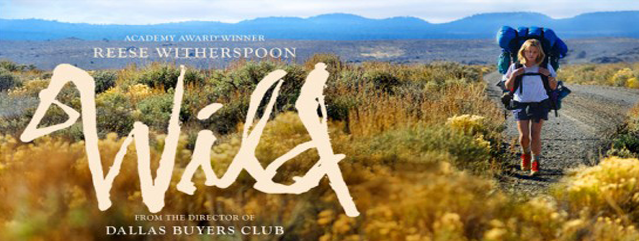
Walking Toward Understanding: A Review of the Movie Wild

wild_movie

“I’m sorry you have to walk a thousand miles just to …” Cheryl Strayed’s ex-husband, Paul, tells her. But “just to” what? Early in Wild, Strayed finishes the sentence for her ex-husband: “Why do I have to walk a thousand miles?”

At mile one, Strayed is not sure why. She’s not even sure at mile eight, twenty-eight, or thirty-six. She lumbers around sharp curves and up and down rugged terrain in order to find the answer, or answers. Strayed’s father was an abusive alcoholic. Her mother, whom she calls “the love of my life,” died of cancer at forty-five. Strayed sought refuge in heroin, and sex with multiple partners, which is what led to the demise of her marriage. She finds the answers to the why part of her hike only at mile one thousand. Strayed hikes toward an understanding of her tumultuous life that seduced her into the woods. Much like how the memoir is structured, the movie depicts both her physical and emotional journeys, the present and past paralleling one another the entire one thousand miles. Of course, we can’t help but lumber along with her.

Wild is not only about Strayed’s yen to find the answers as to why she chose to venture into “wild” territory. It’s about identity, the body, forgiveness. Several tropes represent these themes: the heavy weight of her backpack on her shoulders and back calls to mind the burden of her guilt for past wrongs. The bruises she is left with remind us of the pain of her present, and past, life. Lifting herself up under the weight of the pack, then again when she slips in a river signifies perseverance. The pruning of the pack partway through her trek can be likened to the shedding of her guilt.

The sex scenes reveal Strayed’s confusion: she conflates sex, her body, with worthiness. When a reporter pulls his car over to the side of the road – Strayed is hoping to catch a ride – he interviews her for an article and calls her a hobo. Strayed is quick to clarify that she is not a hobo, that she’s simply hiking the PCT. But she has no place to call home, no anchor, no words to describe who she is. Strayed is not a mother or a wife, labels her mother once assigned to herself.

A series of metaphorical purges (guilt purges) take place: when strayed vomits after a night of drinking with other hikers, when she erases her ex-husband’s name from the sand, and when she finally breaks down sobbing, and says, “I miss you Mom.”

I could share more, but if you have yet to see Wild, or read the book, I don’t want to spoil the ninety-four day hike for you – the one hundred degree afternoons, the sweaty silences, the blue nights and sun-bleached mornings.

So, lace up your hiking boots, strap on your backpack, and join Cheryl Strayed at the head of the PCT.


Wild Director: Jean-Marc Vallee. Staring Reese Witherspoon, Laura Dern, and Gabby Hoffman.

Read More