Football and Concussions

football.concussions

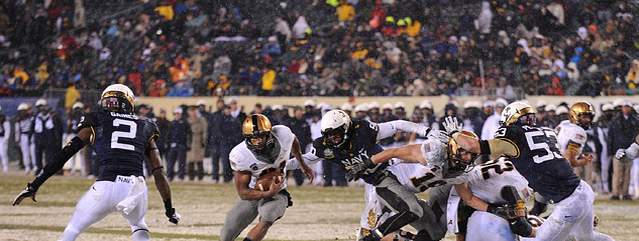
It’s football season, and fans look forward to Sunday afternoons – sitting close to the television, cheering on their most-loved teams and screaming expletives at the screen when the opposition scores a touchdown.

But I am here to share with you a voice that has recently spoken much louder, not about their love of football, but about the dangers of a sport in which the primary goal is to do everything, and anything, possible to prevent the opposing team from scoring a touchdown, even if it means hurling all two hundred plus pounds of body weight at the opponent and mowing them down into the hard turf. That voice is HealthGrove, whose stated mission is “to turn complicated data into vivid and contextually-rich visualizations and knowledge products. When it comes to football and concussions, they have done just that.

HealthGrove examined data from the U.S. National Electronic Injury Surveillance System (NEISS), which gathers injury-related reports from one-hundred emergency rooms every year. The NEISS data showed that the football concussion rate far exceeded all other sports, with an estimated 17, 627 concussions occurring every year. This number is nearly double basketball and soccer related concussions combined.

With all the media attention and research focusing on football-related concussions, professional players are retiring and speaking out about their fears of allowing their children to be subjected to a sport whose brutal body maneuvers have proven to inflict lasting harm to the brain.

So if your child asks you to sign him up for Pop Warner football, please, think about it before saying yes. Remember: 17, 627 football related-concussions occur every year.

It’s worth noting that, as of 2014, there were two hundred sixty five million active soccer players in the world. As the sport has grown in popularity, so have concussions. According to NEISS data, out of all the sports they listed, soccer ranks third when it comes to concussions. Just before I finished writing this post, I learned about a New York City teenager, Thomas Jakelich, who died on  October 26 due to a head injury sustained in a collision with a soccer player of the opposite team. My sincere condolences go out to his family and friends.


Read More

Do Omega 3 Supplements Heal a Traumatic Brain Injury?

omega-3


With a family history of heart disease, I decided to err on the side of caution and started taking omega 3 supplements years ago. I had read that they are good for your heart, and help regulate cholesterol. But I did not know about the greater benefits packed within the glycerin coating.

The brain, consisting of more than sixty percent fat, is the fattiest organ in the body.  Twenty percent of that number is comprised of an omega 3 fatty acid called DHA, or docosahexanoic adic. DHA is found in the central nervous system and is believed to help maintain optimal brain function, reduce inflammation, and increase fluidity within cell membranes. Recent research shows that omega 3, primarily DHA and EPA (another fatty acid that helps reduce inflammation) are both beneficial in the treatment of traumatic brain injuries. Since the pathology of a TBI involves cellular destruction and death, researchers have concluded that omega 3 can help mitigate that process. But, as research tends to go, more studies are needed to look closely at the benefits and risks of treating TBIs with omega 3.

Of course, it’s always better to choose foods rich in omega 3 rather than taking supplements, because those foods contain other nutritional benefits such as protein. EPA and DHA are mostly found in fatty fishes like salmon. ALA, or alpha-linoleic acid, is another omega 3 found in plant sources such as nuts and seeds.

Here’s the disclaimer: Though the FDA has approved medications with omega 3 to treat high levels of triglycerides, they do not approve the use of nutritional supplements to treat TBIs. Because there are not enough scientific studies to prove the effectiveness and safety of omega 3, the FDA explicitly warns  consumers to avoid supplements that have been marketed to prevent, treat, or cure TBIs, including concussions. Of greatest concern is that athletes who have sustained a concussion will take omega 3, believing the supplement will hasten their recovery, then return to the field sooner than they should. Over the past few years, sports guidelines related to concussions have been updated, and clearly note that the first ten days after injury is the period of time posing the greatest risk for sustaining another concussion.

I am not a physician, nutritionist, or pharmacist, and don’t pretend to be an expert on nutritional supplements, so if you are considering taking omega 3 for a TBI, I encourage you to do your research, and, of course, speak with your doctor (please accept my apologies if I sound like a pharmaceutical commercial). But, if you are curious by nature and must know where to learn about omega 3 dosing for a TBI, click here.


Cheers to a healthy brain!


Read More

From Nausea to Plaques and Tangles: Traumatic Brain Injuries and Alzheimer’s Disease

You might have suffered a concussion playing football as a high school or college student, and because you felt nauseous and dizzy, you rested for a few days, just as your doctor advised. Those few days passed and you felt like your old self again, ready to return to the field.

Fifty years later, your family is concerned about your memory: you don’t know what month it is, and you can’t recall the conversation you had with your son two hours earlier. Your wife eventually takes you to a neurologist, who diagnosis you with Alzheimer’s disease. You’re surprised. After all, you have no family history of Alzheimer’s, and you’ve worked hard to keep your brain sharp: you’ve been an avid reader and crossword puzzle fanatic for years. The neurologist must be wrong, you think. Or maybe you haven’t considered the concussion you sustained half a century earlier.

A brain injury is a risk factor for Alzheimer’s. It’s possible that all it takes is one concussion. On autopsy, an Alzheimer’s brain reveals beta amyloid deposits – proteins that collect between nerve cells. Tau, tangled fibers of proteins, collects within the cells. As we age, it’s not unusual to expect protein build up within our brains, but in Alzheimer’s, they accrue in greater amounts, impeding communication between nerve cells, causing memory impairment and personality changes.

In autopsy studies of those who have died in the acute phase of a traumatic brain injury, researchers have found amyloid deposits in thirty percent of people, including children, and increased tau levels in the spinal fluid of those who died of a severe traumatic brain injury.

But studies have proven that amyloid is a mysterious protein as it relates to head trauma. Researchers have learned that individuals with mild cognitive deficits, who reported a history of brain trauma, showed brain changes consistent with Alzheimer’s. But those with no cognitive impairment, who also reported a history of brain trauma, did not show any changes.

So, at least there is hope – if you have suffered a brain injury, maybe you’ll be among the lucky and will escape the sticky plaques and fibrous tangles.

http://www.medscape.com/viewarticle/818376 http://depts.washington.edu/adrcweb/research-101/traumatic-brain-injury/

Read More