Rejection

rejection

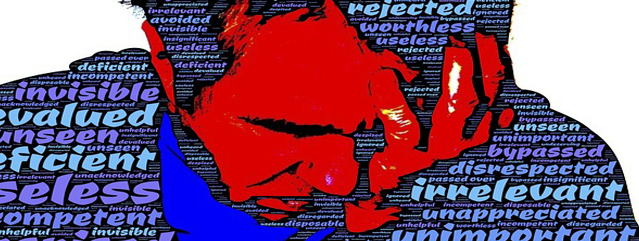
Remember that punched-in-the-gut feeling when the one guy (or girl) you had a crush on in high school went to the prom with your best friend instead of you? Or how about the first time you tried out for the soccer team and you didn’t make the cut? Rejection doesn’t feel very good. You might as well be a deflated balloon. That’s what it felt like for me when a literary journal recently rejected an essay of mine. I’ve received lots of rejections from journals, but this one, for no reason I can explain, hurt like a motherfucker. Because I’m generally a curious person, I can’t help but wonder why rejection causes humans so much emotional pain.

By nature, humans are social beings. Just as we need food and water to survive, we depend on others to feel a sense of belonging. To be rejected is like suffering from hunger and thirst. Because we have access to technology and other modern conveniences, we could manage to lead a solitary existence, though it would likely be a depressing one. To say “I’m in a lot of pain” after receiving a rejection letter from your top choice college, or after failing to land your dream job is not merely a figure of speech. It’s as real as physical pain. Through MRI studies, researchers have found that rejection stimulates many of the same areas of the brain involved with physical pain. As researcher Naomi Eisenberger describes, “As far as your brain is concerned, a broken heart is not so different from a broken arm.”

So, if we feel just as lousy when rejected as we do when experiencing physical pain, maybe the two cold be treated in the same way. That’s what researchers thought, and had a group of volunteer subjects take Tylenol for three weeks, while a second group of subjects were given a placebo. At the end of the study period, those who were given the Tylenol reported fewer episodes of hurt feelings. To confirm those reports, MRIs were taken of the Tylenol group, and showed less activity in the pain regions of the brain. Similar results have been found in real-life:  The same researchers conducted MRIs of individuals whose partners had recently ended their relationships, and when they were shown pictures of their ex-partners, the pain regions of the brain lit up.

Of course, while some individuals experience very few rejections over time (personally, I don’t know any of those people), others experience one rejection after another. And how each of us copes with rejection differs. Some are better at picking up and moving on; others crawl back into bed and bury themselves in the dark. (I’ll admit it: sometimes that’s where I end up, back in bed.) But, even though studies have proven that Tylenol can heal hurt feelings, pain serves us well. Since it’s an evolutionary advantage that we maintain social connections, though it means risking rejection, if we isolate ourselves, we’ll ultimately perish. So, the next time you receive a rejection of any kind, remember this: pain means you’re not as alone as you might think you are.

Read More

Visual Art and the Brain

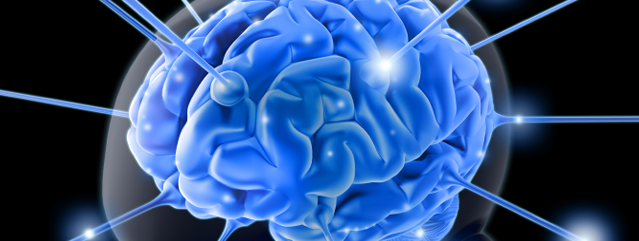
Do you enjoy drawing, coloring, painting? So what if you are not a Picasso or a Van Gogh.  What I’m about to share with you just might inspire you to head out to your local art shop for colored pencils and a drawing pad. Research suggests that creating visual art enhances memory, and improves interactions between certain parts of the brain. Based on feedback from a small group of retirees, improvement in brain functioning may also strengthen one’s psychological state of mind.  This seems logical. After all, as researchers say, “The creation of visual art is a personal integrative experience—an experience of ‘flow,’ in which the participant is fully emerged in the creative activity.” With that integration, brain connections are strengthened, which, in turn, boosts self-confidence.

For individuals with a TBI, art is a form of therapy. It restores connections in the brain damaged by trauma. This restoration process is called neuroplasticity: the changes in nerve pathways of the brain that affect behavior. Yes, we can actually re-wire our brains by intentionally changing the way we think and do things. Since 2010, therapists at the National Intrepid Center of Excellence (NICoE), at Fort Belvoir, Virginia have been using art as a tool in treating war veterans who have sustained TBIs.

Art therapy does more than help to heal an injured brain. Jackie Briggs, a therapist at NICoE says, “For service members who might already have trouble expressing themselves … art therapy gives them a chance to use free expression, allowing whatever needs to bubble up from below the surface to be seen and evaluated.” When thoughts “bubble” up, service members gain a better understanding of their symptoms such as irritability, anxiety, and depression. With that deeper understanding, their relationships benefit, because they are able to effectively unearth their buried feelings and thoughts.

At NICoE, service members decorate blank papier-mâché masks. The reasoning behind using this form of art therapy is based on how trauma works; it blocks the part of the brain responsible for speech and language. The image of the mask itself is tangible, a concrete method of showing how service members are feeling. As one of the therapists at NICoE says, “the masks have given service members a visual voice.” The added benefit is that they know they are not being judged, or critiqued. Making the masks affords them the opportunity to explore, engage in the process of creating something that encourages free expression.

The formof art doesn’t matter. Art is art. Juliet Madsen, a veteran of two wars who sustained a TBI when a roadside bomb hit her convoy, likes to doodle. In an email exchange with her this past fall this is what she had to say about doodling:

Doodling stimulates your creative side, allows your body to calm down, takes the active stresses and puts them on the back burner, can sometimes give you an artistic answer to your problems if you open to it, and gives you a time out… I am a big fan. Once you are an accomplished Doodle Artist take a set of colored pencils to your work or thin point sharpies, then you are really working it.

Juliet inspired me. I bought myself a sketchpad and sharpie and started doodling. I’m now a big fan too!

Are you a doodler, a painter, a sketcher, a creator of masks? If not, why not join in. Grab a sharpie, a pen or pencil, a paintbrush. As Juliet said, “Stimulate your creative side.”

Cheers to free expression, to an integrative experience – and to a healthy brain!

If you want to learn more about the masks service members have created, read the “The Invisible War on the Brain,” published in February 2015 by National Geographic.

http://ngm.nationalgeographic.com/2015/02/table-of-contents

Read More

Post-Traumatic Stress Disorder: Blame it on Genetics and Personal History

blame_it_on_genetics

How do you predict who will suffer from PTSD after a traumatic event and who will not? Most people who experience a traumatic event actually do not suffer from PTSD: about 56% of people will experience a traumatic event in their lifetime, but only 8% will develop PTSD.

Research studies show that individuals with a variant of two genes – TPH1 and TPH2 – are more likely to develop symptoms. These genes, which control levels of serotonin – a chemical in the nervous system that regulates mood, sleep, and alertness – are altered in PTSD sufferers.

Genetics aside, other factors increase the risk for PTSD:

Having experienced other trauma earlier in life, including childhood abuse or neglect.

Having other mental health problems, such as anxiety or depression Lacking a good support system of family and friends Having biological (blood) relatives with mental health problems, including PTSD or depression.

Gender: Because there is more societal pressure on females to take care of others, we are twice as likely than men to suffer from anxiety disorders, such as PTSD.

Personality: People who are worriers, and cannot tolerate unpredictability. These traits may have a biological basis. It’s possible that the amygdala, the part of the brain that controls emotion, is oversensitive in worriers.

Have you been diagnosed with PTSD? If so, it may come as a relief to know that you can blame your symptoms on factors beyond your control.


http://www.ncbi.nlm.nih.gov/books/NBK49142

http://www.mayoclinic.org/diseases-conditions/post-traumatic-stress-disorder/basics/risk-factors/con-20022540

http://www.nimh.nih.gov/statistics/1AD_PTSD_ADULT.shtml

http://newsroom.ucla.edu/releases/ucla-study-identifies-first-genes-231248

http://psychnews.psychiatryonline.org/newsArticle.aspx?articleid=1130400

Read More

Post-Traumatic Stress Disorder: A Re-Wired Brain

rewired_brain

When exposed to danger, it’s natural to be afraid. Our bodies are triggered to make a split-second decision to either face the danger, or run from it: the “flight-or-fight” response. This is a healthy reaction. But in those with PTSD, they continue to be afraid and feel stressed long after the danger has passed – in my case, the speeding car at the Santa Monica Farmers’ Market. Symptoms, like avoiding places that trigger memories of the event, nightmares, depression, and hyper-vigilance – heightened awareness of your surroundings – may interfere with day-to-day-life. In hyper-vigilance, there is a perpetual scanning of the environment for sights, sounds, smells, or anything that is a reminder of threat or trauma. Just because you have been in a car accident, for instance, doesn’t mean you’ll be hyper-vigilant only for screeching brakes or beeping horns.

A month after my psychologist told me I had PTSD, I called her, wondering if I should go to the emergency room because my toe was red – I thought I had a life-threatening infection (I’m a nurse, and sometimes nurses know too much). I wouldn’t sleep in my bedroom on the third floor of my apartment because I was afraid of dying in a fire (I worked as a burn nurse years ago).

Months later, when shopping at an outside market with my father, I suddenly felt short of breath and couldn’t swallow. I told him he needed to drive me to the emergency room because I thought I was having a heart attack. I was a physically fit, non-smoking, lover-of-veggies thirty seven year old. I was not at risk for a heart attack. I called 911 three more times in the next few months, because I thought I was having allergic reaction: first to chocolate, then shellfish, then a bug bite. Miraculously, each time the EMT’s arrived, my rapid pulse slowed and my quivering body relaxed. I was suffering from panic attacks.

Before the accident, I had been known for my calm demeanor, and my no-worry attitude in my family. When working in the neonatal intensive care unit, I had been known for my in-control, I-can-handle-this disposition, even when a baby’s heart rate plummeted to near zero. After the accident, I felt as if there was a circuit breaker inside my brain that tripped at random moments, sending sparks into my nervous system. I didn’t know exactly where the breaker was located, or how to stop it from tripping. I reasoned that my brain had been re-wired. My reasoning was accurate – recently, I learned that researchers have found differences in the structure and circuitry of the brain between those with PTSD and those without it.

http://www.ptsd.va.gov/professional/treatment/overview/clinicians-guide-to-medications-for-ptsd.asp


Read More

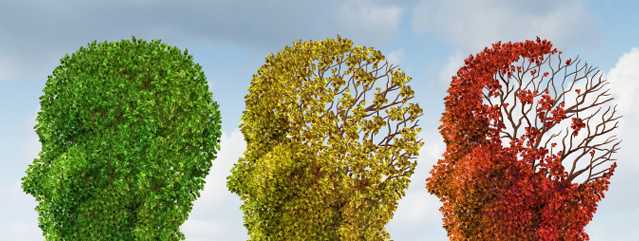
Traumatic Brain Injuries 101

brain_injuries_101

Traumatic Brain Injuries 101 In the United States, 52,000 deaths occur each year from a traumatic brain injury (TBI), and 5.3 million people live with disabilities due to a TBI. But a TBI does not necessarily result from a major trauma, like skiing into a tree or plummeting off a roof. You can sustain a TBI from bumping your head on a kitchen cabinet door, or when you and your five year old smack foreheads while wrestling. Penetrating injuries – from a bullet, or other objects that enter the skull – can also cause TBI’s. But the most common causes are from auto accidents and falls.

TBIs range from mild to severe. Mild injuries – concussions – are the most common. Symptoms include confusion, irritability, nausea, fatigue, amnesia around the event, and loss of consciousness up to 30 minutes. But it’s possible to suffer a mild TBI and not lose consciousness. Also, being diagnosed with a mild TBI does not mean the consequences are mild, such as decreased concentration and attention, getting lost and confused, headaches, dizziness, depression, mood swings, sleep disturbances, and difficulty with balance. Many people experience these symptoms for years, which is what happened to me. I still suffer from poor concentration, depression, difficulty multi-tasking, planning and even judging distance. When driving, for instance, I have trouble thinking ahead (at least that’s what my husband tells me). But it’s true. My brain can’t process all the stimuli coming at me: other cars, beeping horns, bicycles, and joggers. It doesn’t have enough room to focus on getting in the left lane soon enough so I can take a left turn.

In moderate TBI’s, the individual loses consciousness from 30 minutes to 24 hours, and in severe TBIs, longer than 24 hours. Symptoms are worse for people diagnosed with moderate to severe TBIs. They tend to exhibit obvious behavioral issues like aggression, and suffer greater physical impairments, like decreased ability to smell (anosmia), ringing in the ears (tinnitus), paralysis, and slurred speech.

But the challenge is in diagnosing TBIs, especially mild ones (like I said earlier, mild from a trauma perspective, not from a consequence perspective. I’ll address the nuances of this in a future post). My TBI was diagnosed in 2006, three years after I sustained the injury. During the immediate hours after the accident, the doctors where concerned with my other injuries – stopping the bleeding from my ruptured spleen and stabilizing my fractured pelvis. So I struggled in the workplace for two years, and at home, blaming my symptoms wholly on PTSD.

http://www.northeastern.edu/nutraumaticbraininjury/consequences-of-tbi/

Read More