Concussions

For some – especially those of us who have sustained a traumatic brain injury (TBI) – football is synonymous with concussion. And since football season is upon us once again, I thought this would be the perfect time to re-visit the topic of concussions. To get more to the point, as the Brain Injury Association of Nova Scotia asks of us – both the brain-injured and non-brain-injured – “Please keep this in mind …”

A concussion is an invisible disability.

Everyone’s brain and brain injury are different. It is a many layered issue. If you’ve had a concussion and recovered, what worked for you may not be best for me.

A concussion is not just a headache. It affects everything I do.

It’s not that I don’t want to do things, it’s that I can’t.

I’m doing my best, but my best may not be your best.

My symptoms may change day-to-day. Because I’m doing better one day, does not mean I’m better overall. If I have a bad day after a good one, I am not making it up.

I am not attention-seeking. My pain is real. I need validation.

Due to my unpredictable symptoms, I have trouble meeting timeline expectations (i.e. in work settings).

If I over-exert myself physically or mentally, I may feel the effects of that for many days.

My emotions may be heightened. I may be more reactive to situations that didn’t bother me before.

I may have stress and anxiety from my injury and the recovery process.

I may have issues with my mental health afterward.

My self-worth may be impacted, especially if is tied to my ability and productivity.

I may need some scheduled down-time and alone time. It doesn’t mean I don’t enjoy your company; I just need to take care of myself first.

The fact that it’s hard for me to articulate my symptoms and feelings is part of the injury.

Thank you, everyone, for reading this!

And thank you, Brain Injury Association of Nova Scotia.


Read More

Football and Concussions

football.concussions

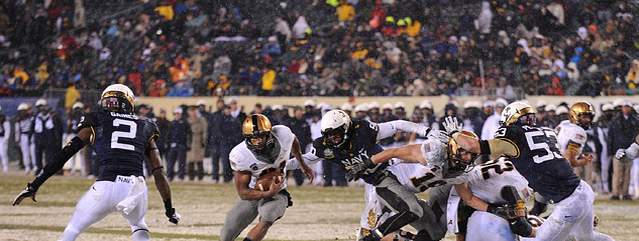
It’s football season, and fans look forward to Sunday afternoons – sitting close to the television, cheering on their most-loved teams and screaming expletives at the screen when the opposition scores a touchdown.

But I am here to share with you a voice that has recently spoken much louder, not about their love of football, but about the dangers of a sport in which the primary goal is to do everything, and anything, possible to prevent the opposing team from scoring a touchdown, even if it means hurling all two hundred plus pounds of body weight at the opponent and mowing them down into the hard turf. That voice is HealthGrove, whose stated mission is “to turn complicated data into vivid and contextually-rich visualizations and knowledge products. When it comes to football and concussions, they have done just that.

HealthGrove examined data from the U.S. National Electronic Injury Surveillance System (NEISS), which gathers injury-related reports from one-hundred emergency rooms every year. The NEISS data showed that the football concussion rate far exceeded all other sports, with an estimated 17, 627 concussions occurring every year. This number is nearly double basketball and soccer related concussions combined.

With all the media attention and research focusing on football-related concussions, professional players are retiring and speaking out about their fears of allowing their children to be subjected to a sport whose brutal body maneuvers have proven to inflict lasting harm to the brain.

So if your child asks you to sign him up for Pop Warner football, please, think about it before saying yes. Remember: 17, 627 football related-concussions occur every year.

It’s worth noting that, as of 2014, there were two hundred sixty five million active soccer players in the world. As the sport has grown in popularity, so have concussions. According to NEISS data, out of all the sports they listed, soccer ranks third when it comes to concussions. Just before I finished writing this post, I learned about a New York City teenager, Thomas Jakelich, who died on  October 26 due to a head injury sustained in a collision with a soccer player of the opposite team. My sincere condolences go out to his family and friends.


Read More

Football and Suicide

post_concussive_syndrome

Twenty-two-year-old Ohio State football player Kosta Karageorge had a history of concussions. Though we don’t know the inciting event that resulted in his suicide, research suggests that athletes who sustain concussions are more likely to develop depression, disorientation, and suicide. How so? You might ask. Chronic traumatic encephalopathy (CTE), a degenerative disease of the brain, originally called “punch-drunk” syndrome in boxers, is seen in any athlete who sustains repeated head trauma, especially football players. It’s not unreasonable to assume that Karageorge was a victim of this mysterious disease, which can only be diagnosed on autopsy. “I am sorry if I am an embarrassment but these concussions have my head all f***ed up,” Karageorge said three days before he shot himself (www.washingtonpost.com/football-player-kosta-karageorge).  According to his sister, Karageorge experienced confusion and mood swings, symptoms, which, in addition to aggression and gait disturbances, are not uncommon in those with CTE (www.marquettewire.org/karageorges-death-shows-concussion).

Though football players of any age may suffer from CTE, younger athletes are particularly vulnerable. Because their brains are not fully developed, they are at risk for second impact syndrome, a potentially fatal condition that occurs when a player sustains a concussion then returns to the game and suffers a subsequent concussion before the first one has had time to heal (www.usatoday.com/highschool football deaths). More sad news: the prevalence of depression among teenagers who sustain concussions is three times higher (http://www.ncbi.nlm.nih.gov/pubmed/24355628).

If you haven’t been following the news about brain trauma in football players, you might, or might not, be surprised to learn that, out of one hundred twenty-eight deceased players, as many as one hundred one had CTE (www.pbs.org/concussion). What steps are being taken to prevent football players from these unnecessary and brutal deaths? Both the National Football League and the National Collegiate Athletic Association settled class-action lawsuits in 2013 challenging concussion protocols. But, finally, this past November, a former football player, who sustained concussions playing the game, filed the first class action lawsuit against the Illinois State High Athletics Association.

Another young football player has also come out about his history of concussions, and subsequent plunge into depression. Though heartbreaking, his story will leave you more than informed; it will make you pause and think twice before you enroll your child in high-school football (www.huffingtonpost.com/football-concussions).

Let’s take a moment of silence for the others who chose to end their lives because of football (www.ajc.com/football-suicide):

Owen Thomas: The first, and youngest, collegiate player diagnosed with CTE.

Terry Long: An offensive lineman for the Steelers. Shot himself on June 7, 2005. Age forty-five.

Andre Waters: Played for the Steelers and the Cardinals. Shot himself on Nov. 20, 2006, at age forty-four.

Shane Dronett: A defensive lineman in the NFL. On Jan. 21, 2009, shot himself. Age forty-eight.

Dave Duerson: Played for the Bears, Giants and Cardinals. On Feb. 17, 2011, he shot himself in the chest. Age fifty.

Ray Easterling: Played for the Falcons. On April 19, 2012. Shot himself in his Richmond, Va., home. Age sixty-two.

Junior Seau: A linebacker for the Chargers, Dolphins and Patriots. On May 2, 2012, shot himself in the chest. Age forty-three.

Jovan Belcher: A linebacker for the Kansas City Chiefs. Shot and killed his girlfriend, then shot and killed himself. He was twenty-five.

Paul Oliver: Played for the University of Georgia, then the Chargers. Shot and killed himself on Sept. 24, 2013. Age twenty-nine.

If you’re looking for a holiday gift for a football fan, or a non-fan, check out Steve Almond’s Book, Against Football.  An entire chapter is devoted to football and traumatic brain injuries. The research is both startling, and disturbing.


Read More