Taking The Car Keys Away From My Father
TEST_Image

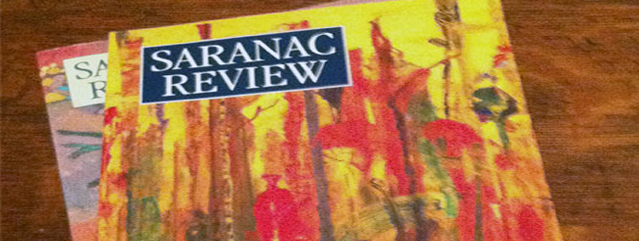
I’m over-the-moon excited to announce that my essay, “Reaching for the Keys,” has been published in Saranac Review  It’s about my emotional struggle to take the car keys away from my father, who was diagnosed with Alzheimer’s disease in 2012. I spent a year and a half working on it – typing, deleting, reflecting, pacing, tearing up drafts and starting over, pulling my hair out, waking up in the night to scratch down notes. Why all the fretting? Though any piece of creative work takes time to craft into a piece of salient art, writing this essay challenged me more than most other essays I have written. How so? While I know I made the right choice by taking the keys away from my father, the act of writing the essay brought me uncomfortably close to particular emotions and a long list of complexities that speak to the human condition (at it’s core, what this essay is really about): fear, anger, remorse, guilt, truth, loyalty, mortality, illness, aging, independence. I suppose that’s partly what creative writing should do – push us a little too close to the edge of the metaphorical embankment.

There’s also an ironic element to the piece, but I don’t want to give too much away here (apologies for the teaser). To quench your curiosity, relieve your hunger, I encourage you to read the essay. The Journal is available for purchase at: Saranac Review.

The Saranac Review was born in 2004 out of four writers’ vision to open a space for the celebration of many voices including those from Canada. Attempting to act as a source of connection, the journal publishes the work of emerging and established writers from both countries. As our mission states, “The Saranac Review is committed to dissolving boundaries of all kinds, seeking to publish a diverse array of emerging and established writers from Canada and the United States. The Saranac Review aims to be a textual clearing in which a space is opened for cross-pollination between American and Canadian writers. In that way, we aim to be a textual river reflecting diverse voices, a literal “cluster of stars,” an illumination of the Iroquois roots of our namesake, the word, Saranac. We believe in a vision of shared governance, of connection, and in the power of art.

Saranac Review

Read More

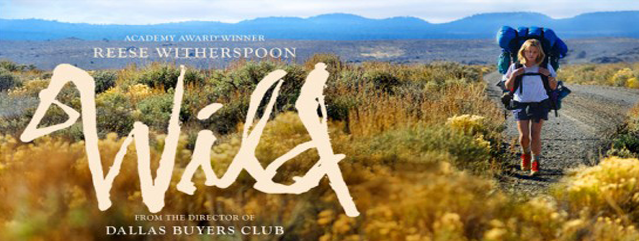
Walking Toward Understanding: A Review of the Movie Wild

wild_movie

“I’m sorry you have to walk a thousand miles just to …” Cheryl Strayed’s ex-husband, Paul, tells her. But “just to” what? Early in Wild, Strayed finishes the sentence for her ex-husband: “Why do I have to walk a thousand miles?”

At mile one, Strayed is not sure why. She’s not even sure at mile eight, twenty-eight, or thirty-six. She lumbers around sharp curves and up and down rugged terrain in order to find the answer, or answers. Strayed’s father was an abusive alcoholic. Her mother, whom she calls “the love of my life,” died of cancer at forty-five. Strayed sought refuge in heroin, and sex with multiple partners, which is what led to the demise of her marriage. She finds the answers to the why part of her hike only at mile one thousand. Strayed hikes toward an understanding of her tumultuous life that seduced her into the woods. Much like how the memoir is structured, the movie depicts both her physical and emotional journeys, the present and past paralleling one another the entire one thousand miles. Of course, we can’t help but lumber along with her.

Wild is not only about Strayed’s yen to find the answers as to why she chose to venture into “wild” territory. It’s about identity, the body, forgiveness. Several tropes represent these themes: the heavy weight of her backpack on her shoulders and back calls to mind the burden of her guilt for past wrongs. The bruises she is left with remind us of the pain of her present, and past, life. Lifting herself up under the weight of the pack, then again when she slips in a river signifies perseverance. The pruning of the pack partway through her trek can be likened to the shedding of her guilt.

The sex scenes reveal Strayed’s confusion: she conflates sex, her body, with worthiness. When a reporter pulls his car over to the side of the road – Strayed is hoping to catch a ride – he interviews her for an article and calls her a hobo. Strayed is quick to clarify that she is not a hobo, that she’s simply hiking the PCT. But she has no place to call home, no anchor, no words to describe who she is. Strayed is not a mother or a wife, labels her mother once assigned to herself.

A series of metaphorical purges (guilt purges) take place: when strayed vomits after a night of drinking with other hikers, when she erases her ex-husband’s name from the sand, and when she finally breaks down sobbing, and says, “I miss you Mom.”

I could share more, but if you have yet to see Wild, or read the book, I don’t want to spoil the ninety-four day hike for you – the one hundred degree afternoons, the sweaty silences, the blue nights and sun-bleached mornings.

So, lace up your hiking boots, strap on your backpack, and join Cheryl Strayed at the head of the PCT.


Wild Director: Jean-Marc Vallee. Staring Reese Witherspoon, Laura Dern, and Gabby Hoffman.

Read More