Put Ice On It

Once a nurse, always a nurse. For those of you who are retired from nursing, or have left nursing because your back, or psyche, can no longer bear the weight of patients, does this phrase sound familiar? Maybe you’ve changed careers – maybe you’re now a lawyer, or a writer. But you’re still a nurse.

You’re a nurse when your mother calls and says, “My leg has a red spot on it and it’s been itching for three days, what do you think it is?” You wonder if she could possibly think that you have superhero vision and can see through the telephone wires into the red spot. You tell her to stop scratching it, to put some cream on it.

You’re a nurse when a good friend asks you if you would mind telling her alcoholic brother that drinking is bad for his liver and he is at risk for liver cancer. You want to tell her that he probably won’t listen to you any more than he’d listen to family, but you know she’s desperate. You want to tell her you don’t have experience with liver disease, that you’re background in nursing is with babies, and they don’t drink, as far as you know. She says she’ll get you her brother’s phone number, but the next time you get together with her, she forgets it. You’re relieved and careful not to ask how her brother is doing.

You’re a nurse when your sister-in-law asks you what to do about her bee sting. “It’s swollen,” she says. You tell her to put ice on it. And when your mother-in-law complains of a headache, you tell her to put ice on her head. “It decreases blood flow to the area, you say, “it should help the throbbing” You’re sister-in-law, who is in the room at the time, asks, “Is ice your answer to everything?” We laugh. But I think she’s on to something. Maybe ice is the answer. Maybe the next time my mother or father, or my husband or stepchildren ask what they should do for a stubbed toe, a twitching eyelid, or a paper cut, I’ll tell them to put ice on it.

Since “you’re the nurse in the family,” you’re assigned as your father’s health care proxy. He has Alzheimer’s and can no longer make decisions for himself. He requires caregivers to help him bathe, dress, and sometimes eat. His doctors call you for consent to admit him to the hospital when he suffers from pneumonia, or diverticulitis, or a blood clot. You are called upon to decide whether or not your father should have surgery to remove a lesion that might or might not be cancerous. You are asked to weigh the risks and benefits of every medical intervention your father faces. Sometimes you wish you never became a nurse.

But you are a nurse –no amount of ice can change that.


Read More
Traumatic Brain Injuries 101

brain_injuries_101

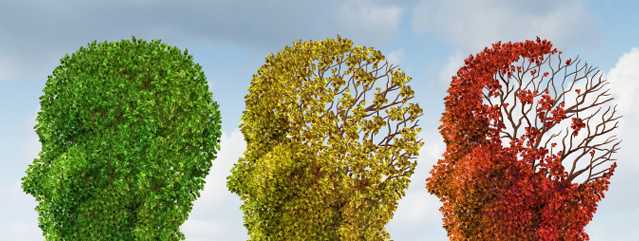
Traumatic Brain Injuries 101 In the United States, 52,000 deaths occur each year from a traumatic brain injury (TBI), and 5.3 million people live with disabilities due to a TBI. But a TBI does not necessarily result from a major trauma, like skiing into a tree or plummeting off a roof. You can sustain a TBI from bumping your head on a kitchen cabinet door, or when you and your five year old smack foreheads while wrestling. Penetrating injuries – from a bullet, or other objects that enter the skull – can also cause TBI’s. But the most common causes are from auto accidents and falls.

TBIs range from mild to severe. Mild injuries – concussions – are the most common. Symptoms include confusion, irritability, nausea, fatigue, amnesia around the event, and loss of consciousness up to 30 minutes. But it’s possible to suffer a mild TBI and not lose consciousness. Also, being diagnosed with a mild TBI does not mean the consequences are mild, such as decreased concentration and attention, getting lost and confused, headaches, dizziness, depression, mood swings, sleep disturbances, and difficulty with balance. Many people experience these symptoms for years, which is what happened to me. I still suffer from poor concentration, depression, difficulty multi-tasking, planning and even judging distance. When driving, for instance, I have trouble thinking ahead (at least that’s what my husband tells me). But it’s true. My brain can’t process all the stimuli coming at me: other cars, beeping horns, bicycles, and joggers. It doesn’t have enough room to focus on getting in the left lane soon enough so I can take a left turn.

In moderate TBI’s, the individual loses consciousness from 30 minutes to 24 hours, and in severe TBIs, longer than 24 hours. Symptoms are worse for people diagnosed with moderate to severe TBIs. They tend to exhibit obvious behavioral issues like aggression, and suffer greater physical impairments, like decreased ability to smell (anosmia), ringing in the ears (tinnitus), paralysis, and slurred speech.

But the challenge is in diagnosing TBIs, especially mild ones (like I said earlier, mild from a trauma perspective, not from a consequence perspective. I’ll address the nuances of this in a future post). My TBI was diagnosed in 2006, three years after I sustained the injury. During the immediate hours after the accident, the doctors where concerned with my other injuries – stopping the bleeding from my ruptured spleen and stabilizing my fractured pelvis. So I struggled in the workplace for two years, and at home, blaming my symptoms wholly on PTSD.

http://www.northeastern.edu/nutraumaticbraininjury/consequences-of-tbi/

Read More