Blueberries and Post-Traumatic Stress Disorder
blueberries_and_ptsd

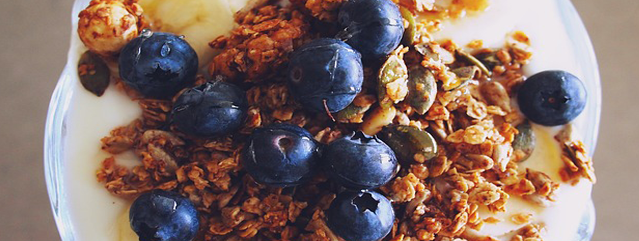
What did you eat for breakfast this morning? I had yogurt with blueberries, lots of blueberries. Akin to gulping down a mug of coffee, these plump babes are part of my morning routine. The sweet burst on my tongue makes me smile and, let’s admit, smiles are more attractive than frowns. If I miss a day munching on an overflowing cup of blueberries, my mojo is all messed up. Thank goodness for blueberries. Why? Not only are they packed with anti-inflammatory, heart-protective, brain-healing extracts (see earlier blog post), they are the anti-depressant of the future.

Based on animal studies, researchers at Louisiana State University’s School of Veterinary Medicine suggest that blueberries may help those suffering from post-traumatic stress disorder. With the rise in PTSD diagnoses, this is good news, particularly since suicide is a very real risk among sufferers.

When researchers induced PTSD-like symptoms in rats, they found that, in comparison to “normal” rats, they had unusually low levels of SKA2, a gene expressed at unusually low levels in people who have committed suicide. The PTSD rates were fed a blueberry-rich diet – as much as two cups – and the results showed increased levels of SKA2 compared to the non-PTSD rats fed a regular diet. The SKA2 study came in follow-up to an earlier one in which blueberry-fed rats showed increased levels of serotonin, the saving grace brain chemical that makes us happy. Researchers plan to further evaluate the link between blueberries and SKA2, with the hope of finding a single pathway by which blueberries can relive both depression and suicidal behaviors.

In the meantime, since blueberries are harmless (unless they are sprayed with chemicals even a veteran linguist can’t pronounce), why not feed your brain a cup or two? And blueberries just might be better than taking drugs: anti-depressants, particularly Serotonin Re-uptake Inhibitors (SSRIs), used to treat PTSD are not always successful. Paradoxically enough, they have been linked to increased suicide tendencies in some people.

Hmm … if two cups of blueberries a day equals, say, twenty milligrams of an SSRI a day, and there are three hundred sixty-five days in a year, if my math is correct, that comes to seven thousand three hundred milligrams of said SSRI versus seven hundred thirty cups of blueberries. Pass the blueberries please.

Read More
Stress and Aging

stress_and_aging

With the holidays fast approaching, what comes to mind? The scent of pine, fruitcakes, latkes, fasting, the seven principles of Kwanzaa. What about stress? Crowds, too many family gatherings, pressure to buy gifts with money you don’t have – all kinds of stress. Sorry to be a downer, but during this time of year I can’t help but think about the consequences of stress.

Though it’s an act of survival, meaning we either flee from or fight against harm, stress also speeds up the aging process. It wreaks havoc on the brain, heart, skin, and more. Of course, if we think about aging long enough, and what might happen as we age, we become stressed. Many of the older people I met during my stint as a wellness nurse for the aging population used to caution me, “Don’t get old, it’s no fun.” So aging itself causes stress. Michael Verano, a therapist who writes and speaks a lot about stress, and calls himself a “stress therapist,” calls this the “chicken and the egg scenario.” In other words, what comes first, stress as a result of aging, or aging as a result of stress?

Verano also asks why seemingly intelligent people “have stress reactions when they know the reaction will have no impact on the situation?” For me, I know, intellectually, that there is no reason to worry about the negative outcomes that might occur in advance of, say, a lecture about writing I’m giving a week from now. My imagination has a way of coming up with the all kinds of dire scenarios: What if I forget my notes? What if I bore the audience and everyone falls asleep? What if someone says I don’t know what I’m talking about?  What if, what if? So, mentally, and emotionally, I worry.

Maybe my worrying is how I cope? Is it how you cope? Verano suggests that most of us believe stress is a coping mechanism, and he has gathered a list of statements to support that exact sentiment. For example, expecting that something bad will happen helps reduce the emotional pain if that negative outcome does occur. With this in mind, Verano came up with ideas to counter-act what he calls a “sea of stress.” My favorite one is putting a time limit on stress reactions. Verano encourages us to set a timer for, say, fifteen minutes, and freak out. But he cautions us not to do so around expensive items, or in public places. If we did, then we might really have something to stress out about.

Now that I’ve pressed you to think about your own stress level and, therefore, have most likely made you stressed, I hope this post helps.

Happy holidays!


Read More