Medical Literary Messenger

I’m happy to share with you that my essay, “A Faded Scar with Palpable Edges,” is now available to read in The Medical Literary Messenger, a web-based journal associated with Virginia Commonwealth University School of Medicine, and whose aim is “to promote humanism and the healing arts through prose, poetry, and photography.” The essay is about my struggle to overcome Anorexia Nervosa, an eating disorder affecting between one and five percent of female adolescents and young girls. The deeply contemplative and inspiring creative works published in the journal can’t help but make one pause to reflect on health, illness, and the human condition. So, while I hope you take a moment to read my essay, I also encourage you to read, and view, the other “voice[s] for the healing arts (Medical Literary Messenger).”

“A Faded Scar with Palpable Edges” was previously published in Humanthology, website devoted to real life chronicles connecting writers and readers to causes they embrace. Though I’m sad to share that Humanthology is no longer in publication, you can still access my essay, and others, on the website.


Read More

Taking The Car Keys Away From My Father

TEST_Image

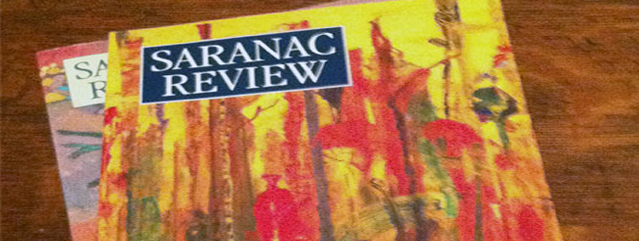
I’m over-the-moon excited to announce that my essay, “Reaching for the Keys,” has been published in Saranac Review  It’s about my emotional struggle to take the car keys away from my father, who was diagnosed with Alzheimer’s disease in 2012. I spent a year and a half working on it – typing, deleting, reflecting, pacing, tearing up drafts and starting over, pulling my hair out, waking up in the night to scratch down notes. Why all the fretting? Though any piece of creative work takes time to craft into a piece of salient art, writing this essay challenged me more than most other essays I have written. How so? While I know I made the right choice by taking the keys away from my father, the act of writing the essay brought me uncomfortably close to particular emotions and a long list of complexities that speak to the human condition (at it’s core, what this essay is really about): fear, anger, remorse, guilt, truth, loyalty, mortality, illness, aging, independence. I suppose that’s partly what creative writing should do – push us a little too close to the edge of the metaphorical embankment.

There’s also an ironic element to the piece, but I don’t want to give too much away here (apologies for the teaser). To quench your curiosity, relieve your hunger, I encourage you to read the essay. The Journal is available for purchase at: Saranac Review.

The Saranac Review was born in 2004 out of four writers’ vision to open a space for the celebration of many voices including those from Canada. Attempting to act as a source of connection, the journal publishes the work of emerging and established writers from both countries. As our mission states, “The Saranac Review is committed to dissolving boundaries of all kinds, seeking to publish a diverse array of emerging and established writers from Canada and the United States. The Saranac Review aims to be a textual clearing in which a space is opened for cross-pollination between American and Canadian writers. In that way, we aim to be a textual river reflecting diverse voices, a literal “cluster of stars,” an illumination of the Iroquois roots of our namesake, the word, Saranac. We believe in a vision of shared governance, of connection, and in the power of art.

Saranac Review

Read More

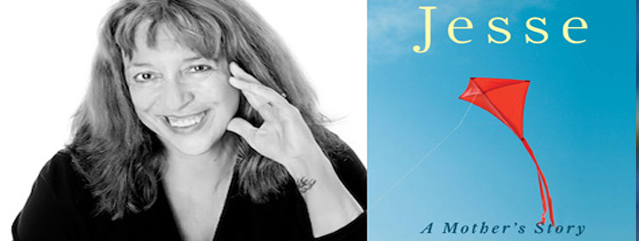
Review of Marianne Leone’s Memoir Jessie

Jesse

Born ten weeks premature, Jesse Cooper suffered a brain hemorrhage, and survived – with cerebral palsy. In 2005, at age seventeen, he died.

During the course of my twenty-year career as a pediatric and neonatal intensive care nurse, I cared for thousands of babies and children, many who had cerebral palsy. I provided the best care possible – heeded their cries, exercised their rigid limbs, and carefully fed them pureed foods so they wouldn’t choke. But it was impossible for me to know what it was like to be a mother of a child with cerebral palsy, or any of the ill children I cared for.

But actress Marianne Leone knows. In her memoir, Jesse, Leone writes with stark prose, sharing with us her “mask of red rage,” and her “fuck-you double slather of red lipstick,” as she, and her actor-husband Chris Cooper, work tirelessly to navigate the hairpin turns of their lives caring for a child with cerebral palsy (185, 189). She lures us along in their trek, from Jesse’s endless days in the neonatal intensive care unit, through their frustrating odyssey in search of physical, occupational, and speech therapists who would treat Jesse with dignity, and their fevered commitment to convince the school system within their community to integrate Jesse into classes with what Leone calls “able-bodied” students. Leone reminds us that “Jessie wasn’t a CP kid first, and a kid second (57).”

Jesse is more than a mere telling of the speed bumps Leone and her family encountered along the way. It is a story of perseverance, and idiosyncratic family coping mechanisms in the face of Sisyphean challenges. It hurtles the reader into a better awareness of what it means to be a quadriplegic, and non-verbal – which does not equate with being an “idiot (31).” Leone’s memoir is a must-read for families, health care professionals, teachers – all of us – who are on a quest to do what is right for our children, whether or not they are disabled.

Jesse speaks to the human condition – in this case, internal conflict – and the human being in us: Even long after the death of her son, Leone admits she’d rather “stay inside and be alone (248).” But she also knows, in order to still feel connected with her son, she must reach out and talk to other mothers with “babies like Jesse (248).”

Jesse himself tugs at the human being in us. His humor, non-judgmental approach to others, and endurance – he was an honor roll student, and windsurfed and wrote poetry – impels us to take a long, hard look at ourselves and ask, “Who am I? Am I aware of what is happening around me? How do I treat others? How do I want to be treated? What meaningful contributions am I making to others? What if I were a quadriplegic and non-verbal?”

In an autobiography Jesse wrote in sixth grade, he says:

“The most important lesson I can teach/is to see people for what they can do/ and not for what they cannot do (82).”

Read More