Taking The Car Keys Away From My Father
TEST_Image

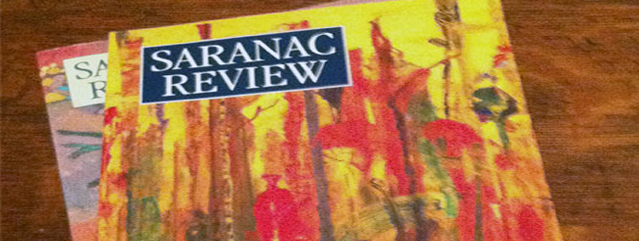
I’m over-the-moon excited to announce that my essay, “Reaching for the Keys,” has been published in Saranac Review  It’s about my emotional struggle to take the car keys away from my father, who was diagnosed with Alzheimer’s disease in 2012. I spent a year and a half working on it – typing, deleting, reflecting, pacing, tearing up drafts and starting over, pulling my hair out, waking up in the night to scratch down notes. Why all the fretting? Though any piece of creative work takes time to craft into a piece of salient art, writing this essay challenged me more than most other essays I have written. How so? While I know I made the right choice by taking the keys away from my father, the act of writing the essay brought me uncomfortably close to particular emotions and a long list of complexities that speak to the human condition (at it’s core, what this essay is really about): fear, anger, remorse, guilt, truth, loyalty, mortality, illness, aging, independence. I suppose that’s partly what creative writing should do – push us a little too close to the edge of the metaphorical embankment.

There’s also an ironic element to the piece, but I don’t want to give too much away here (apologies for the teaser). To quench your curiosity, relieve your hunger, I encourage you to read the essay. The Journal is available for purchase at: Saranac Review.

The Saranac Review was born in 2004 out of four writers’ vision to open a space for the celebration of many voices including those from Canada. Attempting to act as a source of connection, the journal publishes the work of emerging and established writers from both countries. As our mission states, “The Saranac Review is committed to dissolving boundaries of all kinds, seeking to publish a diverse array of emerging and established writers from Canada and the United States. The Saranac Review aims to be a textual clearing in which a space is opened for cross-pollination between American and Canadian writers. In that way, we aim to be a textual river reflecting diverse voices, a literal “cluster of stars,” an illumination of the Iroquois roots of our namesake, the word, Saranac. We believe in a vision of shared governance, of connection, and in the power of art.

Saranac Review

Read More

Being Mortal by Atul Gawande

being_mortal

Most of us avoid talking about death. The topic is not, well, the most pleasant one to address because, inevitably, it means a discussion about what happens before we breathe our last breath. Dying. That’s the part of the conversation where you say, “I hope I go in my sleep,” or “I hope it’s quick and painless.”

Since we can’t run away from dying or lock it up in a closet – sorry – I thought I’d share what Atul Gawande has to say about it in his latest book, Being Mortal. He takes an anxiety-producing topic and fearlessly broaches it through mind-boggling research and affecting stories. Though, I should warn you, the book is not emotionally easy to read. The stories come one after another: Alice’s frequent falls and car accident, Bella’s descent into blindness, Ruth’s stroke, Sarah’s lung cancer.

For much of history, death just happened. People literally dropped dead: you had a sore throat, and the next day you died. Our bodies didn’t “crumble” over time like they do now, thanks to advances in medical technology (28).  We have antibiotics, breathing machines, intravenous fluids, dialysis, chemotherapy. There is always one more drug, one more experimental therapy a physician can pull out of the medicine cabinet to keep you alive, even if it’s only for a few more weeks. Physicians, especially surgeons like Gawande, are trained to fix people. But, in doing so, are we causing more harm than good? Are we denying the aged, and terminally ill, sought after comfort?

But some people are willing to do anything – surgery, take pills – with the hope of maintaining independence, but, as Gawande says, “what do we do when it can no longer be sustained (23)?” Perhaps your parent has have lived on her own for the past fifty years, tending the garden, walking the dog, driving to the grocery store, and so on. But now, due to poor balance and a broken hip (FYI: about 350,00 Americans fall and break a hip every year), she can no longer engage in any of those activities. She can no longer safely cook her own meals or walk to the bathroom. She needs someone to be with her, 24/7. How do we keep the aging population safe while, at the same time, foster their independence? Who will be the one to care for our frail grandparents, parents, or spouses? These are just a few of the difficult questions that lack a single-dose answer.

Through interviews with patients, his dying father, other physicians, and proponents of institutional change, Gawande, and readers, learn that the “sustenance of the soul” is possible through imagination: community co-op living, mobile teams to check in on the elderly, and greenhouse living – long-term care facilities designed to look like a home (128). He debunks the myths of hospice – to do nothing and “let nature take its course (160).” If anything, hospice allows the aged and ill to live a bit longer in their own homes by fostering patient dignity and autonomy.

How all of this comes to fruition may not sound so simple, but Gawande guides us, with a cheat-sheet of questions to ask those who are dying:

1)   What do you understand about your illness, or prognosis?

2)   What are your fears? Goals?

3)   What do you care about?

4)   Given the circumstances, what trade-offs are you willing to make?

5)   If your health deteriorates, how would you like to spend your time, and whom do you want to make decisions for you?

Medicine is not only about repairing people’s hearts or fixing their broken bones.  It’s about maintaining an individual’s well being, emotionally and mentally. It’s about helping human beings live meaningfully by encouraging them to be the author’s of their own lives, up until the very last sentence.

Gawande, Atul. Being Mortal. New York: Metropolitan Books. 2014. Print.

Read More