Being Human

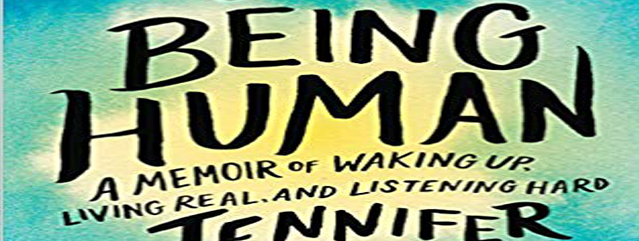
I spent this past weekend being human at the Kripalu Center for Yoga and Healing. That is, I spent this past weekend letting go and not giving a fuck with Jennifer Pastiloff. Yoga instructor, author, and founder of the online magazine The Manifest-StationJennifer is known for her workshop, On Being Human, where women from all over come together to dance, to sing out loud, to write whatever comes to the page, and to share their deepest pains and enduring dreams. If someone were to ask me to choose a single word to describe Jennifer, that word would be lovable. But she’s more than one thing. She is energy, a safe zone, a kick-ass hugger and hand-holder, a super-fun dance partner, a really good listener, an empath. The list could fill my bookshelf.

A friend of mine, who has attended Jennifer’s On Being Human workshop year after year at Kripalu, had told me all about her. I  had also read Jennifer’s posts on The Manifest-Station, followed her on social media, and devoured her book, On Being Human, A Memoir of Waking Up, Living Real, and Listening Hard. Much of what she had to share – her sense of shame and guilt, not feeling good enough, the need to be heard and told “I’ve got you” –  made me think she had written the book just for me. Which is why, after months of inventing one lame reason after the other for why I couldn’t go, I finally decided it was time to get off my scared ass and drive the three-and-a-half hours to Kripalu this past weekend. Why I was so afraid to take Jennifer’s On Being Human workshop I can’t explain. Wait, that’s a lie. The truth is this: The unknown scares the crap out of me sometimes. I had no idea what my experience would be like in Jennifer’s workshop. But we only know when we do, right? So I did. Yes, I thought I’d shit my pants on my way to Kripalu, wondering if I really had it in me to let go and be vulnerable in front of dozens of women I had never met.

I did not shit my pants, but I did sweat, a lot. If anything, the 95-degree heat made it easier to say, “Fuck you fear.” It took too much energy to think, I don’t belong here … I can’t dance … I can’t sing … I can’t, I can’t, I can’t. And the heat melted my body into a let-go puddle. So I had no choice but to dance like a dork, sing “Landslide” and “Don’t Stop Believin'” out of tune while doing Downward-Facing Dog, sing into an orange crayon-turned-microphone, play the air drums with a crayon, cry, and, as Jennifer says, “let snot fly.” It felt good, damn good.

At the end of the weekend, I left with a backpack full of what I call “Pastiloff Vitamins.” I take them everyday, with a large glass of “I am good enough, and don’t fucking forget that.”

I even have some samples of her vitamins for you:

“Ask. Don’t let ‘no’ stop you.”

“Daydream for five minutes every day.”

“Go ‘beauty hunting’. Make something beautiful.”

“Shoulds are assholes.”

“Everything has to be moment to moment, because that’s all we have.”

“Be a human thank you.”

“Say ‘yes’ to yourself.”

“Trust in the timing of your life.”

“Invite ease into your life.”

“Find joy for no reason.”


Read More

27 Wild Days

Do you let the mess surrounding you get in the way of your writing time? Maybe you see the dirty dishes in the sink and say, “I should wash those first before I sit down to write.” Or maybe the dirty laundry has piled up, and you can’t seem to let it be until after you write. Sound familiar? You’re not alone; we’re all prone to distraction. It must be in the water, or more likely on social media – the distraction devil – because I can’t tell you how many of my writing peers tell me that they must do this or that before they write. I admire those writers who get up at five in the morning, grab a cup of coffee then head directly for the chair. How do they do it? What’s in their water? Really, no amount of magic water will lure you to your writing chair (sorry if you thought this is where I was going – toward the water). But I do have an antidote to the distraction devil squatting in your head, and it’s better than even the cleanest, sweetest glass of water. I’ve taken the antidote myself, and I’m still here to talk about it. And I’m still writing. Here it is: 27 Wild Days. For more than 25 years, Laurie Wagner – writing teacher, writing coach, author of 7 books, mixed-media artist, and more – has used 27 Wild Days to help others “get to the heart of what they want to write about.” So what exactly is 27 Wild Days?

With 27 Wild Days, Laurie emails interested writers a series of brief videos every day for 27 days. In each video, she shares aspects of the writing practice that has served her for more than two decades. She then reads a poem, twice, and offers a prompt from that poem as a way to help you get your pen moving. She recommends writing for 12-15 minutes (I find 15 minutes works best, since it takes me a minute or two to get into a writing groove). That’s it! Fifteen minutes. Imagine 15 minutes every day for 27 days. That’s 405 minutes (feel free to check my math). During each fifteen-minute session, if you write three pages, (for me that’s seven-by-ten inch notebook pages, which equals a total of 362 words. Yes, I counted.), by the end of the 27 days you’ll have 9,774 words: an essay, 1/8th of a memoir, 1/6th of a novella.

Of course, life does get in the way, sometimes more than we’d like, so if you miss a day of Wild Writing, you can save the video for another time. It’s happened to me: I’m currently six days behind, but those videos are still in my inbox, labeled “Unread” so I can easily find them. The completed videos I save in a separate folder in my email account, waiting to rescue me from future bouts of writer’s block.

So, if you’re feeling stuck in your writing, or don’t know what to write about next, or think you have nothing to write about (not true, by the way), or you’re like me and find it hard to close your mind’s door on the “you-can-find-a-better-word” judge, try 27 Wild Days (it’s only $49). It’s freeing. It allows you to be intuitive, to let yourself go, write words that don’t make any sense, to get a little lost, to be stupid on the page.

That’s it. Now, as Cheryl Strayed would advise: “Write like a motherfucker.”


Read More

Writing Goals

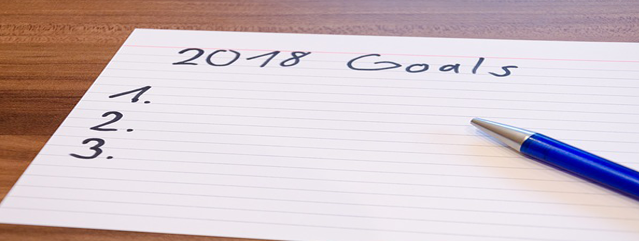
There’s less than a week remaining in January, which, for me anyway, means it’s still the New Year. Which means we’re still within the 2018-goal-setting window, if there’s such a window at all. When speaking of goals here, I mean writing goals. (I’m a writer, so what other goals are there to ponder?)

As 2017 came to a close, I thought long and hard about my goals for 2018: a large writing project to revise, essays to complete and submit to literary journals, and agents/publishers to whom to pitch my memoir.

Ten days before the New Year, when I was thinking about how to hone in on manageable, realistic writing goals, an email from Brevity, a journal of concise literary nonfiction, popped-up in my inbox. I clicked open the email, and there it was, the post that could not have come at a better time. In “The Year of the Writer,” Allison Williams starts out by first encouraging us to celebrate even our tiniest 2017 writing accomplishments. Maybe it’s a sentence you’re proud of, the essay you finally sent to a dream literary journal, the positive feedback you received from your writing group, or the rejection letter from an editor who took the time to offer specific suggestions and asked you to re-submit in the future. Allison’s mindful nudge for us to recognize each of our writing accomplishments, while examining what worked and didn’t work, was grounding for me. It gave me permission to pause, to take my time to mine the ever-growing list of writing goals I continue to compile and house in a somewhat large file on my computer’s desktop.

So how did I hone in on my 2018 writing goals? I listened to Allison and focused on the classic SMART formula: specific, measurable, attainable, relevant, timely. As Allison cautioned, I was careful to not set too many goals, and took into consideration my emotional/mental idiosyncrasies. (I become anxious when I have too much ahead of me, and end up spending more time thinking about how I wish I weren’t so anxious than getting as much work accomplished as I’d like.)

Here’s what I came up with (except for goal #1, the deadlines are self-imposed):

1) Apply for the 2018 Bread Loaf Writers’ Conference in Middlebury, Vermont. Deadline February 15, 2018.

2) Submit fifty query letters to agents by the end of March, which is in addition to the 125 I sent in 2017.

3) Each week, revise two chapters of a draft of a novel I wrote two years ago.

4) Revise an essay rejected by a mainstream newspaper, then submit to other publications. Deadline February 10, 2018.

5) Complete an essay about processing forgiveness and submit to literary journals. Deadline: still thinking about it.

6) Collect ideas/thoughts/questions regarding the structure of my next memoir. Deadline: March 1 2018.

Since I do well with visual reminders of things I need/want to accomplish, I typed my writing-goal list, printed it out, and taped it to the inside front cover of my 2018 date book. That way, when my mind gets over-excited about other writing projects, I have that list readily available to remind me, “Melissa, stay focused. Of course, if something else comes up that’s worthy of veering off my writing-goal course, like an offer from an agent to represent my memoir, who then quickly sells it to, say, Random House, and I’m too busy traveling for my book tour to complete those two essays or work on my novel, then I’m all good, really, really good.

So far, I’m ahead when it comes to goal #1: I hit the send button on January 6. Now I just have to wait until May to hear back from Bread Loaf. I’ve taken a small bite out of goal #2: six queries sent – forty-six remaining. As for goal #3, I begin the revisions of my novel during a five-day retreat in Point Reyes, California – what I call the kickoff event to making my next large project the best that it can be. Goal #4: I’m happy to share that I’m deep into revisions of the essay, and feel good about meeting my February 10 deadline. Goal #5: Well, there’s a reason why I didn’t set a deadline: I only recently started the first draft of this essay, and still need to think about a realistic time frame. For some reason (one of my idiosyncrasies), once I set a date, I feel as if I can’t change it. So I need to be sure before putting it out there in black and white. Goal #6: I’ve come out ahead here too; I’ve already decided on the structure of my second memoir, and have even written the first and last sentences of the book!

What writing-life experiences from 2017 have helped you to formulate your 2018 goals? What are your writing goals for 2018? How do you navigate distractions, keep your butt in the chair, keep your eyes on the page and your fingers on the keyboard?


Read More

Past Ten

Below is a piece I wrote at the urging of author, editor, and teacher Donald Quist. He asked me to contribute my reflections about how I’ve changed over the previous ten years to his project Past Ten in which various writers share similar recollections. As Donald says, the personal stories in Past Ten are a “testament to the transformative power of time and the human capacity to turn the unpredictable into art.”
Enjoy!


June 21, 2007

It’s 2:06 p.m. The summer solstice. I’m sitting at my desk at the Vermont Lung Association, where I work as an administrative assistant. I’m tapping at the computer keys, logging contributions from donors into an Excel spreadsheet longer than this day. My fingertips turn numb with boredom. My vision blurs from all the lines and rectangles and numbers. Bringg, bringg, bringg. My head thumps with each shrill ring of the telephone. I answer the call from a board member, and pencil his message on a sticky note to be passed on to the CEO. But when I hang up I’ve forgotten his name. Bob? Jim? Ted? My brain’s gas tank is near empty, and I want to lay my head on my desk, nap away this day. I want to sleep off my traumatic brain injury, close my eyes against a diagnosis that still paper cuts my tongue each time I speak it.

It’s been three years since my head smacked against the pavement when a car mowed me down, and no amount of sleep, or even the continuous sunlight on this day can burn off the smog obscuring my mind’s eye from seeing with any kind of mental clarity. I want this day to end. But I must keep tapping, plugging in numbers and names and dates. Filling up the rectangles of a spreadsheet is like filling in the white spaces of my unsure-where-I’m-going-life. How long I’ll pretend I’m happy working here in an office that smells like a basement, with plastic window blinds that clack each time artificial air from the vent gusts its cold breath into the room, I don’t know.

Of course, I’d rather be standing by a newborn’s crib side, where I stood as a nurse for fifteen years. Where I changed diapers, bottle-fed infants their mamas breast milk, cuddled preemies in cotton receiving blankets. But that was before the crash. Now my broken brain couldn’t bear the constant noise of a neonatal intensive care unit: wailing newborns, alarming monitors, dinging IV pumps. That’s why I am here, at this desk, where it’s mostly quiet and I’m asked only to accomplish one job at a time, like filling in rectangle after rectangle. Because it takes all of me to get through this day, I don’t have the mental energy to imagine the formula or function of my future. So I keep tapping.

The planet has raced around the sun ten times since that day. A decade. Another summer solstice has arrived, and I’m still tapping at the computer keys. I’ve figured out my life’s formula, or at least I think I have. With each keystroke, I fill up my own spreadsheet, one I created in 2010, when I enrolled in graduate school for an MFA in writing. That spreadsheet I have replaced with draft after draft of my memoir, with my favorite quotes from authors, blog posts to write, books to read, more books to write.

My brain still must work hard to hold onto names, though, and it still gets low gas mileage. Words and phrases skid away from me, emerge in anagrams, end in ellipses or in incomplete sentences. But I now look forward to the longest day of the year. The sun equals hope; as the days expand, it’s hope that keeps me from tearing up my draft and throwing it in the trash. Hope is the formula and function that carries me through the winter solstice, into the next decade.

Please visit Past Ten to read more inspiring stories.


Read More

Writing Dialogue

Do you fret over writing dialogue? Do you use dialogue as a filler because you’re not sure where to go next on the page? Well, I’m here to offer some suggestions, that is, on behalf of Rita Zoe Chin, the author of Let the Tornado Come, a brilliantly rendered memoir about her adult onset panic disorder and how she galloped through the storm with unwavering resilience. I met Rita during her writing craft session, “Essentials of Dialogue,” at this year’s Muse and Marketplace in Boston. Since most of us shiver when we hear “rules,” I’m here to assure you that her guidelines are just that, guidelines, though worthy ones I vote for keeping close by on your writing desk.

First and foremost, think of dialogue as having a purpose. Does it advance the narrative, develop the characters, highlight a relationship? When writing the earlier drafts of my memoir, I used to believe I had to get it exact: every word my mother or sister or brother said twelve years earlier. Well, we all know that memories are slippery at best, and what we remember from a dozen years ago may as well be categorized as fiction. When talking about memoir, the best we can do is get it as close to the truth as possible. That said, you don’t need to include every “um,” “uh,” and “oh” on the page. If anything, they’re distracting to readers. Imagine reading this: “Um, I don’t know. Oh, I see. Uh, let me think about that. And, um, I have a story to tell you, um, do you want to hear it?” No. Similarly, salutations like “Hello” and “Goodbye” are not needed. The same goes for nonessential pieces of information like what a character ate for lunch (I suppose if what the character ate moves the story forward in some way then it would be essential). As for accents, this is a tough one. They too can be distracting. And, believe it or not, adverbs do not make for good dialogue. Take a look at this example Rita shared: “She ripped off the wrapping paper and opened the box before he finished reading the gift tag on his. “I love it,” she said, happily.” It’s clear she is happy without having to say so, right? Then there are dialogue tags: I said, he said, she said. Our initial instinct may be to liven up these tags with more active verbs like “I uttered” or “He bellowed.” But, as Rita noted, “let the dialogue do the work.” In other words, get rid of the voice of the narrator. Look at it in the way Rita suggested: “Dialogue tags are there simply to guide us.”

There’s more, but for now, I’ll leave you with a savory tip from Rita: Listen closely to conversations among others: expression, tone, word choice, etc. Pay attention to dialogue when reading, when watching a movie or a play. Read your own dialogue out loud, marking words you stumble over. Maybe there are words unintentionally repeated. And remember: sometimes silence on the page says much more than dialogue.

Hope this helps!


Read More