How to Write About Body Image

body_image

If you had to write about your body, what would you say?

First, let me define body image: it’s how you think and feel about your body, it’s shape and size, how you see yourself in the mirror, how you feel in your body.

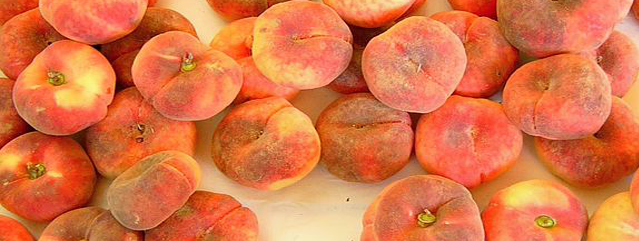
Writing about your own body might feel a lot like walking through town naked. But I’m not here to encourage you to strip on the page, though a certain amount of stripping is required in order for our readers to get to know us as real human beings. The more important question is, when writing about your own body, how do you avoid the pitfall of naval gazing? Through metaphor, imagery, the five senses. When writing the following piece, my aim was to do just that – become intimate with peaches – to smell, feel, taste, touch my way toward a more positive image of my body. I chose peaches because they are one of my favorite fruits, and it was a peach I last recall holding before an elderly driver ran into me at a farmers’ market several years ago. So I guess you could say I’m obsessed with peaches and what they, particularly the one I held at the market, mean to me: changes in the body,  acceptance, re-newal, survival. I wrote with those interpretations in mind when crafting the following narrative:

I gently roll a peach between my palms, its downy coat tickling my fingers. I study the curves and arcs of its plump body. I’m searching for the perfect peach: golden hued with no deformities. But I notice that it has  a soft spot with a purplish bruise, and place it back in the display. I stand among the peaches for another fifteen minutes, picking up a scarred one, a wrinkled one, then another with a slit in its skin. These damaged peaches must taste like wood, I think. I choose one more, and bring it close to my nose. I inhale, smelling earth. I’m tempted to buy it, but notice a blemish at the base, and motion to place it back among the ones that are disfigured. I pause, and tell myself to give this peach a chance. Maybe it will taste better than it appears. I buy it, and as I walk away from the farm stand, sink my teeth into it, its blushed skin forgiving. Pulp bursts with warm juice. I stop, swallow. Summertime trickles down my throat. Sweet. Perfect. 

Do you have a body image narrative to share? If not, I hope this post inspires you to strip, just a little.

Read More
Memoir: Past versus Present Tense Telling of a Past Event

cravngs

When writing about a past event in the present tense, how does the author manage to control the narrative? In other words, how do readers know when the author is speaking from the present of the past versus the present of the now? It is usually much later when we are able to reflect mindfully on a past event, say, pose rhetorical questions and conjure answers about what happened. So how does the author insert reflection, or what Sue William Silverman calls the voice of experience – the metaphors for instance – in to the present tense telling of a past event?

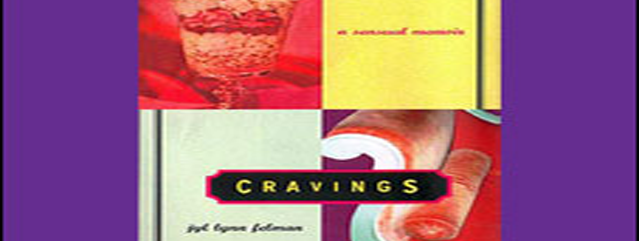
In Jyl Felman’s memoir, Cravings, she predominately writes in the present tense with brief shifts into the past tense. She employs transitional phrases or words to indicate place and time:

“Every February until she’s too sick.”

“When we are growing up.”

“Ten years later.”

“Right before their fortieth wedding anniversary (14, 15, 18, 26).”

This is how Felman controls the overall architecture of the narrative, and the shifts between the actual now, the past, and the future. For the most part, Felman doesn’t fully step out of the present telling of the past and reflect. Rather, the reflective moments are embedded within the scenes of present tense narration. For example, in the chapter, Hyperventilation, she shows us, through scene, how her mother washes her mouth out with soap for swearing, and how she makes herself hyperventilate and needs to go to the hospital. It’s almost like a listing of events – this happened, then this happened. But intertwined is the voice of experience – metaphorical phrases – such as her descriptions of the process of passing out and how she feels like she’s suffocating. In effect, Felman is saying she needs time out from her family. We also hear the reflective voice in her telling of how she realizes the dysfunction in her family, and that she’s unhappy but no one notices (81-90). Foods, her mother’s recipes, and Jewish tradition – threads throughout the narrative – are also metaphors – the voice of experience – in the book. Felman successfully floats these within the present telling of the past.

She does revert to past tense when telling us more about her sister Judy: her anorexia, stealing, etc. It is in these passages where we gain more insight into the family dynamics – there seems to be a greater sense of interiority here. When Felman returns to the present telling of the past, again, it’s a listing of events. There’s a fast paced feeling about it – no lingering. The present tense telling has a way of building tension. There’s almost a rhythmic quality to the way Felman narrates about Judy in those pages: Judy is lost, her father finds her, Judy’s in Seattle, she’s married then divorced, and so on. At the end of the memoir, Felman does reflect from the real present into past moments. But, again, it is the precise phrases that help us know where we are: “It’s two years since she died, only the memories live in my body (187, 188).”

Here is a list of other memoirs written in the present tense: The Kiss by Kathryn Harrison Another Bullshit Night in Suck City by Nick Flynn, The Accidental Buddhist by Dinty W. Moore. Blackbird by Jennifer Lauck, When Katie Wakes by Connie Mayfowler, Because I Remember Terror Father, I Remember You by Sue William Silverman, Love Sick by Sue William Silverman

Citations: Felman, Jyl Lynn. Cravings: a Sensual Memoir. Boston: Beacon, 1997. Print.

Read More

Recognition in a Window

autobiography_of-a_face

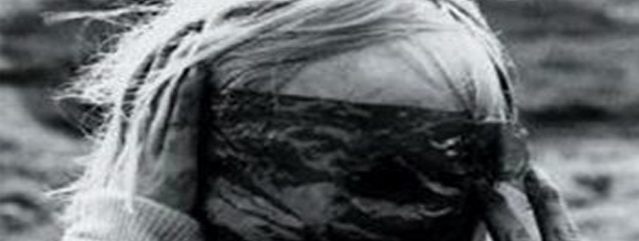
In Lucy Grealy’s memoir, Autobiography of a Face, the focus remains on the author’s identity struggle as she faces years of cancer treatment in which one third of her jaw is removed. How does she take us on her conflicted journey of needing to be accepted for who she is versus succumbing to society’s notion of acceptance?

She implants particular objects that carry the story forward: the hat she almost never takes off, and the turtleneck her mother encourages her to wear to hide her balding head and disfigured jaw. The mirror, her reflection, is Grealy’s nemesis: she says she is an “imposter” when she looks in the mirror (220). And she avoids looking at the details of her face: “Though I had looked at the scar running down the side of my still swollen face, it hadn’t occurred to me to scrutinize how I looked. I was missing a section of my jaw, but the extreme swelling, which stayed with me for two months, hid the defect (62).”

By employing phrases – “I tried to camouflage myself by sitting in the middle of the group,” and “I felt as if my illness were a blanket the world had thrown over me” – Grealy evinces her identity struggle. She does the same through metaphor: “Our house was falling apart,” and “Our home’s drastic state of disrepair” (35, 80). Her house is in disarray like that of her body and emotional state.

By narrowing in on the transformative events – surgeries, hair loss from chemotherapy, becoming a teenager and growing into a woman, interactions with men – Grealy maintains an integrated story of identity. In doing so, the reader is brought into her world, a world colliding with emotions: fear and anger, longing and loneliness, humiliation, denial, sadness.

But ultimately Grealy moves toward self-recognition: she matures from a 9-year old, unaware of what it means to have cancer and naïve as to how to cope with significant deformities, to an adult where she becomes mired in the conflict between acceptance of herself as she exists versus the desire to appear pretty in order to be accepted. She does not achieve complete resolution on, and off, the page – complete resolution is asking a lot of the writer who has suffered any kind of illness, or trauma. But, while at a café with a new lover, Grealy “experiences a moment of freedom,” and arrives at understanding (222):

As a child, I had expected my liberation to come from getting a new face to put on, but now I saw it came from shedding, shedding my image. Society … tells us again and again that we can most be ourselves by acting and looking like someone else, only to leave our original faces behind to turn into ghosts that will inevitably resent and haunt us (222).

And so, as Grealy says, “I looked with curiosity at the window … to see if I could recognize myself (223).”


Grealy, Lucy. Autobiography of a Face. New York: Harper Perennial, 1995. Print.


Read More