Pain Woman Takes Your Keys

Though I’ve already written a blog post about pain, I’m here writing about it again. Why? Because I’ve been thinking a lot about pain after recent emergency surgery to have my appendix removed. During the first week of my recovery, I spent a lot of time hanging out on the couch, either sleeping or reading. You’d think I would have treated myself to a few light reads, but, like I said, pain was (and is) very much on my mind. So the first book I picked up from the pile next to me was Pain Woman Takes Your Keys and Other Essays from A Nervous System by Sonya Huber.
In lyrical wit-filled prose, Huber writes about living with rheumatoid arthritis. She invites us into her pain, and all that goes with it: the anger, fatigue, and frustrations; the slump into poor self-image and self-critical talk, as in “Sometimes I berate myself for not being up to the level of other bodies … Sometimes I feel that in writing and revealing pain I am revealing wrongness (33, 85).” Though she writes to understand her own pain, she also writes for all of us. I mean, who has not suffered pain? More so, she writes for women in chronic pain. It is Huber’s sense of “wrongness” with which women in chronic pain are marked. Sadly, even centuries after women were labeled “hysterical” for expressing pain, not much has changed. When it comes to pain, women are still misunderstood.

Because chronic pain is not like a missing limb or a gaping wound, it’s what Huber calls “invisible suffering (25).” Thus, women are often forced to explain their pain to others, as she openly attests to in her letter to a feminist scholar (Yes, a woman!): “Thank you for making me articulate exactly what it means to live with a disease that is both painful and energy sapping … Thank you for making me detail the obstacles, which include the fact that any lengthy travel … will make me sick and thus destroy weeks of lucid work and family time. (117).”

As much as Huber’s book is about pain, she does bring relief to the page at just the right moments. For example, she shares with us how she reaches out to Facebook friends for stickers to decorate her cane, creating a “joyful explosion of adhesives that … brings more joy than an anonymous metal pole (96).”

Sometimes I wonder if pain ever gets tired of its role – always making us cranky and unpleasant to be around. Maybe the pain we experience is not always an indicator of illness or injury, and instead sometimes it’s trying to tell us, “I’m hurting too, and want you to have fun with me so we can both feel better.” Who knows?

What I know is how I feel about the pain scale. I dread it. Because I’m not good at making decisions, asking me to assign a number to my pain only creates additional pain. Instead of numbers, I prefer using real life language, the language of what it means to be a human being in pain. That’s why I’m on Huber’s side when she tells it to us straight: in place of a seven on the pain scale, she says, “Don’t fucking touch me (156).”

What about you? What “real life” language describes your pain?

Read More
Gratitude

Every Thanksgiving I think about all that I’m grateful for, but this Thanksgiving is different, which isn’t to say I’m not grateful for a heated home, warm clothing, plenty of food in my refrigerator, my husband’s culinary skills, a fluffy pillow on which to lay my head every night, hot tea with local honey every morning, and, of course, family and friends. I am grateful for all of those things, and much more, including the time I cherish for writing. So how is this year different? The ever-widening wake of divisiveness ripping through our country, and beyond, has knocked the wind out of me with such great force that I’m finding it difficult to breath deeply these days, deeply enough so that I am fully sated with gratitude. (Just so you know that wasn’t easy to admit.) For as long as I can recall, no uninvited change of events, or individual, not even someone the likes of _______ (I still can’t say his name) has left me so winded.

But, as I write this somewhat depressing post (it gets better, I promise), I realize that, hey, it’s Thanksgiving, and I cannot, will not, let ______, or the divisiveness, continue to deprive me of the air I need to take full breaths. After all, if I don’t, what good am I? If I don’t breath in all the gratitude my belly can house, then I’m giving up. And isn’t giving up a selfish act? Just writing that makes me queasy. So, what next? My closest confidante tells me to act. But easier said than done, right? Maybe not. Maybe to act means starting small, even if small doesn’t seem like enough. Maybe to act means to listen – to others, all kinds of others. Closely. Maybe to act means to be proactive; to ask what others need before they have to ask for that need; to offer food or drink or a hat to people on the street before they have to beg for it; to speak out and give on behalf of others who have been tongue whipped into believing they have no voice at all.

I think I’ll act this Thanksgiving by asking my eleven-year old niece if she has any ideas about how to be proactive since  _______ was elected. Who knows, maybe she’ll come up with one, or two or three, that will knock the wind out of me – that kind of breathlessness I welcome.

I hope you, too, will follow along, and fully breathe with me, because, hey, I need you; no one can do it alone. With that, I offer you a heaping serving of gratitude for listening to me. Thank you. Wishing each and everyone of you a happy Thanksgiving.

P.S.

For dessert, here’s what else I’m grateful for:

My mother-in-law’s stories, and crocheted hats

The change in seasons

The awareness to listen

Sleep

Warm baths

Good wine

Good books

Flowers any day of the week

A lit candle

Things that make me laugh

Anything that makes me cry

A homeless man who says he likes my smile and to keep smiling

The time to volunteer

Visiting with my ninety-four-year-old neighbor

Pain (a reminder that I’m alive)

Relief from pain

My mother’s every-other-day phone calls

The nursing home staff who take good care of my father

My brother’s generosity, and humor; and his wife’s cheerful spirit

My three stepdaughters, who don’t mind my quirks

My niece, who still likes to play with my hair

My eight-year-old nephew, who still lets me give him smooches on the cheek

Chimes singing with the wind

Rabbits

The smell of a newborn baby

Holding a baby (someone else’s baby)

Walking barefoot in the sand or grass

Popcorn, lots of popcorn

Dark chocolate

My husband’s hands on my feet

My husband singing to me

A dog’s wagging tail

Personalized cards in the mail

All of those who have helped me become the writer I am today

Quiet time

Surviving

Being alive


Read More

Rejection

rejection

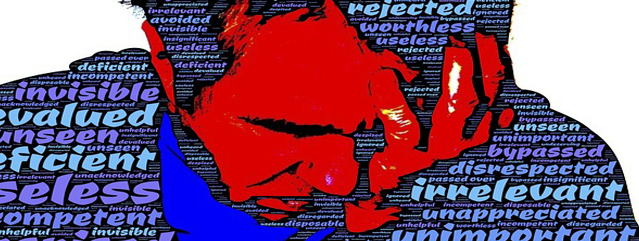
Remember that punched-in-the-gut feeling when the one guy (or girl) you had a crush on in high school went to the prom with your best friend instead of you? Or how about the first time you tried out for the soccer team and you didn’t make the cut? Rejection doesn’t feel very good. You might as well be a deflated balloon. That’s what it felt like for me when a literary journal recently rejected an essay of mine. I’ve received lots of rejections from journals, but this one, for no reason I can explain, hurt like a motherfucker. Because I’m generally a curious person, I can’t help but wonder why rejection causes humans so much emotional pain.

By nature, humans are social beings. Just as we need food and water to survive, we depend on others to feel a sense of belonging. To be rejected is like suffering from hunger and thirst. Because we have access to technology and other modern conveniences, we could manage to lead a solitary existence, though it would likely be a depressing one. To say “I’m in a lot of pain” after receiving a rejection letter from your top choice college, or after failing to land your dream job is not merely a figure of speech. It’s as real as physical pain. Through MRI studies, researchers have found that rejection stimulates many of the same areas of the brain involved with physical pain. As researcher Naomi Eisenberger describes, “As far as your brain is concerned, a broken heart is not so different from a broken arm.”

So, if we feel just as lousy when rejected as we do when experiencing physical pain, maybe the two cold be treated in the same way. That’s what researchers thought, and had a group of volunteer subjects take Tylenol for three weeks, while a second group of subjects were given a placebo. At the end of the study period, those who were given the Tylenol reported fewer episodes of hurt feelings. To confirm those reports, MRIs were taken of the Tylenol group, and showed less activity in the pain regions of the brain. Similar results have been found in real-life:  The same researchers conducted MRIs of individuals whose partners had recently ended their relationships, and when they were shown pictures of their ex-partners, the pain regions of the brain lit up.

Of course, while some individuals experience very few rejections over time (personally, I don’t know any of those people), others experience one rejection after another. And how each of us copes with rejection differs. Some are better at picking up and moving on; others crawl back into bed and bury themselves in the dark. (I’ll admit it: sometimes that’s where I end up, back in bed.) But, even though studies have proven that Tylenol can heal hurt feelings, pain serves us well. Since it’s an evolutionary advantage that we maintain social connections, though it means risking rejection, if we isolate ourselves, we’ll ultimately perish. So, the next time you receive a rejection of any kind, remember this: pain means you’re not as alone as you might think you are.

Read More

Cranial Sacral Therapy

cranial_sacral_therapy

Our bodies deserve to be treated with kindness. Right? If you are looking to do just that, whether you are living with post-traumatic stress disorder, a traumatic brain injury, chronic neck and back pain, migraines, or any other emotional or physical ailment, why not give cranial sacral therapy (CST) a try? Discovered in 1970 by osteopathic physician John E Upledger, CST is not as new-age as you might think.

I know, “cranial sacral” sounds nothing like new-age. You might cringe at the notion of someone messing with your neck and spinal column. But, with CST, there is no mess involved: back cracking, neck manipulation, muscle tugging. To help understand CST, I’ll interrupt here with a very brief lesson in Anatomy 101. More than most other parts of the body, the brain and spinal cord, which make up the central nervous system (CNS), influence the ability of the body to function properly. In turn, for the CNS to  function up to par, it relies heavily on a healthy craniosacral system: the membranes and fluid that surround, protect and nourish the brain, spinal cord, and the attached bones.

Since we endure stress every day – sitting at a desk for long hours, dragging a whining toddler through the grocery store, driving through bumper-to-bumper traffic – the body’s tissues tighten and create havoc in the craniosacral system. This can cause increased tension around the brain and spinal cord, interfering with the healthy functioning of the CNS, and even other systems it  interacts with.

With CST, the therapist uses her hands to evaluate the craniosacral system by gently feeling various parts of the body to assess for ease of motion, and for the flow of cerebrospinal fluid around the brain and spinal cord. Using soft-touch, she releases restrictions in the tissues, and mobilizes fluids around the spinal cord.

I’ve been curious about CST for a long time now, and, when I attended a workshop on CST at Vermont’s annual brain injury conference this past October, Kate Kennedy, the speaker, and veteran practitioner of the method, convinced me to consider it as an adjunct to alleviating my PTSD symptoms (hyper-vigilance, hyper-startle, nightmares) and a TBI (foggy-headedness, fatigue, poor concentration).

During the workshop, I learned, for CST to help heal our physical ailments, we need to let go of our emotions. Kate called them the “stuck places,” when she referred to the “emotions that take up space in our bodies” – in our muscles, tissues, bones. Vital to treating her clients, she asks them to talk about their individual traumas, as she feels for tight places, the places she senses being “over-charged.”  With the letting go of emotions, those tight areas also literarily let go.

Kate also reminded us that compensatory mechanisms influence the experience of the trauma. In other words, we possess layers upon layers of compensation before the trauma, and, for instance, how a migraine associated with a TBI heals depends a lot on what our past compensatory mechanisms were like. It’s not uncommon for people to hold onto the force of the injury – for example, neck tension.

The memory of trauma, pain, or any acute or chronic condition might very well be wrapped-up in your body. It’s true, our bodies hold our personal narratives. If we want to rid them of the upsetting narratives, or as Kate says, “The waste products of our central nervous system,” CST, with its gentle, listening approach can find those mucked-up places. I think of CST as empowering, as allowing you to gain access to your own body – the entire container of the self.

Are you ready to be empowered?

To find a CST therapist click here.


Read More