The Forgiveness Project

In my recent Google search for stories about forgiveness, I came across  The Forgiveness Project. Founded in 2004 by journalist Marina Cantacuzino, The Forgiveness Project provides resources to help people explore and work through their own, unresolved grievances. The project collects testimonies from victims of all kinds of violence whose resilience acts as a powerful antidote to hate and brutality. The purpose of the project is an open-hearted one: to show  that “restorative narratives have the power to transform lives; not only supporting people to move on from harm or trauma, but also building a climate of tolerance, resilience, hope and empathy.”

My personal journey toward forgiveness started nearly 16 years ago, when I was struck down my an older driver at the Santa Monica Farmers Market. The driver, 86-year-old Russell Weller, confused the gas pedal with the brake of his Buick LeSabre and barreled through the market at upwards of 60 miles an hour. He killed 10 pedestrians and injured another 63 of us. My life came to a screeching halt the moment the Buick slammed into me, sending me airborne, my body hitting the pavement with a smack, jarring my brain, rupturing my spleen, and shattering my pelvis. At the scene of the accident, Weller was heard by witnesses to say, “If you saw me coming, why didn’t you get out of my way?” And he refused to offer a meaningful apology to any of the injured or loved ones of the deceased.

Given Weller’s lack of remorse, I didn’t know how to forgive him, if I could forgive him. Later, when I read about the Truth and Reconciliation Commission, I thought, come on, Melissa. If people who have been victims of some of the most horrific crimes (the Rwanda genocide, for instance) can forgive their perpetrators, then why can’t I forgive Weller? He didn’t intentionally kill or hurt people. It was an accident.

Then I learned about the Forgiveness Project, and, once again, felt like crap about myself for my wavering approach toward forgiving Weller. Is it even possible to absolutely forgive? Is it possible to forgive one day, then unforgive the next? Is “unforgive” a word? Why do we forgive anyway? Who benefits from forgiveness? My head sometimes goes bonkers with such questions, and I wish I knew the answers. But I don’t. What I do know is that I am still a student of inquiry into forgiveness. My forgiveness journey is far from over; I’m not sure there is such a thing as “over.”  I’m fine with that. As The Forgiveness Project demonstrates, there are “no set rules or time limits.”


Read More

Vehicle-Ramming and Post-Traumatic Stress Disorder

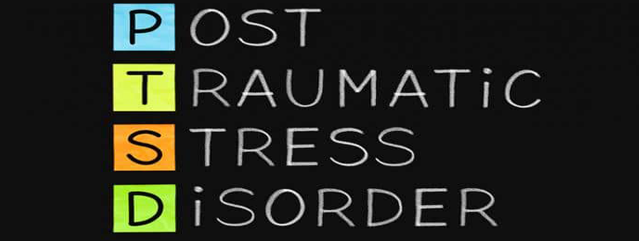
In the aftermath of the latest vehicle-ramming attack, this time in Toronto, I’ve been feeling a little more agitated and hyper-vigilant. Thank goodness, no one I know was injured or killed. Still, my brain can’t seem to fully let go of the horror. Most likely my reaction has a lot to do with post-traumatic stress disorder, a result of my own traumatic experience fifteen years ago, when an older driver confused the gas pedal for the brake and rocketed through the Santa Monica Farmers’ Market , striking dozens of pedestrians. Ten died; I was one of the survivors.  So, of course, each time I hear of yet another vehicle-ramming attack, my brain and body is yanked back fifteen years. And I can’t help but still feel the fear storm through all those who had been walking through Toronto’s north end when twenty-five-year-old Alek Minassian intentionally sped down a busy street in a rented van. I still taste the blood, hear the screams, hear the sounds of crushing glass and metal. For those who witnessed the attack – bystanders, rescue workers, family and friends of the victims – they too are likely suffering from PTSD symptoms. And imagine the grief stricken faces of the loved ones of the injured and dead when they received that unthinkable phone call, or saw the carnage unfolding on television.

For anyone who has survived, or witnessed (first hand or in the media) trauma of this kind – a car crash, terrorist attack, mass shooting – don’t be surprised if this latest tragedy has left you a little more overprotective of your children, fearful of crowds, or hype-aware of your surroundings each time you go for a walk. And maybe you’re experiencing a resurgence of nightmares. Though don’t be surprised if you’re experiencing hypo-arousal: numbed out and not present in the world around you. This kind of trauma rocks us at the core, gnaws into our sense of safety, cracks in half any sense of predictability.

For some, PTSD symptoms naturally resolve; for others it lingers. Studies have shown that up to five days after the 911 attacks, 44% of Americans noted at least one symptom of PTSD. Two to four months later, 11% of NYC residents reported persistent symptoms.

No matter how your PTSD symptoms present themselves, they are real, very real. So, please, talk to your family, your friends, your neighbors, to clergy, social workers, educators, to anyone who will listen.

Because

You

Deserve

To be heard

You

 Deserve

To be

Understood


Read More

How To Be Your Own Best Editor

your_own_best_editor

Are you a writer who is wondering how to tackle editing your manuscript? As I edit my memoir, I think about the tips Ann Hood  shared at the Muse and Marketplace last May in her workshop, “How To Be Your Own Best Editor.” I left the workshop with pages of a notebook filled with her savory tidbits, and re-read them again and again when I’m stuck. Here they are:

First, you need to develop writing habits that you can keep. And don’t allow anything to interfere with your writing time. If need be, Ann suggested finding a writer friend who is amendable to signing a contract with you.

Each day, before writing the next pages of her manuscript, Ann reads aloud what she wrote the day before, and edits at she goes along (it’s too easy to skim over awkward sentences and words when reading silently). She could not have emphasized this enough: When writing first chapters, start where something happens rather than with backstory. While working on those first pages, Ann reminded us to avoid starting with clichés like long descriptions of the weather, or a scene where someone is waking up. As she said, we all wake up the same way: we crawl out of bed, and rub the sleep from our eyes as we shuffle to the bathroom, pee, brush our teeth, etc. I believed it when Ann declared that first chapters tend to get revised the most – I’ve lost count as to how many times I’ve deleted the first chapter of my memoir in progress and have had to start all over again. This happens because we usually start the piece in the wrong place, and believe that’s exactly where the book should start.

On a micro editing level, Ann cautioned against overuse of the verb to be, as in, “she was walking.” Instead, write this: “She walked.” Similarly, she advised to watch out for extraneous and vague descriptors like “so,” “awesome,” and “meanwhile.” The same goes for words like “smile,” “look, and” laugh.”  A recent word count of my two-hundred-fifty-page memoir revealed fifty smiles, and at least seventy looks. Ann suggests we strive for something that is uniquely revealing to your character, such as picking at knuckles to show a nervous response. Here’s another micro editing detail worth jotting down on a Post-it and sticking on your desk: make sure the beginnings and ends of scenes and chapters are resonant.

On a more global point, Ann referred to Grace Paley’s assertion that every story is two stories: the one on the surface and the one bubbling beneath. The climax is when they collide. The external conflict is the plot, or the tangible parts of the story, whereas the internal conflict is a need.

Ann also alluded to Flannery O’Conner, who said writing is painting a picture with words. Or, rather than stating emotions, show them. How is your character sad, angry, or lonely? And don’t forget to have the protagonist do three essential things along the way: React, reply, reflect. As for dialogue, it should do more than offer information. It should advance the conflict, develop character, move the story forward. Of course, you can’t forget the setting – every scene should have one. Is it in a hospital, an office, at the beach?

When finished with a complete draft, Ann urged us to put it away for three months before sending it out to agents (at the very least, one month). Why? She summed it up in an Allen Ginsberg quote: “To regain your voice, you need to forget you ever heard it.” Now that’s worth writing down on a Post-it.

Please feel free to share any thoughts, questions, or insights.


Read More

Stages of Forgiveness

stages_of_forgiveness

*Years after eighty-six-year-old Russell Weller ran me down at the Santa Monica Farmers’ market, I possessed enough emotional fortitude to unearth the new articles I had collected about the accident. It was then when I decided I needed to find a way to forgive him. I’ve been told that forgiveness is over-rated, that you don’t have to forgive to heal. While that might very well be true, my want to forgive others for any wrong committed is part of my constitution. So I had to at least make an attempt to forgive Russell Weller. Otherwise, I’d be infected with a case of chronic bitterness and cynicism, and worried I’d be contagious. Who wants to hang out with someone with a transmittable illness she has the capacity to heal?

To forgive, one must first assign blame. But, as in Russell Weller’s case, if there is no act of intentional harm, where do you place blame and, therefore, how do you forgive? To add an additional elusive layer, how do you forgive someone you’ve never met? Is it even possible to forgive someone you don’t know? I reached out to Russell Weller’s family years after the accident, but they refused my request to visit him. In 2010 he died.

The following year, I enrolled in an MFA program. During my third semester, still befuddled as to how to forgive Russell Weller, I wrote my critical thesis on the topic: The Face of Forgiveness. I examined how a particular writer, who had sustained life-threatening injuries after a car struck him, navigated the indeterminate nature of forgiveness on the page. Because each circumstance varies, forgiveness cannot be defined in absolute terms. **Since forgiveness is a process, I arrived at the conclusion that it can be charted in stages:

1) Understanding of the accident/incident

2) Transference of anger and other emotions

3) Self-pity

4) Awareness of others’ suffering

5) Avoidance

6) Surrender

These stages don’t necessarily occur sequentially. Like Elizabeth Kubler Ross’ stages of grief –denial/isolation, anger, bargaining, depression, acceptance – the stages of forgiveness may overlap, or one may become stuck in a particular stage. For me, I became stuck in one or two, and skipped another one or two altogether. It’s also worth noting that the stages of forgiveness may not occur in a defined timeframe.

Stage 1: Understanding of the accident/incident:

I dedicated months to reading news articles and investigative reports, parsing out the details of the accident: What Russell Weller was doing in the moments before he sped through the market, his medical history, his driving history, what bystanders witnessed at the scene of the crash. Somehow, I believed by reading those articles I would get to know Russell Weller and, therefore, be able to forgive him, or not. But written words weren’t enough – they seemed static on the page. Even though some articles included his apology – “I’m deeply sorry for any pain that everyone went through” – I could not hear his voice, hear his remorse, anger, or fear. And with all the contradicting statements about Russell Weller’s character and what people saw or didn’t see, I only became more confused. I felt like a pendulum – swaying dizzily between sadness and anger.

Stage 2: Transference of anger:

As I read articles about the role the local entities had to play in running the market, any anger I harbored for Russell Weller quickly transferred to city officials who were responsible for ensuring the safety of pedestrians. I wondered why they didn’t have sturdy barriers in place, rather than wooden sawhorses. But, similar to my confusion regarding how to feel about Russell Weller, my feelings and emotions swayed – from judgment to understanding, from contempt to submission.

Stages 3 and 5: Self-pity and Avoidance:

I did not become victim to self-pity  – perhaps the perpetual warring dialogue in my head thrust self-pity aside. For the same reason, I skipped avoidance.

Stage 4: Awareness of others’ suffering:

As I continued my dogged search to find meaning within the chaos, I could not help but be lured into an awareness of others’ suffering.  I imagined the physical and emotional pain the other injured pedestrians endured, and the rage and anguish that tore into the families of the deceased. I viewed Russell Weller as injured, too – emotionally, mentally, psychically. I imagined Russell Weller’s grief: plagued by nightmares, isolated behind drawn window shades, sallow from regret.

The judge who presided over Russell Weller’s trial said he “lacked remorse” Because he didn’t cry? Why is it that we have a tendency to forgive others only if they exhibit unequivocal remorse: falling to their knees, drooping, sobbing? But a display, or physical showing, of remorse is not necessarily what matters to those harmed. Of course, a sincere apology does not negate the harm done, but sincerely spoken words of remorse are what matter. The quality of the voice matters: is it harsh, tense, creaky?

In 2011, I Finally obtained and viewed a copy of the videotape of Russell Weller speaking with police officers soon after the accident. I slid the video into the CD player, inched close to the television screen, so close I felt as if he and I were together in the same room. Though he did not cry, his full-toned voice quivered as he said, “I’m in trouble with my heart and soul.” He voice quieted to a whisper, as if he were in church mourning over the dead: “God almighty, those poor, poor people.”  That’s when I forgave Russell Weller. That’s when I surrendered – to Russell Weller’s remorse.

Is there anyone in your life you want to forgive? Have you forgiven someone who has caused you harm? How did you arrive at forgiveness?


*Originally posted at Speak Out! A blog about surviving traumatic brain injuries. Hosted by Donna O’Donnell Figurski.

**Stages of forgiveness conceived by Melissa Cronin


Read More
How to Keep Your Brain Fit


memorizing_poetry

Do you enjoy memorizing poetry?

Do you recall your youth, when when your teachers assigned you poems to memorize? Shall I compare thee to a summer’s day? Sound familiar? Or maybe you have craftily blocked that time period from your memory bank. But, like our quads and gluts, the brain is a muscle too. If we don’t exercise our muscles they’ll turn to flab. Memorizing poetry, or a song or scene from a movie, is just one way to keep our brains fit. And the profits are worth the time invested (I know, you’re wondering what the profits could possibly be).

Memorizing poetry primes our brains for retaining other types of information like names of people or a list of groceries. Studies have shown that rote learning benefits the hippocampus, the part of the brain responsible for consolidating short-term memory into long-term memory (http://www.bestcollegesonline.com/in-praise-of-memorization).

Memorization helps us focus, and improves our working memory – the ability to hold multiple pieces of information in the brain at once – allowing us to comprehend what we read, see, and hear. According to Bloom’s Taxonomy, “the highest order of thinking occurs at the evaluating and creating levels which infer that the thinkers must have knowledge, facts, data, or information in their brains.” With the facts laid down in our brain, we are better prepared to evaluate information and think critically (http://www.edutopia.org/rote-learning-benefits.http://www.bestcollegesonline.com/in-praise-of-memorization).

A regular practice of memory training staves off cognitive decline. For those of you who are living with the sequelae of a brain injury, try memorizing a poem, even if it’s a short one, like The Red Wheelbarrow by William Carlos Williams (http://www.poetryfoundation.org/learning/guide/178804).

But how do you begin memorizing a poem? For me, I focus on two lines at a time, repeating them over and over. I close my eyes and visualize the words. For instance, a few years ago, I memorized my first poem, Once by the Pacific by Robert Frost. Here are the first two lines:

The shattered water made a misty din.

Great waves looked over others coming in

I started by envisioning myself walking along the beach, listening to the waves crashing to shore, washing over pebbles – the sound of “shattered” glass came to mind. “Shattered” became a signpost that carried me further into the poem. I immersed myself in the scene, watching the waves roll over one another. If you’ve been to the beach, you know how waves behave, so the key is to allow yourself to be there, in your head.

I tend to choose poems that resonate with me, the ones with which my body and psyche connect, like Once by the Pacific. Before I explain exactly how I connect with the poem, here are the remaining lines:

And thought of doing something to the shore

That water never did to land before.

The clouds were low and hairy in the skies,

Like locks blown forward in the gleam of eyes.

You could not tell, and yet it looked as if

The shore was lucky in being backed by cliff,

The cliff in being backed by continent;

It looked as if a night of dark intent

Was coming, and not only a night, an age.

Someone had better be prepared for rage.

There would be more than ocean-water broken

Before God’s last Put out the light was spoken.

For me, shattered, dark intent, rage, and more than ocean water broken conjure images of the Santa Monica Farmers’ Market, where an elderly driver hit me and dozens of other pedestrians. This poem catapults me back in time, just prior to the accident, a portent, if you will. You may wonder why I’d want to remember that moment, but the poem does much more than conjure tragedy ;it speaks to my love for the ocean. When I’m home in Vermont, hunkering down for another frigid winter, this poem transports me to the beach my husband and I visit a few times a year in Anna Maria island. Again, I close my eyes and see myself walking barefoot in the water, the waves massaging my feet, the salt marinating my wintered soles.

I’m currently memorizing T.S. Eliot’s Preludes – 54 lines. I’ve gotten part way through the third stanza. I’ll let you know how it goes.

What poems have you memorized, and what prompted you to choose them? What is your strategy for memorizing poems?


Read More