Pearl of Wisdom for Writers

As a writer, the hardest part for me is getting the words on the page, meaning this: my brain manages to arrange precisely what it is I want to write, but once I sit my butt in the chair, and face the screen, my brain slams its door shut. If only I had the key to that door, quick access to the words so beautifully aligned in my head. But, alas, I do not have such a key. Instead, I keep at it, and sometimes find myself sitting in front of the computer for an hour before coming up with a sentence I’m half-willing to share with the world.

Herein lies the problem: I fret way too much over every single word I write. I worry too much about what others will think of me and my writing once they read my work. Sure, there are days when my fingers dance a smooth Rumba across the keyboard, but those days are few and far between. What do I do about this? While it would be nice if I did have a key for the times my brain locks me out, I might lose it. Then what? What I need to do is build my own door, open it up all the way, and invite into my writing home whatever comes my way. What I need to do is loosen up a little more, to be a little more brave, a little more willing to do a Rumba.

If I’ve learned from anyone what it takes to do the narrative dance with abandon, it’s my brother-in-law Chris. Though he’s not a writer, he does know how to let go and be himself. What I admire the most about him is his so-what? attitude. He doesn’t empty his mental gas tank worrying about what others might think of him when he shares what he needs to share in the moment. In other words, he is as authentic as authentic gets. As long as I’ve known him (15 years), he has spoken his emotional truth, and has blown me away with how easily and calmly he speaks about all things real and human without censorship or self-judgement.

Because Chris is a self-described non-writer, and usually prefers to engage in live discussions with people, rather than texting, emailing, or sending letters, I was shocked and delighted when he texted his siblings and other close family a brief synopsis of his experience during his recent road-trip from Vermont to Florida. (For context: Chris was his mother’s caregiver for nearly two years, the reason why he did not hike the Appalachian Trail. She lived at OLP for a year, and passed away on November 21, 2018)

Let me write this down and share it, as time has a way of at least dulling my memories. On my adventure to Florida, I stopped at Johnson City, Tennessee. The next morning, I left and started south on Interstate 26. It’s difficult to describe on paper the majestic vistas I witnessed. The sheer power of the mountains as I traveled through the Smokies, Cherokee National Park, and the Appalachia Trail. I could not help have thoughts of regretting my decision in 2016 to not hike the AT. All the things I could have seen and experienced danced through my head. Daydreaming was definitely prevalent, but reality set in and navigating Atlanta was on my mind. South of Atlanta my mind once again drifted, but this time it was filled with visions of Mom. I will only try to describe one of the many that popped into my mind that afternoon. I am sitting with Mom – the place could be in Florida or OLP (Our Lady of Providence Residential Care Facility). Mom is eating a cookie, or could be candy, or ice-cream, that part doesn’t matter. I am cooking Mom some fish and a veggie. I mention to Mom to save room for dinner as she takes another bite of her goody of the day. Mom looks at me and tells me that she’s not hungry. I say nothing as she looks at me, daring me to contradict her. When I say nothing, she goes back to what she was doing, but I can’t help seeing an impish little smile that tells me she has won again, and is still in control. That night, as I fell asleep, my only thought was that I have no regrets. Majestic Mom and the real memories outweigh the majestic mountains and the wannabe memories. This will the last time I write something like this.

During a recent family gathering, I asked Chris what he meant by the last sentence in his text. To be honest, I was afraid of what he might say. You see, Chris has stage 4 lung cancer, and anytime he mentions the word “last” my overthinking brain raises its worry flag.

When he gave me a long goggle-eyed stare, I wanted to curl up and crawl inside myself.

Then he said, “Because it took me all day to write it. It was mentally exhausting.”

He smiled (thank goodness), which gave me permission to smile too, and we both nodded in agreement at one another.

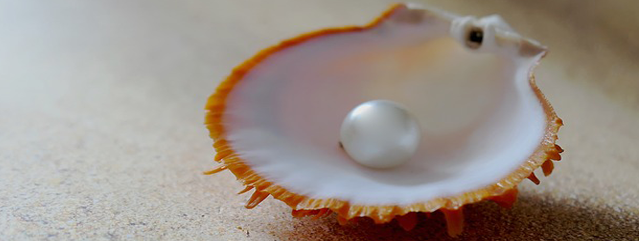
But here’s the pearl of wisdom Chris so kindly offered, and which I quickly hung on a sturdy hook in my brain: “I wanted to write something during my trip,” he said, “but my head wasn’t in the mental space. Yesterday it was, so that’s when I wrote it.”

Because I’m a writer, I think I should write every day, seven days a week. But there are days when my “mental space” is closed, maybe because it’s out of town for a long-weekend, or it’s come down with a bad cold and needs a day or two on the couch, or maybe it simply needs a timeout. I think I just might do that: take a timeout the next time I’m sitting at the computer, and my brain slams its door on me. Yes, I think I will do that. And not regret it.

Chris’s cancer diagnosis has smacked him in the face with his own mortality, and it doesn’t take much to physically and mentally wear him down these days, but I know he has plenty of pearls left. And I can’t wait to open up his next serving of oysters.

Read More

Gratitude

Every Thanksgiving I think about all that I’m grateful for, but this Thanksgiving is different, which isn’t to say I’m not grateful for a heated home, warm clothing, plenty of food in my refrigerator, my husband’s culinary skills, a fluffy pillow on which to lay my head every night, hot tea with local honey every morning, and, of course, family and friends. I am grateful for all of those things, and much more, including the time I cherish for writing. So how is this year different? The ever-widening wake of divisiveness ripping through our country, and beyond, has knocked the wind out of me with such great force that I’m finding it difficult to breath deeply these days, deeply enough so that I am fully sated with gratitude. (Just so you know that wasn’t easy to admit.) For as long as I can recall, no uninvited change of events, or individual, not even someone the likes of _______ (I still can’t say his name) has left me so winded.

But, as I write this somewhat depressing post (it gets better, I promise), I realize that, hey, it’s Thanksgiving, and I cannot, will not, let ______, or the divisiveness, continue to deprive me of the air I need to take full breaths. After all, if I don’t, what good am I? If I don’t breath in all the gratitude my belly can house, then I’m giving up. And isn’t giving up a selfish act? Just writing that makes me queasy. So, what next? My closest confidante tells me to act. But easier said than done, right? Maybe not. Maybe to act means starting small, even if small doesn’t seem like enough. Maybe to act means to listen – to others, all kinds of others. Closely. Maybe to act means to be proactive; to ask what others need before they have to ask for that need; to offer food or drink or a hat to people on the street before they have to beg for it; to speak out and give on behalf of others who have been tongue whipped into believing they have no voice at all.

I think I’ll act this Thanksgiving by asking my eleven-year old niece if she has any ideas about how to be proactive since  _______ was elected. Who knows, maybe she’ll come up with one, or two or three, that will knock the wind out of me – that kind of breathlessness I welcome.

I hope you, too, will follow along, and fully breathe with me, because, hey, I need you; no one can do it alone. With that, I offer you a heaping serving of gratitude for listening to me. Thank you. Wishing each and everyone of you a happy Thanksgiving.

P.S.

For dessert, here’s what else I’m grateful for:

My mother-in-law’s stories, and crocheted hats

The change in seasons

The awareness to listen

Sleep

Warm baths

Good wine

Good books

Flowers any day of the week

A lit candle

Things that make me laugh

Anything that makes me cry

A homeless man who says he likes my smile and to keep smiling

The time to volunteer

Visiting with my ninety-four-year-old neighbor

Pain (a reminder that I’m alive)

Relief from pain

My mother’s every-other-day phone calls

The nursing home staff who take good care of my father

My brother’s generosity, and humor; and his wife’s cheerful spirit

My three stepdaughters, who don’t mind my quirks

My niece, who still likes to play with my hair

My eight-year-old nephew, who still lets me give him smooches on the cheek

Chimes singing with the wind

Rabbits

The smell of a newborn baby

Holding a baby (someone else’s baby)

Walking barefoot in the sand or grass

Popcorn, lots of popcorn

Dark chocolate

My husband’s hands on my feet

My husband singing to me

A dog’s wagging tail

Personalized cards in the mail

All of those who have helped me become the writer I am today

Quiet time

Surviving

Being alive


Read More

Writing Prompts

writing prompts

I recently attended a memoir writing retreat at La Finca in Vieques, Puerto Rico, where eleven of us gathered in the Caribbean breeze each morning to discuss work submitted by two separate participants. But before we plunged into the nitty-gritty of structure, voice, character development, and so on, we warmed up our brains each morning by spending fifteen minutes responding to a writing prompt provided by Elizabeth Cohen, award winning writer, poet, memoirist, journalist, steadfast writing mentor, and Assistant Professor of English at SUNY Plattsburgh.

I like writing prompts, timed prompts; they drive me to write fast, to keep the pen moving, to not fret over whatever it is I’m writing about. Prompts force me to let it all out, to express what I otherwise would second-guess expressing. One of my favorite prompts Elizabeth offered us came from a Mary Oliver poem, “The Summer Day.” In the poem she says, “I don’t know exactly what a prayer is.” The prompt: “What is a prayer?”

Maybe I wasn’t paying close enough attention to what Elizabeth asked us to respond to, because I heard her say this: “What does it mean to pray.” But, hey, that’s the beauty of prompts; they leave room for choice. So here’s what I wrote:

To be still and quiet is to pray. To walk barefoot in the grass, and feel each blade between the toes. To close your eyes against the day’s glare and turn inside yourself and breath out any knots and tangles. To breath in the memory of being carefree, of doing water angels and skipping stones on a midnight lake. To pray is to sing, to write, to call forward that which makes you still, still enough to listen to the sounds you cannot hear. It’s to hold close to you the heartbeat of what matters most to you. To pray is to remember that you are not alone, and that candy breezes have the capacity to carry you closer and closer toward the inside of you, deep into the uterine center of you. To pray is to imagine, to feel, to hold a butterfly in the palm of our hand.

I’d love to hear from others what it means to you to pray. (or if you’re good at paying attention, “What is a prayer?”) What other mind-limbering prompts do you have to share?

Read More

National Novel Writing Month

nanowrimo

I wrote a novel in thirty days last November. Yes, you read that correctly. Thirty days. How did I do it? The drive to write, determination, and encouragement – from family, friends, and the staff at nanowrimo.

Nanowrimo, or National Novel Writing Month, begins every year on November 1, when participants begin working toward the goal of completing a fifty-thousand-word novel by midnight on November 30. Anyone can participate, from novice to veteran writers. All you need to do is sign up, create your novel on the website, and, of course, write at least sixteen hundred and sixty-seven words a day.

So what motivated me to spend a month doing little else but write? First, I already had an idea for a novel in mind, and had been thinking about starting it, but kept telling myself I’d get to it later, maybe next year. In September, two months before the kick-off of nanowrimo, my stepdaughter said, “Melissa, do it; you can do it.” Her enthusiasm was contagious. Why not? I thought – after spending the spring and summer revising my memoir, I had put it aside, with plans to read through and revise it, yet again, starting in December. So, what better time than November, when darkness presses down on the light, to push back against the sluggish side-effect of winter’s gloom, and write the first draft of my novel?

How did I begin? I began before the beginning – a lot of research, an outline, a diagram of the novel’s arc, flashcards jotted with brief descriptions of each chapter, character sketches – physical descriptors and clothing styles, family and work history, hobbies, dreams, favorite foods, habits, living situations, and strengths and weaknesses. I assigned each character a name that conjured his or her unique temperament, and downloaded from the Internet images that matched each character’s personality. I created living, breathing, heart-beating human beings, and listened to the nuances of each of their voices in my head. I moved into their lives, their minds, their every thought. I did all of this before typing word one.

Though I started preparing two months in advance of the kick-off of nanowrimo, and felt confident about the trajectory of my story, when I finally sat my butt in the chair to type the first sentence, the uninvited judge living in my head spoke mightily. And there were days when my brain churned on sloth speed and I struggled to reach the minimum daily goal of sixteen hundred and sixty-seven words. But I countered the judge’s arguments, re-filled my brain’s glucose tank with fun snacks (mostly dark chocolate), and gave myself pep talks: “Keep typing, keep writing, keep the characters alive and breathing.” Of course, there’s something to be said for seeing progress, in numbers. That’s partly how nanowrimo kept me going: Each day I downloaded what I had written on the website and, voilà, the link calculated exactly how many words I had written, how many words I had left to write, and my average word count per day. More than the word count, the unraveling of the story sustained me. By November 28, I had fifty thousand words. I was ahead of schedule! On November 30, I typed my last sentence. Total word count: fifty-three thousand nine hundred fifty-nine words.

Though it’s only January, and November is three seasons in the future, if you’re thinking about writing a novel, and want to sign up for nanowrimo next year, it’s not too soon to start thinking about your story now: plot, arc, theme, characters.  Though some people may have the brainpower and creative heft to dive into nanowrimo without a life jacket, I vote for having one nearby, whether it’s an outline, a diagram, or both. And getting your work onto the page will boost your confidence, deliver a lasting high, encourage you to say, “Yes, I can do it!”

Writing paraphernalia and conditions I recommend: Note cards, corkboard, your favorite pen, pencils, notebook, sticky notes, drawing paper, a quiet space, quotes from writers that inspire you, your favorite chocolates or other snacks, plenty of water, tea/coffee, comfy clothing, and a happy light for those who live in locations like Vermont, where the sun goes on sabbatical starting in November.

Good-luck!


Read More

Creating Powerful Prose

powerful_prose

Are you looking for a solution to creating powerful prose? Of course you are. Why would you want your work to be clogged up with useless words, sentences, and phrases? After reading five online writing guides, I found that most of them agreed on the same words that, as one guide asserts, “deserve to die.”

Many of the words you can safely kill are ambiguous ones like adverbs and adjectives. For instance, writing “The toddler jumped high” doesn’t tell us how high he jumped. Two inches? Ten inches?  The same goes for the following: “The woman is tall.” Your version of tall will likely be different than mine. But if the sentence is written with detail, as in, “The woman is six foot eleven,” then we can agree she’s tall.

Here is a partial list of more words you can kill off:

Very and Really: Though both are meant to augment an adjective, verb, or another adverb, they do the exact opposite – they weaken the word it intends to modify.

Just: this word also weakens the writing. If someone smacked my hand every time I used “just,” I’d have one huge bruise.

Perhaps and Maybe: Both of these adverbs make the writer sound unsure, which makes the reader question the writer’s reliability. When reading my work recently, an editor told me she noticed I use both of these words too often. (how much is too often?) She also mentioned that women tend to use “maybe” and “perhaps” more than men. I don’t know how true that is, but her feedback made a difference. Each time I’m tempted to write “maybe” or “perhaps,” as in, “Maybe I felt sorry for him,” I stop myself and ask, “Well, do I?” If so, I write it that way: “I feel sorry for him.”

Always and never: Both are absolutes, and nothing is absolute. It’s best to employ these words when writing a command, such as “Always lock the door before you leave the house” or “Never leave the car door unlocked.”

Thing: This is lazy writing. What things? Books, chairs, bubble gum wrappers?

Amazing: This word is overused: “That was an amazing movie … The hike was amazing… The concert was amazing.” Which brings us to …

“Was:” A to be verb. I know I’ve mentioned this in previous blog posts, but it’s worth mentioning again. The to be verb is sometimes warranted, but action verbs make for stronger prose. Instead of saying, “I was walking to the beach,” say, “I walked to the beach.”

Let’s look at the two options in the following sentence using “amazing” and “was”:

“The sunset was amazing” versus “The sun descended below the horizon, painting the the sky magenta and red.” Which sounds better?

I invite you to explore the following websites for more words to destroy:

Lit ReactorPlague words10 words to cut

Feel free to let me know how it goes.

Read More