Are You Wearing a Helmet?

helmet

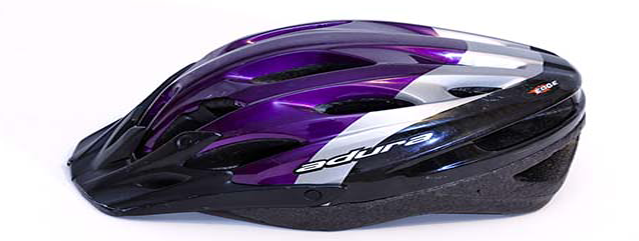
With the warmer temperatures finally here, maybe you’ve unlocked your bicycle from sitting stiff in the garage all winter, and have been riding it, hopefully with a helmet, to work every day. Or maybe you ride for pleasure – to feel spring wash over your face while inhaling the lilac scented breeze.

It’s estimated that nearly 70 million Americans ride bicycles. It goes without saying that riding a bicycle is good for your health, but doing so does not come without risks, especially if you are not wearing a helmet. More than 600,000 people go to emergency rooms each year for bicycle-related injuries. Each year, head injures account for about seventy-five percent of bicyclists who die from crashes. Out of the estimated 33 million children who ride bicycles each year, nearly four hundred die from crashes and 153 million go to the ER for head trauma.

But there’s good news: wearing a helmet can prevent eighty-eighty percent of TBIs from bicycle accidents. This solution is a no-brainer (no pun intended). But how many adults, and children do you see riding a bicycle without a helmet? You may wonder why some people choose not to wear a helmet, why some parents do not insist that their children wear one too. Perhaps parents don’t think it will happen to them or their children – fall into the road and hit their head on the pavement, or get hit by a car in the process. Perhaps they forgot their helmets and didn’t feel like turning around to go home and get them. Or they think they’ll look silly wearing a helmet. Better to look silly than the alternative.

I’ll stop lecturing and offer you this video about how to properly fit a helmet. It will only take three minutes and forty-seven seconds of your time. And, if you’re concerned about appearances, check out this site here for some stylish helmets.

If you cannot afford the more costly helmets, click here or here for less expensive ones (disclaimer alert: some of the larger corporate stores I don’t necessarily endorse). You might contact your local bike shop, school, or fire department for places to purchase helmets. This past March, during Brain Injury Awareness Month, the Brain Injury Association of America partnered with Nutcase Helmets to raise awareness about TBIs. For every helmet purchased, two dollars went to the BIAA. Is there a similar fundraising effort happening in your area?

The government is working to prevent brain injures from bicycle accidents by enacting legislation that would require bicyclists to wear helmets. Twenty states have some form of a helmet law, but most only apply to riders under eighteen. To see which states currently have laws in place click here.

Happy, and safe riding!

Read More

How to Write About Body Image

body_image

If you had to write about your body, what would you say?

First, let me define body image: it’s how you think and feel about your body, it’s shape and size, how you see yourself in the mirror, how you feel in your body.

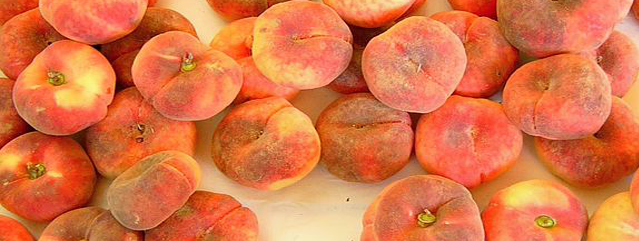
Writing about your own body might feel a lot like walking through town naked. But I’m not here to encourage you to strip on the page, though a certain amount of stripping is required in order for our readers to get to know us as real human beings. The more important question is, when writing about your own body, how do you avoid the pitfall of naval gazing? Through metaphor, imagery, the five senses. When writing the following piece, my aim was to do just that – become intimate with peaches – to smell, feel, taste, touch my way toward a more positive image of my body. I chose peaches because they are one of my favorite fruits, and it was a peach I last recall holding before an elderly driver ran into me at a farmers’ market several years ago. So I guess you could say I’m obsessed with peaches and what they, particularly the one I held at the market, mean to me: changes in the body,  acceptance, re-newal, survival. I wrote with those interpretations in mind when crafting the following narrative:

I gently roll a peach between my palms, its downy coat tickling my fingers. I study the curves and arcs of its plump body. I’m searching for the perfect peach: golden hued with no deformities. But I notice that it has  a soft spot with a purplish bruise, and place it back in the display. I stand among the peaches for another fifteen minutes, picking up a scarred one, a wrinkled one, then another with a slit in its skin. These damaged peaches must taste like wood, I think. I choose one more, and bring it close to my nose. I inhale, smelling earth. I’m tempted to buy it, but notice a blemish at the base, and motion to place it back among the ones that are disfigured. I pause, and tell myself to give this peach a chance. Maybe it will taste better than it appears. I buy it, and as I walk away from the farm stand, sink my teeth into it, its blushed skin forgiving. Pulp bursts with warm juice. I stop, swallow. Summertime trickles down my throat. Sweet. Perfect. 

Do you have a body image narrative to share? If not, I hope this post inspires you to strip, just a little.

Read More

Equine Therapy for Post-Traumatic Stress Disorder

equus-1-1261416-m


Are you in search of a creative, interactive approach to treating post-traumatic stress disorder?

Several years ago, when horseback riding, I reached behind me for my raincoat that was strapped to the back of the horse. As I swung the coat toward me to put on, the horse bucked and started running. I panicked and forgot what I had learned a few moments earlier – not to hold the reins too tightly, which will only make the horse pull harder, or lean forward, which signals the horse to run faster. The guide, who was not far behind me on his own horse, yelled for me to let up on the reins and sit back. I took a few deep breaths and and did as he said. The horse soon slowed, then finally came to a gentle stop. After my heart slowed from a gallop to a trot, the guide explained to me that I had startled the horse with my yellow coat.

Soon after that incident, I went horseback riding again, and had a positive experience. Since then, I have not been on a horse; I’m not sure why? As I age, am I more fearful that I will get hurt? Yes. And living with PTSD has made me more fearful of taking unnecessary risks. So why would I even think about getting on a horse to trot through wild territory? But horses are extremely affectionate and accepting animals, and have a lot to offer human beings.

For more than fifty million years, horses have played a role in transportation, entertainment, farming, and more. By nature, horses are instinctive and highly alert and, therefore, equine therapy can help those suffering from PTSD symptoms like hyper-vigilance. Horses may not speak, but they do communicate by mimicking human emotions. For instance, if you are feeling anxious, horses will react by, say, widening their eye or flicking their ears. In other words, horses are our mirrors. Their non-verbal feedback is a prompt for us to better understand our internal processes. We can then modify our behaviors. The key is to be in-tune with how horses react when you are with them. Equine therapy has been noted to help with emotional healing: among a long list of benefits, it decreases anxiety, improves social skills, assists in better communication; and increases confidence, self-awareness, and trust.

I recently decided that, in order to confront my fear of horses, I need to get back on a horse soon. So that’s what I intend to do this summer.

If you’re interested in equine assisted psychotherapy program, check it out!

Read More

Bananas

bananas

During a visit with my father last October, I experienced a moment of mutual presence with him, a moment so rare between the two of us that I had to write about it, not only for me, but for you. Do you have a similar experience you are in need of sharing?

Bananas 

While I eat lunch with my father today, he stares at the bunch of bananas in front of him. “They’re so beautiful,” he says. “Their so yellow.” He smiles, then giggles. Who is this man?

Before my father’s dementia started progressing a few months ago, he never noticed the details of anything beyond his checkbook or savings account. We certainly never discussed the aesthetics of fruit. But maybe the plaques in his brain are leaking a chemical that allow my father to be deeply aware of seemingly mundane things like bananas.

He takes a bite of his sandwich, then comments on the bananas again: “I can’t believe how yellow they are.”

Until my father’s uncharacteristic awareness, I never looked closely at the beauty of bananas: cylindrical bodies, tapered ends, and sturdy stems attached to inflorescent stalks. When I eat a banana, I usually strip the peel off, whip it in the trash, and devour the fruit. I grab a banana on the go, when rushing to an appointment, or when driving to work. After I’m finished, I throw the peel on the passenger side floor mat, or stuff it into the cup holder.

My father touches the top banana, lightly, as if taking care not to disrupt its serene poise, yet needing to feel its yellow presence. I ask him if he wants one. He pulls his hand back. “No, I just like looking at them,” he says. And so we look at the bananas, together.

Bananas was previously posted at  Beautiful Things, a weekly column by River Teeth: A Journal of Nonfiction Narrative 

Read More

Stages of Forgiveness

stages_of_forgiveness

*Years after eighty-six-year-old Russell Weller ran me down at the Santa Monica Farmers’ market, I possessed enough emotional fortitude to unearth the new articles I had collected about the accident. It was then when I decided I needed to find a way to forgive him. I’ve been told that forgiveness is over-rated, that you don’t have to forgive to heal. While that might very well be true, my want to forgive others for any wrong committed is part of my constitution. So I had to at least make an attempt to forgive Russell Weller. Otherwise, I’d be infected with a case of chronic bitterness and cynicism, and worried I’d be contagious. Who wants to hang out with someone with a transmittable illness she has the capacity to heal?

To forgive, one must first assign blame. But, as in Russell Weller’s case, if there is no act of intentional harm, where do you place blame and, therefore, how do you forgive? To add an additional elusive layer, how do you forgive someone you’ve never met? Is it even possible to forgive someone you don’t know? I reached out to Russell Weller’s family years after the accident, but they refused my request to visit him. In 2010 he died.

The following year, I enrolled in an MFA program. During my third semester, still befuddled as to how to forgive Russell Weller, I wrote my critical thesis on the topic: The Face of Forgiveness. I examined how a particular writer, who had sustained life-threatening injuries after a car struck him, navigated the indeterminate nature of forgiveness on the page. Because each circumstance varies, forgiveness cannot be defined in absolute terms. **Since forgiveness is a process, I arrived at the conclusion that it can be charted in stages:

1) Understanding of the accident/incident

2) Transference of anger and other emotions

3) Self-pity

4) Awareness of others’ suffering

5) Avoidance

6) Surrender

These stages don’t necessarily occur sequentially. Like Elizabeth Kubler Ross’ stages of grief –denial/isolation, anger, bargaining, depression, acceptance – the stages of forgiveness may overlap, or one may become stuck in a particular stage. For me, I became stuck in one or two, and skipped another one or two altogether. It’s also worth noting that the stages of forgiveness may not occur in a defined timeframe.

Stage 1: Understanding of the accident/incident:

I dedicated months to reading news articles and investigative reports, parsing out the details of the accident: What Russell Weller was doing in the moments before he sped through the market, his medical history, his driving history, what bystanders witnessed at the scene of the crash. Somehow, I believed by reading those articles I would get to know Russell Weller and, therefore, be able to forgive him, or not. But written words weren’t enough – they seemed static on the page. Even though some articles included his apology – “I’m deeply sorry for any pain that everyone went through” – I could not hear his voice, hear his remorse, anger, or fear. And with all the contradicting statements about Russell Weller’s character and what people saw or didn’t see, I only became more confused. I felt like a pendulum – swaying dizzily between sadness and anger.

Stage 2: Transference of anger:

As I read articles about the role the local entities had to play in running the market, any anger I harbored for Russell Weller quickly transferred to city officials who were responsible for ensuring the safety of pedestrians. I wondered why they didn’t have sturdy barriers in place, rather than wooden sawhorses. But, similar to my confusion regarding how to feel about Russell Weller, my feelings and emotions swayed – from judgment to understanding, from contempt to submission.

Stages 3 and 5: Self-pity and Avoidance:

I did not become victim to self-pity  – perhaps the perpetual warring dialogue in my head thrust self-pity aside. For the same reason, I skipped avoidance.

Stage 4: Awareness of others’ suffering:

As I continued my dogged search to find meaning within the chaos, I could not help but be lured into an awareness of others’ suffering.  I imagined the physical and emotional pain the other injured pedestrians endured, and the rage and anguish that tore into the families of the deceased. I viewed Russell Weller as injured, too – emotionally, mentally, psychically. I imagined Russell Weller’s grief: plagued by nightmares, isolated behind drawn window shades, sallow from regret.

The judge who presided over Russell Weller’s trial said he “lacked remorse” Because he didn’t cry? Why is it that we have a tendency to forgive others only if they exhibit unequivocal remorse: falling to their knees, drooping, sobbing? But a display, or physical showing, of remorse is not necessarily what matters to those harmed. Of course, a sincere apology does not negate the harm done, but sincerely spoken words of remorse are what matter. The quality of the voice matters: is it harsh, tense, creaky?

In 2011, I Finally obtained and viewed a copy of the videotape of Russell Weller speaking with police officers soon after the accident. I slid the video into the CD player, inched close to the television screen, so close I felt as if he and I were together in the same room. Though he did not cry, his full-toned voice quivered as he said, “I’m in trouble with my heart and soul.” He voice quieted to a whisper, as if he were in church mourning over the dead: “God almighty, those poor, poor people.”  That’s when I forgave Russell Weller. That’s when I surrendered – to Russell Weller’s remorse.

Is there anyone in your life you want to forgive? Have you forgiven someone who has caused you harm? How did you arrive at forgiveness?


*Originally posted at Speak Out! A blog about surviving traumatic brain injuries. Hosted by Donna O’Donnell Figurski.

**Stages of forgiveness conceived by Melissa Cronin


Read More

error

Enjoy this blog? Please spread the word!