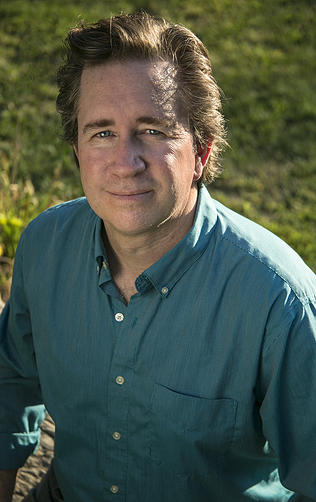
Health Care: “The Right of Every Citizen”
healthcare_musings

I recently had the pleasure to meet Dr. Gene Lindsey, a compassionate and empathetic physician for nearly four decades, who has been a guiding voice in Massachusetts concerning healthcare reform. To be fully informed about the latest happenings in healthcare, I encourage you to read Dr. Lindsey’s blog, where you can also sign up for his weekly newsletter Healthcare Musings. In an email exchange with with Dr. Lindsey, he shared with me his experience visiting his ninety-four-year-old father this past winter. Because I want to understand the aging process, and write about aging here on my website, his story intrigued me. My ninety-one-year-old father-in-law, Tom, passed away not too long ago. So, at this time, topics related to aging and loss are of particular resonance. Please enjoy this excerpt of Dr. Lindsey’s story, “I Can Do it Myself.”

This past February, I traveled to Lincolnton, North Carolina to visit my father and to share with him a celebration of what would’ve been my mother’s 96th birthday, if she were still alive.

My parents “retired” in late 1982 when my Dad turned sixty-two. After twenty-five years of “retirement,” my mother’s health declined in her late eighties, and my Dad transferred more of his time to her care. By 2006, caring for her became more than a full time job, and the medical resources to manage her various conditions didn’t exist in their community. They sold their home and bought one in the Atlanta area near my sister, whose daughter and daughter-in-law were both nurses. In Atlanta there were more specialists, with more services nearby. With the support my sister’s family provided, my parents were able to live independently. My mother survived another six years before she died in hospice care in 2013, two months before her 94th birthday.

During the last seven months of her life, after she enrolled in hospice, she lived a remarkably comfortable existence. Most of the hospice care was in their home – Mom received inpatient hospice care only when my father needed respite, and again at the end. The entire six years was a tour de force, organized by my Dad and sister.

The role of caregiver gave great purpose to both my Dad and sister until my mother died. Not only had my Dad lost his spouse, best friend, and confident of seventy years, but he lost his real purpose for existence. Dad had no social supports in Atlanta other than family. He was intellectually isolated because he had given up his work and social contacts to care for my mother. Despite many offers for grief counseling from hospice, he couldn’t connect in an effective way. 

Atlanta wasn’t the place for our Dad, but he couldn’t live alone anywhere else. In May 2013, we gathered in North Carolina at my mother’s grave to honor her on Mother’s Day. My Dad’s neglect of his health was most obvious by his instability on stairs that weekend and his story of a few “slips” at home. When he returned to Atlanta, he fell and broke his hip. 

The next six months were pretty dreadful and included a prolonged hospitalization. Our father didn’t want assisted living. My brother agreed to become a caregiver and live with him. He asked only that he and Dad find a home in Lincolnton that allowed each to have space for themselves, and that we figure out how to cover him so he could have a week each month at his home off the Georgia coast, to attend to personal business and spend time with his grandchildren.

To make such a decision is one thing. To execute the move and reestablish support systems is another. By the time of the move, my Dad had a mounting list of chronic issues – many were the result of inactivity from grief, but he still had a long list, including a cardiac pacer, residual problems from a total knee replacement, and late complications from surgery for prostate cancer.

Last May, a year after the broken hip, and as things were settling into a good rhythm in the new home with my brother, my father fell again when he tripped on a curb. He fractured his pelvis and spent six weeks in the hospital, including rehab. All the gains over the last year seemed lost.

The core issue was what part of his condition was due to memory loss and other cognitive issues and what part was situational depression and grief that might improve with the right combination of meds and rehab? Previous attempts to use psychotropic meds had been problematic. It became clear that the depression and cognitive issues would be best managed with counseling. Experience had taught us that the liabilities of meds for anxiety and depression in any but the most miniscule doses far outweighed their benefits.

Healthcare in Lincolnton had changed since my mother was forced to go to Atlanta for care. In the interim, the county hospital was sold to Carolinas Healthcare Systems, a growing non-profit system. My Dad hadn’t been effectively integrated into the system before his second fall, but he was by the time of his discharge from an affiliated rehab. Back at home, he was seen regularly in outpatient rehab, and his emotional and cognitive issues were effectively managed between his PCP and the larger system. When he visited me for a month in August, he could walk a half a mile with a rolling walker, if allowed many stops to rest.

Now, six months later, he walks a mile a day, with a sure gait, though he follows the advice of his physical therapist and never leaves home without his cane.

Earlier this past winter, he walked his daily mile on an indoor track of an athletic facility. Those 18 laps were “boring,” as he clicked them with a counter. Two months ago, an expanded supermarket opened in town, and he discovered that five laps around the perimeter inside the store was a mile. Now, while shopping, he counts his laps by shifting a coin from his left pocket to his right one at the end of each lap.

While I walked through the store with him during my recent visit, the lady in the flower section stopped us on three of our five laps: first to say hello and ask who I was, again to ask my father to pray for her friend who was having her kidney removed, and a third time to ask his advice about how to approach the store’s management about getting more work hours. My father had the time to chat, and enjoyed the opportunity to serve.

The real measure of his recovery is that he’s socially interactive with people outside his family and no longer talks about his life being empty of purpose. He’s active in his church, and writes Lenten essays requested by the minister. He has also spoken with the folks at the local hospice about volunteering and loves to attend “old philosophers” meetings at a fast food eatery most mornings. He’s developed an interest in a homeless man, who is seen regularly around town pushing a shopping cart full of his belongings.

The thematic high point of the trip occurred when we went to get in the car to drive to the store to go for a walk. I offered him a hand, but he refused my help with a curt yet logical: “I can do it myself. I will do it better this time than the last time I did it; and if I do it myself this time, the next time I try, I will be even better!”

I’m reminded of what I was taught in medical school: Grief is a two-year process. I’m also aware that many elderly people die in close proximity to the death of their spouses. I also believe that my father is the great beneficiary of the evolving body of information that’s leading to the improved care for the elderly. My Dad didn’t know how to ask for help and our efforts were well meaning, yet the job is hard and at times feels impossible. But hard is not the same as impossible, and I’m grateful for the medical professionals who appeared on cue when beckoned by a PCP who knows the family and the patient, and shows by his efforts that he cares.

The care my parents have been fortunate to receive, and the support their caregivers have been presented with may not be perfect, but all I need do is think back to the limited resources available not that long ago. The challenge now is to make care that is at least that good the right of every citizen, including the man wandering the streets with the shopping cart, who has a name and a history my father now knows.
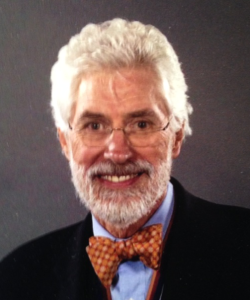


gene_lindseyGene Lindsey, MD, CEO Emeritus of Atrius Health, served as President and CEO of Atrius Health and Harvard Vanguard Medical Associates from 2008 through 2013. Dr. Lindsey has been an internist and cardiologist for almost 40 years, practicing at Harvard Vanguard Medical Associates and its predecessors since 1975. He has a long history of leadership during that time. In 1997, when Harvard Vanguard Medical Associates, a non-profit, 500-physician multi-specialty medical group was created, Dr. Lindsey became the first Chairman of the Board for this new organization.  In 2004-2005, when five groups affiliated to form Atrius Health (formerly HealthOne Care System), Dr. Lindsey joined the Atrius Health Board, and in January 2007 became its Chairman, a position which he held until he was appointed as CEO. Dr. Lindsey served on the Advisory Committee to the Massachusetts Health Care Quality and Cost Council, Special Commission on Price Variation, and now serves on the Advisory Committee to the Massachusetts Health Policy Commission. Lindsey received his medical degree from Harvard Medical School and holds a B.S. in Chemistry from the University of South Carolina. He completed an internship, residency, and was a clinical fellow in cardiology at Brigham and Women’s Hospital. Dr. Lindsey is a sought-after speaker on the healthcare topics of payment reform, accountable care organizations, practice innovation, quality and efficiency.


Read More

Glassmusic: A Novel by Rebecca Snow – Review

glassmusic

In her debut novel, Glassmusic, painterly prose brushes the page in sweeping greens and blues. Weaved throughout that lush 1920’s Norwegian landscape, is the heart of the narrative: A coming of age story in which young Ingrid struggles to come to terms with the sexual assault she witnessed against her sister, Kari.

Ingrid’s blind father, who relies on her to see for him, teachers her to play music on water-filled glasses. Those melodies, along with guiding her father, are what protect her from her secret and ground her through her tumultuous childhood. Her mother, who is jealous that her husband needs Ingrid more than her, looks away from her daughter in disappointment. And her sister, Kari, inflicts her with physical and emotional harm.

Ingrid seeks companionship, and quickly trusts Stefan, a Parisian boy visiting from France. It is this relationship, and their individual interpretations of faith and literature that spur Ingrid to become more aware of the world beyond her own microscopic one. Along with her newfound knowledge, she explores distant fjords, hills, and woods not only to escape the memory of her sister’s assault, but also to figure out who she is and who she wants to be. Is she a protector of secrets and lies or a teller of the truth? As she navigates her way toward awareness, slipping over rocky terrain along the way, she realizes that she needs her family, and that her family needs her. More so, as a reflective older child, she realizes she needs to tell the truth.

In Glassmusic, Snow creates palpable characters rich with universal emotions and conflict: anger, pity, empathy, loyalty, forgiveness, jealousy, and identity.

Ingrid’s father says, “Talking is like music, you must practice. (123).” Perhaps the same can be said for making sense of the unfathomable – it takes practice.


Rebecca Snow’s debut novel, Glassmusic, was released from Conundrum Press in November 2014. Her poetry has been published in Blue Moon, Pooled Ink, and was added to the Denver Poetry Map.  She won first place for narrative nonfiction in the 2007 Writers Studio Contest. Her piece was featured in Progenitor. Snow received her MFA in Creative Writing from the University of Montana and teaches English at the Community College of Aurora. Originally from Seattle, she lives in Denver, Colorado with her son and enjoys hiking the great Rocky Mountains.

Read More

How to Keep Your Brain Fit


memorizing_poetry

Do you enjoy memorizing poetry?

Do you recall your youth, when when your teachers assigned you poems to memorize? Shall I compare thee to a summer’s day? Sound familiar? Or maybe you have craftily blocked that time period from your memory bank. But, like our quads and gluts, the brain is a muscle too. If we don’t exercise our muscles they’ll turn to flab. Memorizing poetry, or a song or scene from a movie, is just one way to keep our brains fit. And the profits are worth the time invested (I know, you’re wondering what the profits could possibly be).

Memorizing poetry primes our brains for retaining other types of information like names of people or a list of groceries. Studies have shown that rote learning benefits the hippocampus, the part of the brain responsible for consolidating short-term memory into long-term memory (http://www.bestcollegesonline.com/in-praise-of-memorization).

Memorization helps us focus, and improves our working memory – the ability to hold multiple pieces of information in the brain at once – allowing us to comprehend what we read, see, and hear. According to Bloom’s Taxonomy, “the highest order of thinking occurs at the evaluating and creating levels which infer that the thinkers must have knowledge, facts, data, or information in their brains.” With the facts laid down in our brain, we are better prepared to evaluate information and think critically (http://www.edutopia.org/rote-learning-benefits.http://www.bestcollegesonline.com/in-praise-of-memorization).

A regular practice of memory training staves off cognitive decline. For those of you who are living with the sequelae of a brain injury, try memorizing a poem, even if it’s a short one, like The Red Wheelbarrow by William Carlos Williams (http://www.poetryfoundation.org/learning/guide/178804).

But how do you begin memorizing a poem? For me, I focus on two lines at a time, repeating them over and over. I close my eyes and visualize the words. For instance, a few years ago, I memorized my first poem, Once by the Pacific by Robert Frost. Here are the first two lines:

The shattered water made a misty din.

Great waves looked over others coming in

I started by envisioning myself walking along the beach, listening to the waves crashing to shore, washing over pebbles – the sound of “shattered” glass came to mind. “Shattered” became a signpost that carried me further into the poem. I immersed myself in the scene, watching the waves roll over one another. If you’ve been to the beach, you know how waves behave, so the key is to allow yourself to be there, in your head.

I tend to choose poems that resonate with me, the ones with which my body and psyche connect, like Once by the Pacific. Before I explain exactly how I connect with the poem, here are the remaining lines:

And thought of doing something to the shore

That water never did to land before.

The clouds were low and hairy in the skies,

Like locks blown forward in the gleam of eyes.

You could not tell, and yet it looked as if

The shore was lucky in being backed by cliff,

The cliff in being backed by continent;

It looked as if a night of dark intent

Was coming, and not only a night, an age.

Someone had better be prepared for rage.

There would be more than ocean-water broken

Before God’s last Put out the light was spoken.

For me, shattered, dark intent, rage, and more than ocean water broken conjure images of the Santa Monica Farmers’ Market, where an elderly driver hit me and dozens of other pedestrians. This poem catapults me back in time, just prior to the accident, a portent, if you will. You may wonder why I’d want to remember that moment, but the poem does much more than conjure tragedy ;it speaks to my love for the ocean. When I’m home in Vermont, hunkering down for another frigid winter, this poem transports me to the beach my husband and I visit a few times a year in Anna Maria island. Again, I close my eyes and see myself walking barefoot in the water, the waves massaging my feet, the salt marinating my wintered soles.

I’m currently memorizing T.S. Eliot’s Preludes – 54 lines. I’ve gotten part way through the third stanza. I’ll let you know how it goes.

What poems have you memorized, and what prompted you to choose them? What is your strategy for memorizing poems?


Read More

Force-Feeding: An Ethical Dilemma

What are your thoughts about the practice of force-feeding individuals who refuse to eat?

As nurses, we sometimes find ourselves in situations where we are asked to carry out clinical tasks we believe are ethically unsound. For instance, let’s look at the case of the Guantanamo-Bay prisoners who went on a hunger strike in June 2014. The military nurse assigned to them refused to force-feed the prisoners “because it felt wrong,” he said (http://www.washingtonpost.com/force-feed-detainees).

If he were to follow through with the orders to force-feed a suspected criminal, this is how it would likely play out: strapping the prisoner to a chair or bed, pushing a long rubber tube into his nose, down into his stomach, while he twists and flails, fighting to maintain a semblance of dignity.

Nurses choose to become nurses because they want to help those who are vulnerable, physically and emotionally. Nurses approach their patients as a whole entity, the mind and body a seamless system. They listen to their patients talk about their fears and anxieties. They sit with them during the night when they are awake in pain, and administer medications to ease their discomfort. They advocate on the behalf of their patients. The nursing code of ethics is clear about the role of a nurse:

The nurse, in all professional relationships, practices with compassion and respect for the inherent dignity, worth, and uniqueness of every individual, unrestricted by considerations of social or economic status, personal attributes, or the nature of health problems (http://www.nursingworld.org/Mobile/Code-of-Ethics).

According to that code, the nurse at Guantanamo acted within his rights. He acted with respect, and preserved the prisoners’ autonomy to make decisions on their own behalf. By refusing to force-feed the prisoners, he was protecting each of their individual rights.

The Guantanamo Bay case is clear-cut, but what about circumstances that are not so black and white, like force-feeding a patient with Anorexia Nervosa?

Withholding feeding, and fluids, is common practice in the terminal stages of an illness. But anorexia is not considered a terminal disease, yet patients do die from poor nutrition. Thus, feeding them is a life saving measure. But, unlike the Guantanamo prisoners, what if anorexic patients are not competent, meaning they cannot express their wishes due to cognitive impairment from severe malnutrition? What if these individuals had already displayed, through aggressive behavior, that they did not want to be fed? Do medical professionals, and family members heed those pre-incompetent wishes? But most people with anorexia have difficulty making decisions, so though they are fearful of gaining weight, and therefore starve themselves, they are not necessarily suicidal. So it’s hard to know the exact wishes of the patient (https://www.childrensmercy.org/ forced feeding in anorexia nervosa.pdf).

.

Other than force-feeding someone as a means to save a life, how else does this benefit a patient who is uncooperative, who has been administered feedings and intravenous nutrition numerous times without lasting success? When does the intended beneficent act venture into an act of great emotional, and physical, harm for the patient (https://www.childrensmercy.org/ forced feeding in anorexia nervosa.pdf)?

The ethical questions are endless. But, for nurses, and other medical professionals treating those with anorexia, they are worth examining.


Please note: the information set forth in this post is not representative of the opinion of the author, Melissa Cronin.


Read More

When The Creative Tide is Out: Guest Post by Patrick Ross

Patrick Ross Photo by Marisa Ross.

I’m excited to introduce my first guest blogger and accomplished writer, Patrick Ross, of Committed: A Memoir of the Artists Road. Patrick and I are fellow alums of the Vermont College of Fine Arts, where I had the opportunity to read parts of his powerful account of his journey across the United States to engage with creative individuals. But the book is more than about traveling; it’s about identity, and his journey of self-discovery. Starting on page one, Patrick bravely shares his vulnerabilities and demons. In this post, Patrick takes an honest look at what it means to live the life of an artist.


“Here’s a tip for artists who are in it for a lifetime. When the tide is in, write. Wake up at two in the morning if you have to and write. But if the tide is out don’t sweat it. That’s when you get your busywork done.” – Flutist and songwriter Steve “Voice of Golden Eagle” Cox, quoted in Committed: A Memoir of the Artist’s Road (p. 124).

Am I an artist who is in it for a lifetime? I’d like to think so. That was a theme of my travel memoir Committed. While on a cross-country trip interviewing artists of every type who had embraced an art-committed life, I found myself inspired to live the same way. It led me to earn an MFA in Writing and to write Committed. But just how committed am I to that life nearly five years after those interviews?

I interviewed Steve “Voice of Golden Eagle Cox” in Memphis, Tennessee. I thought of him at times as I spent the latter half of 2014 writing nothing more creative than short blog posts. No personal essays. No follow-up books. Nothing.

For a time I had a built-in excuse: Committed was published in October, so there was promotion leading up to its release, then more after its release. When promoting yourself as a writer, who has time to actually write? That frenzy of interviews, guest blogs, readings and book-signings largely came to an end. But still I didn’t write. The tide still wasn’t in.

Steve’s wisdom on the tide of creativity struck me the day he shared it with me, and so it was one of the small morsels from hundreds of hours of interviews that made it into Committed. But at the time I also sensed a lack of drive in Steve. He kept saying he was “open to possibility,” to write more music, to return to the road, to be creative.

I certainly didn’t see myself as superior to him in that scene, as my internal monologue suggests: “I am open right now to possibility in the same way a defeated prey is open to a predator’s jaws. It is an openness grounded in passivity (p. 124).” But as I progressed on my road trip, and became more open to possibility myself, I then found myself driven to seize that possibility.

Near the end of that road trip I interviewed another songwriter, radio DJ Rochelle Smith. Sitting in her Boise, Idaho, studio, she told me it had been a while since she had done any solo performing. “I guess I’m looking for that next project. I’m not sure what is coming, but I feel something is (p. 218).” She had earlier told me that she agreed to the interview because she had asked the universe if she should, and it had said yes. In Committed, I connect her in my mind with my Memphis interview:

“She’s presumably asked the universe and is waiting for an answer. I think again of Steve Cox, the Voice of Golden Eagle. He said the universe had proclaimed to him that a wondrous new path would be coming soon, and that he’d be ready when it arrived. But what if you don’t have the patience to wait? What if you’ve cleared your way through the tumbleweeds, the dried hulks of your past, and are anxious to drive forward (p. 218)?”

As I read this passage now I feel guilty, that I’m somehow suggesting that Steve and Rochelle now longer had any wisdom to offer me, that I’m ready to move forward and leave them with their passivity.

One of the most difficult aspects of writing Committed was telling the story as true as I could, including revealing the impressions that were being formed in me as I met with these artists who were so generous with their time and their stories. One reviewer of Committed, not surprisingly a professional writer, picked up on this:

“I was also grateful for the absence of gloss that might infect other essays on art. The artists Ross interviews in their own homes and studios are presented without makeup, so to speak. I could smell the cat litter, the coffee brewing in the kitchen, and the musty wardrobes. I saw dust bunnies beneath the sofa and front steps in need of repair. And so when Patrick was swept up in a sweeter aura that some artists exuded, I understood that here was an artist making a special impression upon the author (Amazon.com review by novelist P.J. Reece of Committed: A Memoir of the Artist’s Road).”

I have continued to grow since that 2010 trip. What I know now is that I was in no position to judge these two musicians for any perceived passivity. I’d add that both Steve and Rochelle were artists that made a special impression on me; that’s why they receive a disproportionate amount of attention in the book as I attempted to share their “sweeter aura” with my readers.

So this winter has proven to be a dry one creatively. There has been no tide because the water has frozen over. At times I have longed for even the hint of possibility, the notion that perhaps the universe had something waiting for me. On far too many days the story of my art-committed life seemed written in the past tense.

You can’t force the tide to come in. But you can be ready for it when it arrives. And in the last three weeks or so, some cracks have formed in the ice. A bit of cold water has stealthily streamed onto shore. I’ve seized on those drops, writing a few pages of choppy, rough prose for my next book. I’m refusing to judge its quality right now, but instead just reveling in the fact that I am, apparently, still a creative writer living an art-committed life.

There is much defrosting still to do. This winter has been the most brutal for me emotionally in nearly a decade. But I understand that Steve “Voice of Golden Eagle” Cox was not just wise in understanding that creativity is a tide, but that we have to remain open to possibility. You can’t seize something that isn’t there, but you can be ready for it when it arrives.


Patrick Ross is a professional storyteller. He works by day as a speechwriter and communications advisor in the Obama Administration while finding time to teach creative writing online with The Loft Literary Center. The author of Committed: A Memoir of the Artist’s Road, he has an MFA in Writing from the Vermont College of Fine Arts. Learn more at http://www.patrick-ross.com.


Read More
error

Enjoy this blog? Please spread the word!