Medical Literary Messenger

I’m happy to share with you that my essay, “A Faded Scar with Palpable Edges,” is now available to read in The Medical Literary Messenger, a web-based journal associated with Virginia Commonwealth University School of Medicine, and whose aim is “to promote humanism and the healing arts through prose, poetry, and photography.” The essay is about my struggle to overcome Anorexia Nervosa, an eating disorder affecting between one and five percent of female adolescents and young girls. The deeply contemplative and inspiring creative works published in the journal can’t help but make one pause to reflect on health, illness, and the human condition. So, while I hope you take a moment to read my essay, I also encourage you to read, and view, the other “voice[s] for the healing arts (Medical Literary Messenger).”

“A Faded Scar with Palpable Edges” was previously published in Humanthology, website devoted to real life chronicles connecting writers and readers to causes they embrace. Though I’m sad to share that Humanthology is no longer in publication, you can still access my essay, and others, on the website.


Read More

What is Orthorexia Nervosa?

Orthorexia

You’ve heard of Anorexia Nervosa and Bulimia,  right? Anorexics restrict their eating whereas Bulimics go through cycles of binge eating followed by purging. But what is Orthorexia Nervosa? An eating disorder currently not recognized in the Diagnostic Statistical Manual of Mental Disorders, Orthorexia was first coined in 1996 by a physician who used it to describe patients who were overly concerned with their health. Orthorexia, which literally translates into “fixation on righteous eating,” begins with one’s attempt to eat healthy foods. But orthorexics then become obsessed with food quality and how much to eat. The more restrictive the diet, the greater one’s health suffers. Like anorexia and bulimia, there is no exact cause to orthorexia. Though the desire is to eat healthfully, there are other deeply rooted motivations, such as the hunger to be thin, the determination to be in control, and the need to improve self-esteem.

10896860_10102114715529990_7529815905148581668_n

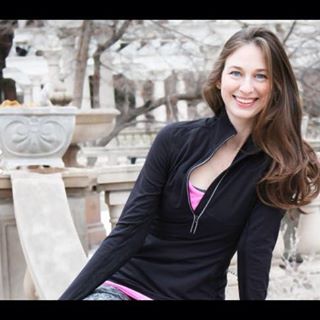
Rachel Levine, a kindergarten teacher in Denver, Colorado, and an advocate for those suffering from eating disorders, has been in recovery from both orthorexia and anorexia for more than seven years. In the March 2015 issue of Self Magazine, she shares her raw story of how orthorexia “almost killed her,” starting from the very beginning, when her heart nearly stopped beating from nutritional deprivation. To learn more about how Rachel got her appetite for life back, I invite you to read her story, “What it’s Like to Care Too Much About Eating,” here.


Read More

Force-Feeding: An Ethical Dilemma

What are your thoughts about the practice of force-feeding individuals who refuse to eat?

As nurses, we sometimes find ourselves in situations where we are asked to carry out clinical tasks we believe are ethically unsound. For instance, let’s look at the case of the Guantanamo-Bay prisoners who went on a hunger strike in June 2014. The military nurse assigned to them refused to force-feed the prisoners “because it felt wrong,” he said (http://www.washingtonpost.com/force-feed-detainees).

If he were to follow through with the orders to force-feed a suspected criminal, this is how it would likely play out: strapping the prisoner to a chair or bed, pushing a long rubber tube into his nose, down into his stomach, while he twists and flails, fighting to maintain a semblance of dignity.

Nurses choose to become nurses because they want to help those who are vulnerable, physically and emotionally. Nurses approach their patients as a whole entity, the mind and body a seamless system. They listen to their patients talk about their fears and anxieties. They sit with them during the night when they are awake in pain, and administer medications to ease their discomfort. They advocate on the behalf of their patients. The nursing code of ethics is clear about the role of a nurse:

The nurse, in all professional relationships, practices with compassion and respect for the inherent dignity, worth, and uniqueness of every individual, unrestricted by considerations of social or economic status, personal attributes, or the nature of health problems (http://www.nursingworld.org/Mobile/Code-of-Ethics).

According to that code, the nurse at Guantanamo acted within his rights. He acted with respect, and preserved the prisoners’ autonomy to make decisions on their own behalf. By refusing to force-feed the prisoners, he was protecting each of their individual rights.

The Guantanamo Bay case is clear-cut, but what about circumstances that are not so black and white, like force-feeding a patient with Anorexia Nervosa?

Withholding feeding, and fluids, is common practice in the terminal stages of an illness. But anorexia is not considered a terminal disease, yet patients do die from poor nutrition. Thus, feeding them is a life saving measure. But, unlike the Guantanamo prisoners, what if anorexic patients are not competent, meaning they cannot express their wishes due to cognitive impairment from severe malnutrition? What if these individuals had already displayed, through aggressive behavior, that they did not want to be fed? Do medical professionals, and family members heed those pre-incompetent wishes? But most people with anorexia have difficulty making decisions, so though they are fearful of gaining weight, and therefore starve themselves, they are not necessarily suicidal. So it’s hard to know the exact wishes of the patient (https://www.childrensmercy.org/ forced feeding in anorexia nervosa.pdf).

.

Other than force-feeding someone as a means to save a life, how else does this benefit a patient who is uncooperative, who has been administered feedings and intravenous nutrition numerous times without lasting success? When does the intended beneficent act venture into an act of great emotional, and physical, harm for the patient (https://www.childrensmercy.org/ forced feeding in anorexia nervosa.pdf)?

The ethical questions are endless. But, for nurses, and other medical professionals treating those with anorexia, they are worth examining.


Please note: the information set forth in this post is not representative of the opinion of the author, Melissa Cronin.


Read More

Eye Movement Desensitization Reprocessing: The Answers are Rooted in the Onions

rooted_in_onions_Image

There are 8 phases to EMDR: First, the therapist gathers background information about the client and discusses possible targets, or memories, on which the client may focus during treatment. In phase 2, the therapist ensures that the client is prepared to cope with potential distressing feelings. This may involve imagery or other stress reduction techniques. During phases 3 through 6, the EMDR procedure takes place. In phase 7, the client keeps a log noting any thoughts or emotions that arise. Finally, in phase 8, the client and therapist evaluate the progress made.

When I first learned about EMDR, I imagined walking out of the therapist’s office magically cured of all my PTSD symptoms. Maybe that’s what I wanted to hear when my original therapist told me about the treatment. But that’s not how EMDR works. EMDR is not a panacea – it assuages the anxiety related to the trauma, but does not necessarily eliminate PTSD symptoms all together. It wasn’t until I completed my first 90-minute session with the therapist when I learned that she could not give me an answer as to how long it would take before I noticed a reduction in anxiety.

Some people experience reduced symptoms of PTSD after a few sessions, but those who have suffered multiple traumas, or a complex history may require prolonged treatment. Once the therapist explained this to me, it made sense that I did not leave even the fifth or sixth session feeling marked relief. I grew up in a household where I endured both physical and emotional abuse. The emotional abuse continued into my twenties and early thirties when I became involved with men who treated me poorly.

As I shared my history with the therapist, I realized, for the first time, that other traumas I had experienced made my treatment complex: I was in a car accident with my father when I was ten, and another one with my step-mother when I was eleven. I nearly  drowned in the Colorado River when I was fifteen, and rammed into a tree while backcountry skiing when I was thirty. I completed twice-a-month EMDR treatments a year after my first session. Six years later, I returned for what I call a “tune up.”

For more information on EMDR, click on the video below:

https://www.emdr.com/client-session.html


Read More

Weaving Together a Memoir: A Critical Analysis of ‘The Kiss’ by Kathryn Harrison

How do writers transition from one layer (in this essay I use thread, strand, or filament) of a narrative, then successfully return to the main, or grounding thread? In Kathryn Harrison’s memoir, The Kiss, an account of her incestuous affair with her father, there are at least four threads woven throughout the book. The main one being her father, followed by secondary threads: Harrison’s mother, her grandparents, and her struggle with Anorexia Nervosa.

Like forming a braid, Harrison first introduces the main strand – her father – by summarizing the interactions between the two of them during their travels together – then deftly weaves in a secondary strand. One way she accomplishes this is by employing reflection. In the last sentence of the first chapter she says, “These nowhere and notimes [sic] are the only home we have.” The operative word “home” introduces Harrison’s grandmother – the next thread – in chapter two. Harrison says, “My mother’s parents raise me. I live in their house until I’m seventeen” (5).

But she does not let the grounding thread – her father – slip. She goes on to explain that he was not welcomed into her grandparents’ home. The thread further remains intact through dialogue – another strategy in which Harrison weaves together the braid of figures and events in the book. ‘“Where is your dad?’ other children ask. ‘I don’t know,’ [Harrison] answer[s]” (5). This dialogue is the diving off point, which allows her to delve deeper into her past: she tells us that her parents divorced when she was an infant and that she and her mother stayed with her grandparents after her dad left.

She also employs scene as a strategy to weave in the mother thread: her grandmother screams at Harrison’s mother when a date picks her up. But her mother saves snapshots of Harrison’s father (5, 6). We now have the mother thread introduced, along with the father and grandmother – a French braid.

Through scene again, we begin to learn more about Harrison’s mother: she sleeps much of the time, and when Harrison makes noise in an attempt to wake her mother, she ignores her daughter. A theme – rejection – is beginning to unfold between the three filaments – Harrison’s father, her grandparents and mother (7, 8). And when Harrison reflects on her mother’s date, her father remains present on the page: “Though she dates other men … my mother remains romantically fixated … on my father” (9). This follows with a tighter connection to the father: he sends letters to Harrison’s mother, and, as she says, “sometimes, folded in with them, are little ones for me (11).”

These letters segue to other objects, which, in addition to dialogue and reflection, keep the father, mother and grandparent strands intact. For instance, we have Harrison’s mother’s yearbook, in which she reflects on photos of her mother: “Do I know my mother any better than the long-ago classmate … who foretold her future? ‘She will study … French (17).’” The encyclopedia set Harrison includes belongs to her grandparents, which were sold to them by her father, who was once an encyclopedia salesman. Harrison’s mother attempts to teach her daughter French by using flashcards (16, 17, 18).

By including the cards, Harrison reveals her mother’s desire for her daughter to be perfect. Harrison says about her mother, “Once she throws the flash cards down and slaps my face. My mother’s love depends on my capitulation” (19, 20). The mother-daughter relationship in this scene provides us with the first hints of Harrison’s struggle with Anorexia Nervosa, yet another thread:

I come down with an illness no one can define or cure … It goes on for weeks until the day I hear the pediatrician tell my grandmother that I’m so dehydrated I’ll have to be hospitalized … I return to school not just thinner but seemingly smaller … Very occasionally, I dream in French, and on those mornings I wake up ill: I vomit (20, 21).

Harrison then loops back to the grounding thread of her father through startling reflection: “Do my father’s accomplishments cost him as dearly as mine do me” (21)?

Harrison, Kathryn. The Kiss. New York: Random House, 1997. Print.

Read More