Post-Traumatic Vision Syndrome

posttraumatic_vision_syndrome

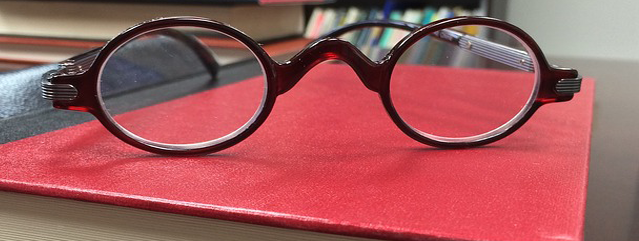
Did you know that at least sixty areas of the brain are involved with the processing of visual information, and that seventy percent of all sensory information is visual? I didn’t know this. I learned that fiber of trivia from Amy Pruszenski, a doctor of optometry, during her talk about post-traumatic vision syndrome (PTVS) at the Brain Injury Association of Vermont annual conference this past October. Simply put, PTVS is a disruption in flow within the complex network of nerves, tracts, and subsystems of the brain. Such disruption prevents the processing of visual data. This is not an uncommon occurrence in people who have sustained a traumatic brain injury (TBI). So, if you’ve sustained a TBI, including a concussion, and you’ve been wondering whether or not you have PTVS, keep reading.

Some common problems associated with PTVS include blurred vision, sensitivity to light, reading difficulties (words may appear to move on the page), poor comprehension, difficulty concentrating, poor memory, double vision, headaches when straining eyes, eye pain, squinting, closing one eye, poor depth and spatial judgment, and strabismus, or misalignment of the eyes. The list is endless.

But there’s no reason to walk around fearful that you’re about to fall over because you’re visual processing system is out of wack – you swear that every time you go out for a walk, the sidewalk curb shifts just as you are about to step off it to cross the street. Fortunately, there are treatments and behavioral changes that can help improve the flow and processing of information between the eyes and brain. Corrective lenses can help with blurry vision and magnification of objects, and can improve both close-up and distance vision. Prism glasses have a ground prism in or on the lens, which changes how the light enters the eye. These might help alleviate double vision and improve peripheral vision. Some optometrists recommend patching one eye to help with double vision. Doing so prevents information that causes double vision from entering the brain. After testing a patch during Amy’s talk, and having had to wear one as a kid to strengthen my “lazy eye,” I can tell you that this is not the most appealing option, especially if you are prone to claustrophobia.

Some behavioral changes Amy suggested, which apply to people without a TBI too, sounded tempting. Of course, they require discipline and training. Every twenty minutes, step twenty feet away from your computer, and focus on something else for at least twenty seconds. (I must do as Amy urged and set a timer to remind myself to turn away from the screen – I’ve been staring at it for more than an hour now.) Also, try what Amy calls a “Palm Break.” Block your eyes with your palms to block out all visual stimulation. But it’s not only the length of time engaged in an activity that affects visual processing; the type of activity affects it too. For instance, computer work is more strenuous on the eyes and brain than, say, washing the dishes.

Here are a few more tips to help avoid visual overload: remove clutter in your home and at work. (You don’t want to be around me when my home is a mess.) Prioritize activities, and don’t set yourself up to do too much in a day. (I still think I’m the super-woman I was before my TBI and list five or six brain-heavy tasks in my date book each day.) And shut down your computer, ipad, iphone, iwhatever, even the television, two to three hours before bedtime. (I know, this is a tough one, especially if you’re like me and must watch just one more episode of Call the Midwife before you click the off button on the remote.) The short wavelengths emitted from these kinds of devices suppress melatonin, a hormone that controls wake and sleep cycles. The suppression of melatonin not only interferes with sleep, it has also been linked to all kinds of bodily dysfunctions: cancer, diabetes, heart disease, obesity.

Rather than leaving you bloated with worry about how to fit in yet another self-care activity into your busy day, I’ll end with a shout of encouragement from Amy: “Celebrate accomplishments!”


Read More

Cranial Sacral Therapy

cranial_sacral_therapy

Our bodies deserve to be treated with kindness. Right? If you are looking to do just that, whether you are living with post-traumatic stress disorder, a traumatic brain injury, chronic neck and back pain, migraines, or any other emotional or physical ailment, why not give cranial sacral therapy (CST) a try? Discovered in 1970 by osteopathic physician John E Upledger, CST is not as new-age as you might think.

I know, “cranial sacral” sounds nothing like new-age. You might cringe at the notion of someone messing with your neck and spinal column. But, with CST, there is no mess involved: back cracking, neck manipulation, muscle tugging. To help understand CST, I’ll interrupt here with a very brief lesson in Anatomy 101. More than most other parts of the body, the brain and spinal cord, which make up the central nervous system (CNS), influence the ability of the body to function properly. In turn, for the CNS to  function up to par, it relies heavily on a healthy craniosacral system: the membranes and fluid that surround, protect and nourish the brain, spinal cord, and the attached bones.

Since we endure stress every day – sitting at a desk for long hours, dragging a whining toddler through the grocery store, driving through bumper-to-bumper traffic – the body’s tissues tighten and create havoc in the craniosacral system. This can cause increased tension around the brain and spinal cord, interfering with the healthy functioning of the CNS, and even other systems it  interacts with.

With CST, the therapist uses her hands to evaluate the craniosacral system by gently feeling various parts of the body to assess for ease of motion, and for the flow of cerebrospinal fluid around the brain and spinal cord. Using soft-touch, she releases restrictions in the tissues, and mobilizes fluids around the spinal cord.

I’ve been curious about CST for a long time now, and, when I attended a workshop on CST at Vermont’s annual brain injury conference this past October, Kate Kennedy, the speaker, and veteran practitioner of the method, convinced me to consider it as an adjunct to alleviating my PTSD symptoms (hyper-vigilance, hyper-startle, nightmares) and a TBI (foggy-headedness, fatigue, poor concentration).

During the workshop, I learned, for CST to help heal our physical ailments, we need to let go of our emotions. Kate called them the “stuck places,” when she referred to the “emotions that take up space in our bodies” – in our muscles, tissues, bones. Vital to treating her clients, she asks them to talk about their individual traumas, as she feels for tight places, the places she senses being “over-charged.”  With the letting go of emotions, those tight areas also literarily let go.

Kate also reminded us that compensatory mechanisms influence the experience of the trauma. In other words, we possess layers upon layers of compensation before the trauma, and, for instance, how a migraine associated with a TBI heals depends a lot on what our past compensatory mechanisms were like. It’s not uncommon for people to hold onto the force of the injury – for example, neck tension.

The memory of trauma, pain, or any acute or chronic condition might very well be wrapped-up in your body. It’s true, our bodies hold our personal narratives. If we want to rid them of the upsetting narratives, or as Kate says, “The waste products of our central nervous system,” CST, with its gentle, listening approach can find those mucked-up places. I think of CST as empowering, as allowing you to gain access to your own body – the entire container of the self.

Are you ready to be empowered?

To find a CST therapist click here.


Read More

Domestic Violence and Traumatic Brain Injuries

1412719110253

Since October is Domestic Violence Awareness Month, I thought this would be a perfect time to share with you a societal problem that has been largely ignored. Not only do war veterans, football players, and accident survivors sustain traumatic brain injuries, but women who are victims of domestic violence sustain TBIs too. Here’s the tragic truth: Close to five million women in the United States experience domestic-related assaults every year, and the injuries they suffer are mostly to the head, neck, and face. Men experience approximately three million domestic-related assaults each year. The CDC estimates that nearly one hundred sixty thousand TBI-related deaths, hospitalizations, and emergency room visits in the U.S. every year are a result of physical assaults. But the actual numbers are unknown. Why?

Many victims don’t report the abuse to family, friends, or the police because they worry others will not believe them. And victims are often dependent on their abusers, financial and physically. Also, a TBI can make it difficult to communicate clearly, preventing victims from reporting the abuse. The perpetrator may convince others that the victim shouldn’t be taken seriously because of her TBI-related cognitive problems, and victims may be unwilling to admit that they have a TBI out of fear of the fallout: losing custody of children for instance.

An obvious trauma does not have to occur for a TBI to exist. Women who suffer a blow to the head in a domestic violence incident may not lose consciousness, and, therefore, they may not seek medical attention. Symptoms may not be easily recognized and women are often misdiagnosed with a mental health illness. In an article from the Huffington Post, a woman who was interviewed about her experience subjected to a two-and-a-half year abusive relationship says, “When you are in a relationship with that much trauma and violence, you don’t know what’s physical or what’s emotional or mental.”

In a past study conducted by the American Psychological Association, trained staff surveyed one hundred sixty nine women who visited three different emergency rooms with injuries sustained over a period of seven to nine months. Of the forty-six women who answered all the survey questions, seventy-one assaults were reported. Thirty-five percent of the women were identified as possibly having sustained a mild traumatic brain injury.

Women with traumatic brain injuries caused by domestic violence have below average recoveries and are more likely to develop post-concussive syndrome. Researchers don’t know the reasons for this, but suspect it’s due to the nature of the injury to the head, that female hormones may affect recovery, or that female victims of domestic violence have sustained multiple injuries.

Overall, researchers found that sixty-seven percent of the women who participated in the survey exhibited symptoms of a TBI.

What is being done about this dire reality? Researchers have advocated for further exploration into the nature and consequences of domestic violence and TBIs. They are also proponents of early screening for TBIs, so women have access to treatment, thus preventing further injuries.

The New York State Office for the Prevention of Domestic Violence has made available to those likely to encounter victims of domestic violence a list of statistics, TBI symptoms, and questions to ask when assessing for abuse. Though the document is geared toward professionals, I encourage all of us to read it, to be better aware of the connection between domestic violence and TBIs.


Read More

Volunteering and Happiness

volunteering_and_happiness

On August 2, as part of a three person panel, I had the occasion to discuss learning accommodations available to traumatic brain injury survivors on “Another Fork in the Road,” a broadcast of the weekly Brain Injury Radio Network, hosted by Donna O’Donnell Figurski. Juliet Madsen, a retired military veteran of the Iraq and Afghanistan wars, sustained a TBI in 2004 while serving in Operation Iraqi Freedom. Both she and I discussed post-TBI issues such as indecisiveness, poor attention span, the inability to remember names, and the need to rely on written and auditory cues to accomplish daily tasks. While I found it to be comforting to know that I am not alone with the fall out of a TBI and what Juliet calls a “revolving door” (One day you have a handle on things, and the next day you don’t), I found her zeal to volunteer inspiring.

A quilter for twenty-five years, Juliet founded Stroke of Luck Quilting and Design  and began sewing quilts to raise funds raise for disabled veterans. She developed the fundraiser, “The Ultimate Sew-in,” and, along with other volunteers, has made 500 quilts for injured soldiers. She also serves as an ambassador for the Invisible Disabilities Association (IDA) and speaks publicly about TBI and PTSD. And, as part of the Veterans Book Project, Juliet worked collaboratively with dozens of other veterans to write Objects for Deployment. She gathered unsettling images of the Iraq and Afghanistan wars with the goal of making meaning out of her memories.

Since the radio show nearly one month ago, I’ve thought a lot about why traumatized individuals spend time volunteering, and go back to a memoir I read a few months ago. In Moving Violations, the author John Hockenberry says, “Trauma intensifies existence.” In other words, trauma brings forth experiences previously shrouded by day-to-day routines, and propels us to re-invent our lives. So it’s reasonable to say that volunteering is just one path toward re-invention. And, since traumatized people often struggle with depression and a sense of helplessness, giving back to the community can help boost self-esteem and a sense of accomplishment. From that, unfolds a better sense of emotional wellbeing. And since volunteering usually involves being around other people, it makes one less isolated, a core risk factor for depression. Of course, these benefits are not exclusive to traumatized individuals; others reap emotional gains too.

Most of us want to be happy, right? A dose of it could come as easily as spending two hours every few months playing music for elders at an assisted living facility, walking three miles once a year to raise money for a national nonprofit, or serving dinner to the homeless at a shelter during the holidays.

Does volunteering make you happy? What kind of volunteer work makes you happy? Please share.


Read More

Learning Accommodations After a Brain Injury

Join me, Donna O’Donnell Figurskifrom Another Fork in the Road, and Juliet Madsen, a military veteran who sustained a traumatic brain injury in 2004 when her convoy was hit by a roadside bomb, on the brain injury radio network this Sunday August 2nd at 830 pm Eastern Standard Time. Many survivors of a brain injury struggle with cognitive decline. We will discuss the various learning accommodations available after a TBI. Feel free to call in during the show with comments and questions at: (424) 243-9540.

Read More
error

Enjoy this blog? Please spread the word!