How Blueberries Heal a Traumatic Brain Injury
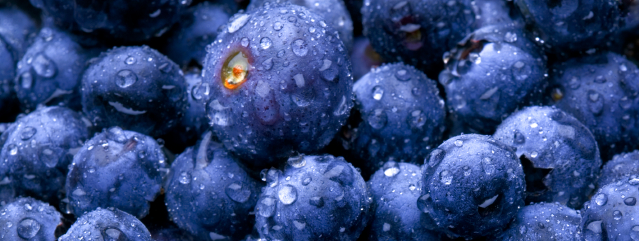
blueberries

You reach for the bush, grab a cluster of summertime, then pop the handful of nature’s sugar into your mouth. A burst of warmth coats your tongue, meanders down your throat, and you think of homemade jam. You grab another cluster, then another, and eat them all, guilt-free, because you know they are good for you – blueberries.

They may be small, but wrapped inside the sheen of a blueberry skin lies a treasure of health benefits: vitamin C for immunity, manganese for strong bones and for converting fats, proteins and carbohydrates into energy. Blueberries are packed with fiber, which helps reduce cholesterol. Research shows that they even reduce the risk of obesity. Polyphenols – substances that give blueberries their blue-purple color – fight off unstable molecules that put us at risk for heart disease, cancer, and Alzheimer’s disease. Health magazines, Dr. Oz, and likely your own mother, have touted the benefits of eating blueberries. But did you know that these blue jewels, which have been around for more than 13,000 years, might help survivors of traumatic brain injuries recover?

The brain functions normally in the presence of glutamate – a neurotransmitter, or chemical that mediates excitatory signals through the nervous system. But, after a brain injury, glutamate rapidly increases, destroying cells. However, in animal studies, researchers have noted that when extracts from blueberries are added to the cells with glutamate they are actually protected. Though it is not necessarily a good idea to always heed “the more the better,” but “the more berries you eat, the better your brain will be protected if a stroke or traumatic brain injury occurs,” says Dr. John Weber, a researcher at Memorial University’s school of pharmacy. Dr. Weber, and others, is still trying to determine exactly how many blueberries are needed for a specific amount of antioxidants – molecules that combat free radicals, or unstable molecules – to reach the brain, and how long they will remain there.

But Dr. Weber is clear about one thing: those who have suffered a moderate to severe injury might not benefit from eating blueberries. Yet, the extracts in berries might be helpful in the later stages of healing.

Blueberries store well in the freezer –they don’t suffer damage to their fragile polyphenol skins. So, at only 80 calories per cup, stock up, and eat up!

http://www.naturalnews.com/032219_polyphenols_blueberries.html

http://www.blueberrycouncil.org

http://www.whfoods.com/genpage.php?tname=foodspice&dbid=8

http://www.thetelegram.com/News/Local/2014-08-05/article-3823293/Blueberries-could-help-heal-brain-injuries/1

Read More

Sharing Shelves: Traumatic Brain Injury or Post-Traumatic Stress Disorder

library-bookshelves-5jssxryn

Because traumatic brain injuries are the result of a trauma, it’s common for TBI survivors to also suffer from PTSD. But differentiating the cause of symptoms can be challenging. Depression, anxiety, cognitive difficulties, and fatigue are common to both. But PTSD is a mental condition, whereas TBI is a neurological condition.

In TBIs, individuals may experience retrograde amnesia: memory loss of events – usually recent ones – that occurred prior to the injury. Before the elderly driver ran into me at the Santa Monica Farmers’ Market, I recall holding a peach, then nothing else, until I woke up in the emergency room more than an hour later. Even then, my memory is spotty. In PTSD, people are haunted by intrusive thoughts and memories of the trauma. Even though I do not remember the accident, I have been haunted by thoughts of the gruesome scene. Imagination is powerful.

Fatigue is a hallmark feature of TBIs. The brain tires easily, and therefore must work harder to process information. When I’m exposed to too much stimuli – chatter, whining children, and bright lights – I feel as if my head is stuffed with cotton. In PTSD, hyper-vigilance keeps people awake (see Post-Traumatic Stress Disorder: A Re-Wired Brain). In anticipation of nightmares, they may be afraid to fall asleep. So my TBI causes my brain to work over-time, and the nightmares I still experience startle me awake, keep me awake, draining what little fuel is remaining in my brain.

In TBIs, there may be damage to the frontal lobe – the area of the brain that controls emotions and personality, so emotional swings are not uncommon. In the few years after my injury, I found that I was more irritable and cried for no apparent reason: when washing the dishes, or standing in line at the bank. Emotional numbness is more common in PTSD. People may no longer be interested activities they once enjoyed. I recall days when it took a Herculean effort just to get out of bed and dressed for the day – sometimes it still does.

About fifty percent of those with TBIs suffer from depression. Compare that to the approximately seven percent among the general adult population. Depression is also common in those with PTSD, particularly war veterans, but since they want to avoid the stigma of mental illness, they hesitate to report symptoms and refrain from talking about the trauma at all.

Since PTSD is an anxiety disorder it’s natural for people to experience heightened stress, especially when reminded of the trauma. But in TBIs, people appear unmotivated when the truth is they lack the ability to initiate activities. I may seem lazy because I don’t cook and rarely food shop, but that’s because my TBI presents with the inability to make decisions – which kind of pasta to buy, or what to cook for dinner.

Given the overlapping of symptoms between a TBI and PTSD, neither one fits squarely on its own shelf. But I suppose that’s the way it goes with most things.

http://www.nimh.nih.gov/health/publications/the-numbers-count-mental-disorders-in-america/index.shtml

http://www.brainlinemilitary.org/content/2013/03/tbi-and-ptsd-navigating-the-perfect-storm_pageall.html

Read More

Fiddling My Way to a Stronger Vocabulary

Fiddling my way to a stronger vocabulary 000005217038SmallTen months before I suffered my traumatic brain injury, I started learning how to play the fiddle. But, distracted by pain, fatigue and medical appointments during the first months of my recovery, I thought I’d never play it again. And the few times I tried, the notes sounded either too flat or too sharp. I’d put it back in it’s case, then set it in the corner of the living room, somber and angry at the same time.

Through the persistent support of friends, I eventually practiced again, every day. I started practicing for ten minutes at a time, but quickly increased my sessions to twenty minutes, a half hour, then an hour. I needed the music – immersing myself in the sounds of each note and the melodic phrases of Irish jigs and reels helped me to focus. But I did not know what effect playing the fiddle, or learning any instrument, had on the brains of TBI survivors.

Scientists used to believe that changes in the brain could occur up until only childhood. But modern research has shown that the brain can create new pathways and alter existing damaged ones to form new memories and learn new information. The process, called neuroplasticity (brain remapping) can take months, or even years. But neuroplasticity can also occur through active learning, called structural plasticity. Researchers have found, through music training, areas of the brain involved in cognition such as memory, speech, attention, and language are strengthened. For instance, children who are musically trained have stronger vocabularies and reading skills than those who are not musically trained. Similar patterns have been observed in adults.

So I continue to push the bow across the fiddle’s strings. I call these sessions my brain workout.

http://neurosciencenews.com/neuroscience-music-enchances-learning-neuroplasticity/

Read More

Neuropsychological Testing: Trickling Toward New Beginnings

hourglass_

Neuropsychologists are not medical physicians; they are psychologists who study the relationship between behavior and the brain. They first interview the individual: work and medical history, family dynamics, and school performance. The neuropsychologist gathers this information in order to compare level of functioning prior to a traumatic brain injury with post-injury functioning. The testing covers a broad range of areas: concentration, attention span, basic and abstract thinking, memory, mathematical reasoning, motor skills, problem-solving skills, judgment, and emotional character.

In May 2006, when I believed there had to be more than PTSD to blame for my difficulties in the workplace, I saw a neuropsychologist. I spent eight hours filling out self-evaluation forms and undergoing testing. Separately, my husband and I scored (one being the best, ten the worst) my level of irritability and depression, and my ability to remember things, concentrate, multitask, recall words, and think quickly. Our scores were nearly identical, with most of them ranging between five and eight. I spent the remainder of the day filling in dots on questionnaires, naming faces in photos, sticking pegs in tiny holes in less than fifty seconds, drawing figures from memory, naming as many items as I could think of that started with the letter T in less than one minute.

A few weeks later, the results came in the mail: the tests suggested I had sustained a traumatic brain injury when I was hit by a car three years earlier.

Finally, I had answers as to why I had trouble following conversations, learning new information, or performing most tasks in a timely manner. Finally, I had a reason as to why I could not retrieve the word from my brain when the neuropsychologist asked me to name the photo of two vertically connected glass bulbs with sand trickling from the top bulb to the bottom bulb.

Hourglass.

Emblematic of the passage of time, the hourglass also marks new beginnings.


Read More

An Invisible Injury

Physicians rely on various tests to diagnosis a TBI. The Glascow Coma Scale (GCS) measures three areas: ability to open eyes spontaneously, to speech, pain, or not at all. The ability to speak: is the patient confused, unable to speak coherently, or not able to speak at all? The ability to move: does the patient respond appropriately to painful stimuli? Are there abnormal movements?

Each area is scored. The best possible score is fifteen. Thirteen or greater indicates a mild TBI. Nine through 12 suggests a moderate TBI, and 8 or lower is likely a severe TBI. Since the GCS scores the initial injury, it is not a predictor of the patient’s recovery and functional ability. If a 13 is assigned to the initial injury, the patient may still exhibit long-term deficits like difficulty processing new information. My GCS score at the time of my injury occurred was fourteen.

Symptoms are also helpful in diagnosing a TBI, such as clear fluid (spinal fluid) draining from the ears or nose, irregular breathing, dilated pupils, coma, paralysis, numbness or tingling, vomiting, and loss of bowel and bladder control.

In TBI’s there may be brain swelling and bleeding, which can be seen on Computed Tomography (CT scan) or magnetic resonance imaging (MRI). CT scans are not as sensitive as MRI’s, but take less time to complete – the reason why they are taken in the acute phase of treatment. However, both techniques cannot detect torn neurons, or microscopic bleeding (see post: The Brain: A Delicate 3.4 Pounds). For those who sustain neuron damage, but no swelling or significant bleeding, it’s difficult to diagnose a TBI. This was the case in my injury. It’s easier to diagnose patients who show obvious signs of a TBI (see symptoms above). But in those that do not, physicians must rely on subjective input from patients. That’s why many people go years before being diagnosed. If you have heard of TBI’s referred to as an “invisible injury,” now you know why.

http://www.biausa.org/brain-injury-diagnosis.htm http://www.nlm.nih.gov/medlineplus/tutorials/traumaticbraininjury/nr289102.pdf

Read More
error

Enjoy this blog? Please spread the word!